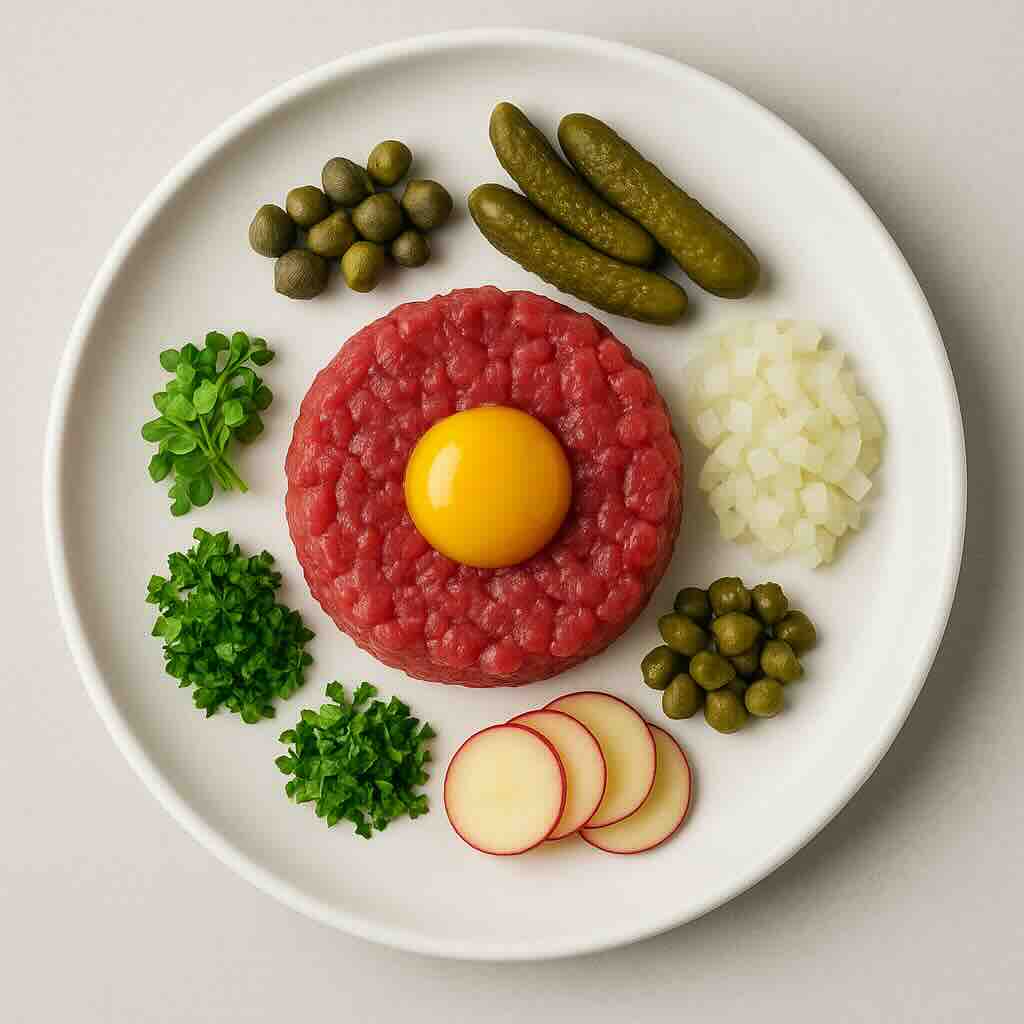
Choosing the right cut of beef is the most consequential single decision in tartare. Cuts vary in tenderness, fat content, fibre direction, and how cleanly they hold a fine dice — and only some are appropriate for raw consumption at all. This page walks through the cuts you'll see at a butcher and explains where each one fits, with notes on what to ask for by name.
Anatomy of Beef for Tartare
Understanding where cuts come from on the animal helps predict their texture, flavor, and suitability for raw preparation. The less a muscle is used during the animal's life, the more tender it will be—a crucial factor for tartare.
Prime Tartare Regions
- Loin: Home to the most tender cuts (tenderloin, strip loin)
- Sirloin: Balanced tenderness and flavor
- Round: Lean cuts requiring careful selection
- Chuck: Select portions only, with excellent marbling
Top Cuts for Tartare
Let's explore the best cuts for tartare, ranked by their suitability for raw preparation:
1. Tenderloin (Filet Mignon)
The Gold Standard
- Location: Beneath the ribs, along the backbone
- Texture: Supremely tender, fine grain
- Flavor: Mild, buttery, subtle
- Fat Content: Very lean with minimal marbling
- Price: Most expensive option
- Best For: Classic preparations where texture is paramount
The tenderloin's unparalleled tenderness makes it the traditional choice for tartare. Its mild flavor serves as a perfect canvas for seasonings and accompaniments.
2. Top Sirloin
The Flavor Champion
- Location: Upper portion of the sirloin
- Texture: Tender with slight chew
- Flavor: Rich, beefy, pronounced
- Fat Content: Moderate marbling
- Price: Mid-range, excellent value
- Best For: When you want bold beef flavor
Top sirloin offers the best balance of flavor, texture, and value. Its robust taste stands up well to strong seasonings.
3. Eye of Round
The Lean Option
- Location: Rear leg, well-exercised muscle
- Texture: Dense, requires fine chopping
- Flavor: Clean, mineral, iron-rich
- Fat Content: Extremely lean
- Price: Budget-friendly
- Best For: Health-conscious preparations
While less tender than loin cuts, eye of round's leanness appeals to those watching fat intake. Requires very fine dicing.
4. Strip Loin (New York Strip)
The Balanced Choice
- Location: Short loin, behind the ribs
- Texture: Tender with pleasant bite
- Flavor: Robust, well-rounded
- Fat Content: Good marbling, fat cap
- Price: Premium but not extreme
- Best For: When you want everything
Strip loin provides an ideal compromise between the tenderloin's texture and sirloin's flavor.
| Cut | Tenderness | Flavor | Price | Best Use |
|---|---|---|---|---|
| Tenderloin | 10/10 | 6/10 | $$$$ | Classic, elegant |
| Top Sirloin | 7/10 | 9/10 | $$ | Flavorful, everyday |
| Eye of Round | 5/10 | 7/10 | $ | Lean, healthy |
| Strip Loin | 8/10 | 8/10 | $$$ | Premium, balanced |
| Flat Iron | 8/10 | 8/10 | $$ | Modern, trendy |
Cuts to Avoid
Certain cuts should never be used for tartare due to texture, safety, or quality concerns:
⚠️ Never Use These Cuts
- Ground Beef: Unknown origin, contamination risk
- Stew Meat: Often from multiple sources
- Blade Cuts: Too much connective tissue
- Shank: Extremely tough, sinewy
- Brisket: Requires cooking to break down
Understanding Meat Grades
USDA grading significantly impacts tartare quality:
Prime Grade
- Highest marbling (8-11% fat)
- From young, well-fed cattle
- Best flavor and texture
- Only 2-3% of beef grades Prime
Choice Grade
- Moderate marbling (4-7% fat)
- High quality, widely available
- Excellent for tartare
- Best value for quality
Select Grade
- Minimal marbling (2-4% fat)
- Leaner, less flavorful
- Acceptable if very fresh
- Requires careful preparation
Beyond USDA: Alternative Grading
Other quality indicators to consider:
Grass-Fed vs. Grain-Fed
- Grass-Fed: Leaner, mineral flavor, yellow fat
- Grain-Fed: More marbling, milder taste, white fat
- Grass-Finished: Best of both worlds
Breed Considerations
- Angus: Excellent marbling, consistent quality
- Wagyu: Supreme marbling, luxury option
- Hereford: Good flavor, moderate marbling
- Highland: Lean, gamey, unique flavor
Evaluating Freshness
Critical indicators for tartare-worthy beef:
Visual Inspection
- Color: Bright cherry red (not brown or gray)
- Surface: Slightly moist, not wet or slimy
- Fat: White to cream colored, firm
- Texture: Firm, springs back when pressed
Smell Test
- Fresh, clean scent
- Slight metallic note is normal
- No sour, ammonia, or "off" odors
- Aged beef may smell nutty or earthy
Special Considerations
Fat Content Balance
The ideal fat content for tartare is 15-20%:
- Too lean: Dry, lacking flavor
- Too fatty: Unpleasant texture, coating mouthfeel
- Solution: Blend cuts if needed
Aging and Tartare
How aging affects different cuts:
- Tenderloin: Benefits from 21-28 days
- Sirloin: Optimal at 28-35 days
- Round: Best fresh or minimally aged
- Strip: Excellent at 35-45 days
Preparation Techniques by Cut
Tenderloin Preparation
- Remove all silver skin meticulously
- Cut into 1/4-inch dice
- Gentle handling to preserve texture
- Minimal seasoning to highlight quality
Sirloin Preparation
- Trim external fat to 1/8 inch
- Cut slightly smaller (1/8-inch dice)
- Can handle robust seasonings
- Benefits from brief marination
Round Preparation
- Freeze partially for easier cutting
- Dice very fine (1/16 inch)
- Add fat source (olive oil, egg yolk)
- Season generously to enhance flavor
Cost-Effective Strategies
Maximizing value without compromising quality:
Smart Shopping
- Buy whole muscles and portion yourself
- Look for sales on premium cuts
- Develop relationships with butchers
- Consider buying direct from farms
Portion Control
- 3-4 oz per serving is standard
- Stretch with vegetables for volume
- Use trimmings for cooked dishes
- Freeze portions for later use
Regional Variations
Different cuisines favor different cuts:
French Traditional
- Exclusively tenderloin
- Hand-chopped only
- Minimal fat addition
American Modern
- Various cuts accepted
- May include fat additions
- Creative preparations
Korean Yukhoe
- Specific cuts from round
- Julienned, not diced
- Pear and sesame oil added
Sustainability Considerations
Making responsible choices:
- Source from local, sustainable farms
- Use whole muscle to reduce waste
- Consider grass-fed for environmental impact
- Support regenerative agriculture practices
Conclusion
Selecting the right cut of beef is the foundation of exceptional tartare. While tenderloin remains the classic choice, understanding the characteristics of different cuts allows for creative and economical preparations without sacrificing quality or safety. Whether you choose the buttery tenderness of filet mignon or the robust flavor of top sirloin, the key is starting with high-quality, fresh meat from a trusted source.
For a shorter, decision-focused version of this guide — a ranked shortlist, the cuts to avoid, and the mince-versus-hand-cut question — see the best cut of beef for tartare.
Remember that the best cut is one that meets your specific needs—whether that's ultimate tenderness, bold flavor, lean nutrition, or value. By understanding the anatomy, grading, and preparation techniques for each cut, you can confidently create tartare that showcases the best of what beef has to offer.