Roasted Eggplant Tartare (Vegan)
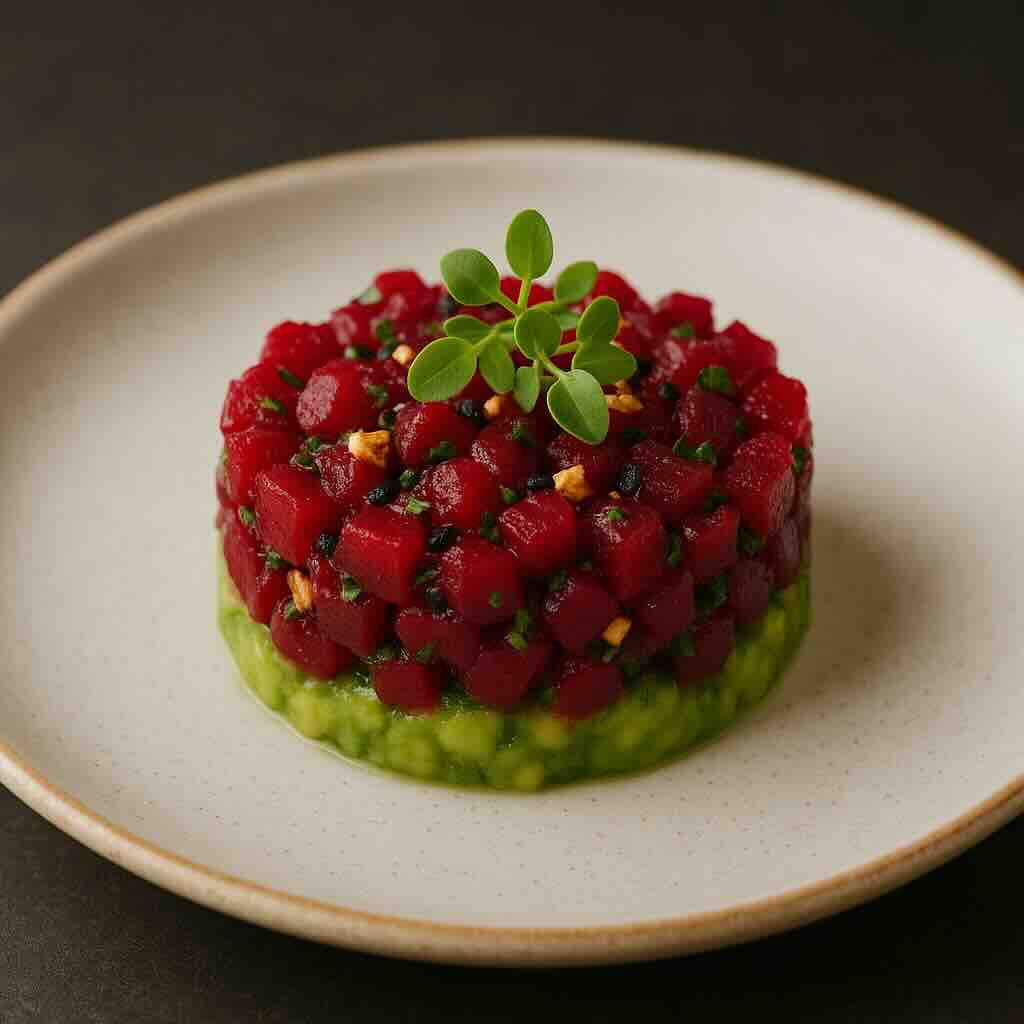
Unlike most tartares, this one is cooked first — and that is the whole point. Roasting eggplant until the flesh is meltingly soft and lightly caramelized gives it a smoky, almost meaty depth that holds up to the bold tartare seasonings of capers, lemon, parsley and good olive oil. Once cooled and diced, the eggplant is dressed and served cold like a classic tartare. It is a Mediterranean-leaning, fully plant-based dish that makes an excellent starter or part of a mezze spread.
This is a vegan dish with no raw meat, fish or egg, so there is no raw-protein risk to manage. The eggplant is fully cooked. As with any dish, use clean utensils and a clean board, and refrigerate the diced eggplant if you are not dressing it right away.
Instructions
- Heat the oven to 425°F (220°C). Line a baking sheet with parchment.
- Halve the eggplants lengthwise, score the cut faces in a crosshatch, brush with 2 tbsp olive oil and season with salt.
- Roast cut-side down for 30–40 minutes, until the flesh is completely soft and the skins are collapsing.
- Let the eggplant cool until you can handle it, then scoop the flesh away from the skin. Discard the skins.
- Set the flesh in a sieve and press gently to drain off excess liquid — this keeps the tartare from being watery.
- Chop the drained flesh into a small, fairly even dice rather than a purée; you want some texture.
- In a bowl, whisk together the remaining 1 tbsp olive oil, lemon juice and zest, Dijon, the optional garlic and paprika or cumin, salt and pepper.
- Stir the minced shallot and chopped capers into the dressing and let macerate for 5 minutes.
- Fold the diced eggplant into the dressing until evenly coated.
- Fold in most of the parsley. Taste and adjust salt, pepper and lemon — roasted eggplant can take a generous amount of seasoning.
- Set a ring mold on each plate and spoon in the tartare, pressing lightly to shape, then lift the mold away. Chill for 10–15 minutes if you have time.
- Finish with the remaining parsley, a drizzle of olive oil and a few flakes of sea salt. Serve with toasted pita, flatbread or crostini.
Nutrition Information (per serving, estimated)
Values are estimates and will vary with eggplant size and the amount of olive oil used.
Frequently Asked Questions
Is the eggplant raw or cooked in this tartare?
It is fully cooked. Raw eggplant is unpleasantly spongy and bitter, so it is roasted until soft and lightly caramelized first, then cooled and diced. The dish is called a tartare for its diced, seasoned, served-cold presentation rather than because it is raw.
Which eggplant should I use?
Standard globe eggplants work well and are easy to find. Choose ones that feel heavy for their size with taut, glossy skin, which tend to have fewer seeds and less bitterness. Smaller Italian or Japanese eggplants also work and often have a sweeter, creamier flesh.
Can I make it ahead?
Yes — this is one tartare that actually benefits from a little resting time. You can roast and dress the eggplant up to a day ahead and keep it covered in the refrigerator; the flavors deepen. Add the fresh parsley and a final drizzle of olive oil just before serving.
How should I serve it?
Serve it cold or at cool room temperature with toasted pita, flatbread or crostini for scooping. It is also at home on a mezze board alongside hummus and olives, or spooned over grilled bread as a starter.
You May Also Like
Avocado Tartare
Creamy vegan avocado with lime and capers
Tomato Tartare
A bright, summery vegan tartare
Master Knife Skills
The clean dice every tartare depends on
Scallop & Apple Tartare
A refined seafood take on the technique