Hand-cutting is what separates good tartare from the paste a food processor produces. The texture you are aiming for — small, distinct cubes with a little bite — depends almost entirely on one variable: how cleanly your blade passes through the meat. This guide is about choosing a knife for that job. We recommend by criteria rather than by brand, because the right knife is defined by what it does, not by whose name is stamped on it.
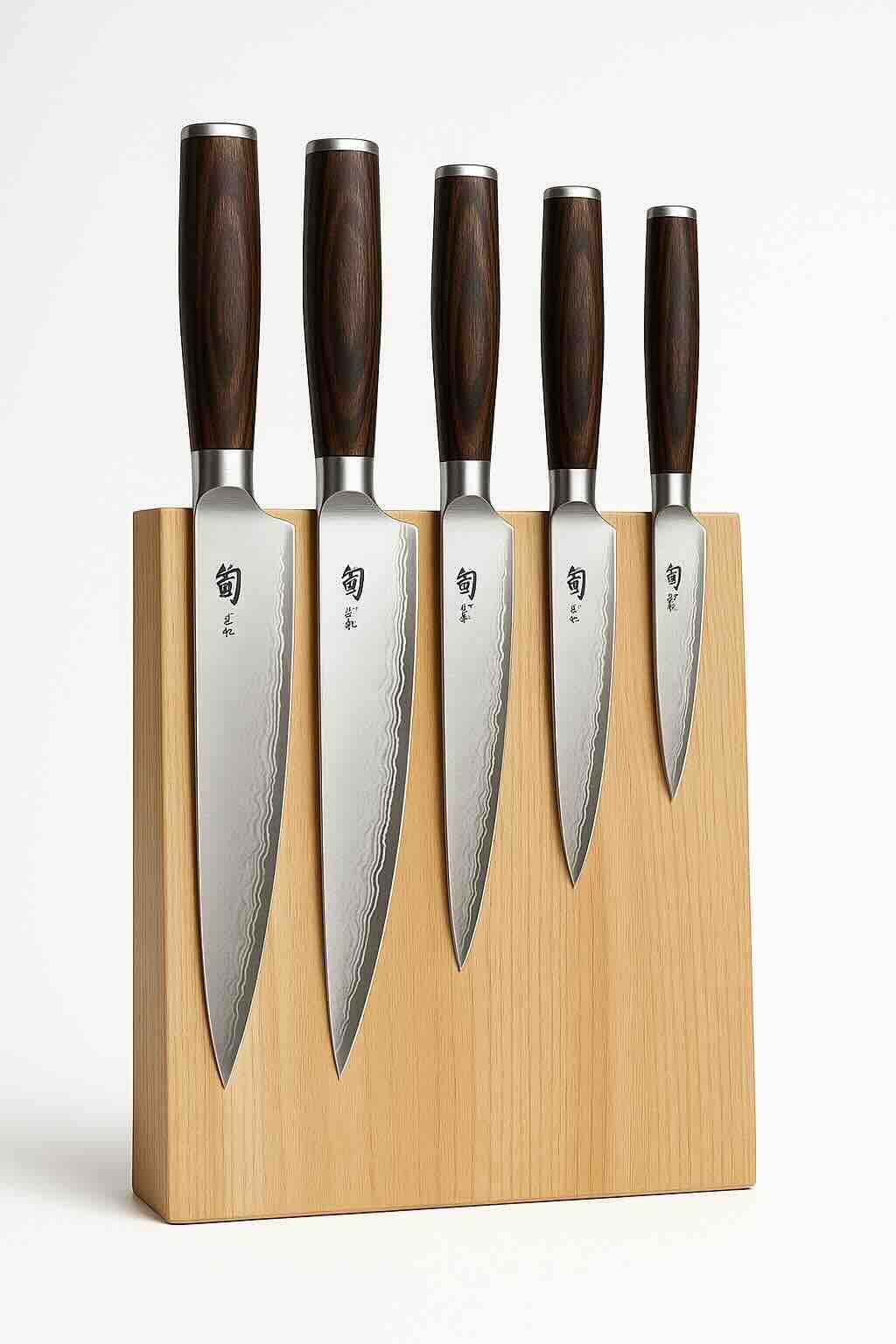
Why a truly sharp blade matters
Raw beef, tuna, or salmon is soft and yielding. A sharp edge slides through it with almost no downward pressure, separating the fibres in a clean shear. A dull edge cannot part the fibres, so it drags and compresses them instead. The result is a smeared, weepy mince that loses juices onto the board and turns grey faster.
That clean shear is also why a good tartare looks the way it does: defined cubes with crisp faces that catch the light. You cannot fake this texture with a blunt knife and more chopping — more chopping with a dull blade only worsens the crushing. Sharpness is not a luxury here; it is the technique.
Blade types and trade-offs
Several blade shapes will do the job. None is uniquely "correct." What you want is enough length to draw the blade through in one or two strokes, and a thin edge that does not wedge. Here is how the common options compare for cutting tartare.
| Blade type | Strengths for tartare | Trade-offs |
|---|---|---|
| Chef's knife / gyuto | Most versatile; enough length and belly to slice then cube; the knife most people already own | A thick spine or chunky edge can wedge through soft meat; benefits from a fine edge |
| Sujihiki / yanagiba slicer | Long, thin, very flat edge made for slicing protein in single pull strokes; superb for the first stage | Narrow blade is less handy for the final dicing; yanagiba is single-bevel and takes practice |
| Santoku | Thin behind the edge; light and easy to control for smaller hands | Shorter length and flatter belly mean more strokes; flat profile suits chopping over rocking |
| Paring knife | Fine for trimming sinew and silverskin off the trim before you start | Too short to cut tartare efficiently; use it only for prep, not the dice |
A practical pairing many home cooks settle on is a long slicer for cutting the chilled protein into even planks and strips, then a chef's knife to turn those strips into cubes. But a single sharp chef's knife handles the whole job perfectly well.
Why edge geometry beats brand
It is tempting to think the answer is a famous maker. It isn't. The two things that actually determine how a knife cuts soft protein are how sharp the edge is and how thin the blade is behind that edge. A modest knife that is genuinely sharp and thin will out-cut an expensive one that is dull or thick.
This is the site's standing principle: we do not invent authority. We will not tell you a particular model is "the best," because the honest variables are sharpness, geometry, and your own maintenance — not a logo.
Length and weight
For cutting tartare, a blade somewhere in the range of a standard chef's knife or a little longer gives you enough edge to pass through a strip of meat in one draw, which produces cleaner faces than a sawing motion. Too short and you saw; too long and the knife becomes unwieldy for the fine dicing stage.
Weight is personal. A heavier knife can feel reassuring but does no cutting work on soft protein — the edge does that. A lighter, thinner blade is often easier to control for precise, even cubes. Choose the weight that lets you guide the tip accurately without fatigue.
Steel and maintenance
Steel type matters less than how you keep the edge. Harder steels hold a fine edge longer but can be more brittle and fussier to sharpen; softer steels dull faster but are forgiving and quick to refresh. Either can cut tartare beautifully when sharp.
- Honing realigns a rolled edge and should be done often — a few light passes before you start. It does not remove metal or restore a truly dull edge.
- Sharpening removes a little metal to create a new edge. Whetstones give the most control; pull-through and guided systems are easier but coarser. Sharpen when honing no longer restores bite.
- Test it on paper: a sharp knife slices clean through a sheet of printer paper held at the edge. If it tears or skids, it is not ready for tartare.
- Dry and store carefully. Keep the edge off other steel — a block, magnetic strip, or in-drawer guard preserves it between uses.
You don't need an expensive knife
Here is the reassuring part. The knife you already own is very likely good enough, provided you sharpen it. A clean, keen edge on an inexpensive chef's knife will produce better tartare than a premium blade that has gone dull in a drawer. Spend your effort on sharpening, board hygiene, and keeping the meat cold — those decide the result far more than the price of the knife.
If you do buy something, buy by feel and by edge: hold it, check that it is thin behind the edge, and make sure you are willing to maintain it. A knife you will actually keep sharp beats a trophy you are afraid to use.
A note on safety
A sharp knife is also a safer knife, because it goes where you point it instead of slipping. Keep the protein cold and firm while you work, use a stable board on a damp towel, and cut with controlled strokes. For everything around handling raw meat and fish, defer to our complete food safety guide.