Classic Beef Tartare
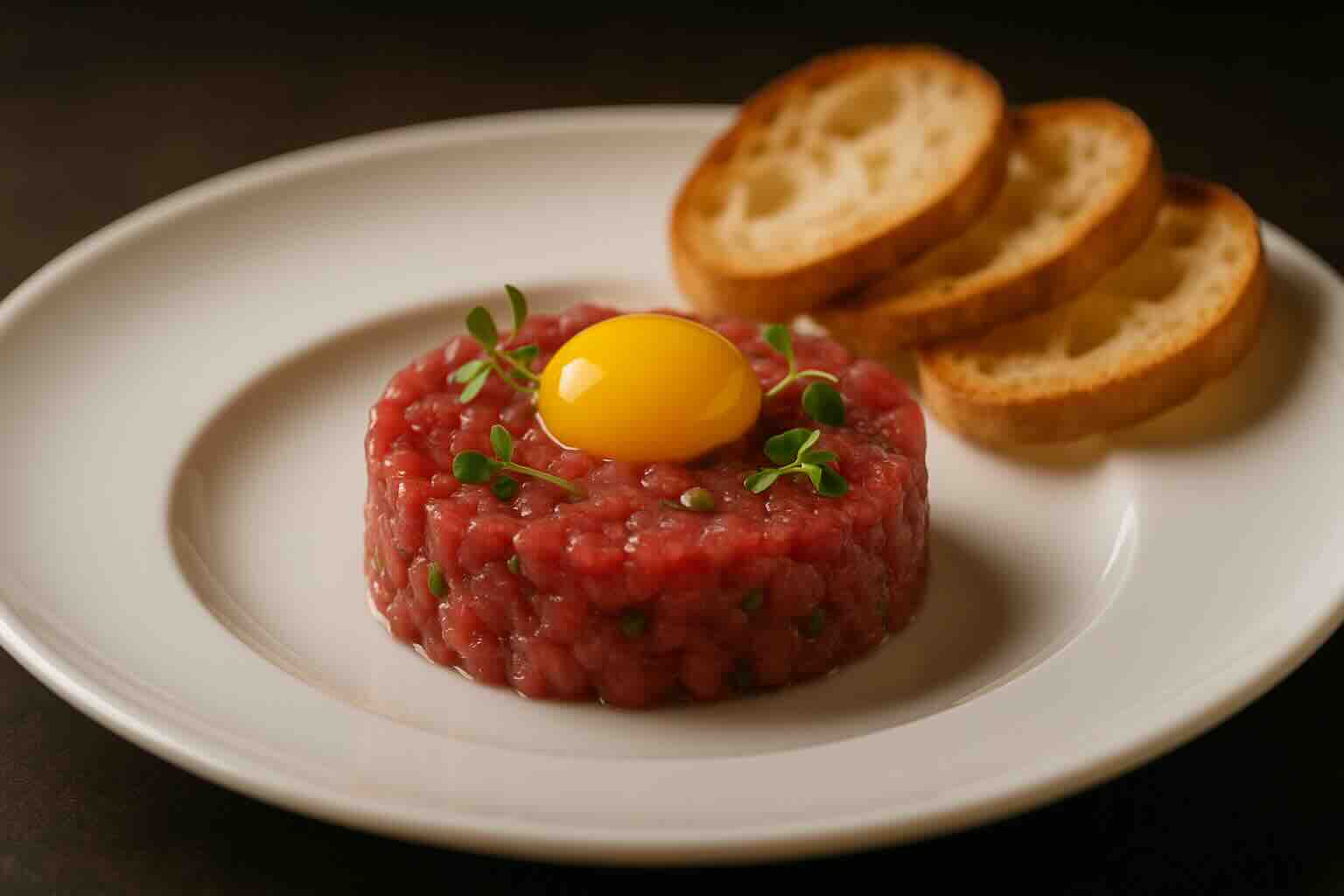
Beef tartare is raw beef, trimmed and cut by hand into fine dice, seasoned cold and served immediately. The classic French version — the one served in every Paris bistro under the name steak tartare — is built on four things: a lean whole-muscle cut, sharp aromatics (shallot, capers, cornichons), a savoury backbone of Dijon and Worcestershire, and an egg yolk folded through at the table. Nothing is cooked, nothing is blended, and the whole dish comes together in about twenty minutes.
You will also see it spelled beef tartar or called steak tartare, and it is often searched as “beef tar tar” — it is all the same dish. The name has nothing to do with the mayonnaise-based sauce served with fish; tartare vs tartar sauce untangles the spellings and the history.
Most of the work is buying and knife work rather than cooking. Choose a lean, tender cut — see the best cut of beef for tartare for the shortlist — and ask the butcher to cut it fresh from a whole muscle rather than taking pre-ground beef. If you want the full ingredient list explained first, start with what beef tartare is made of. Then keep it cold, cut it small and even, and dress it at the last possible moment.
Instructions
- Place beef in freezer for 30 minutes to firm up. This makes cutting easier and safer.
- Using a very sharp knife, trim any fat or sinew from the beef. Cut into 1/4-inch dice, working on a chilled cutting board.
- In a chilled bowl, combine the diced beef with shallots, capers, cornichons, and parsley.
- In a separate bowl, whisk together the mustard, Worcestershire sauce, and the hen's egg yolk (if using). Season with salt and pepper.
- Gently fold the dressing into the beef mixture. Add a drizzle of olive oil and adjust seasoning to taste.
- Divide the tartare among 4 chilled plates, shaping with a ring mold if desired.
- Make a small indentation on top of each portion. Crack each quail egg (snip the shell with a knife tip or small scissors), separate it, and slip one yolk into each hollow.
- Serve immediately with toasted baguette slices and a simple green salad.
Nutrition Information (per serving)
How much beef tartare per person?
Plan 80–100g (3–3.5oz) of trimmed beef per person as a starter and 150–200g (5–7oz) as a main course, usually with frites and a green salad. This recipe's 400g makes four starters or two generous mains. The table scales the dressing in the same proportions; buy roughly 15–25% more beef than the trimmed weight to allow for sinew and silverskin. The longer reasoning, by protein and course, is in how much tartare per person.
| Serves | Trimmed beef (buy) | Shallots | Capers | Cornichons | Dijon | Worcestershire | Yolks in dressing | Yolks on top |
|---|---|---|---|---|---|---|---|---|
| 1 starter | 100g (buy ~120g) | ½ shallot | 1½ tsp | 1½ tsp | ¾ tsp | ½ tsp | none | 1 |
| 2 starters or 1 main | 200g (buy ~240g) | 1 | 1 tbsp | 1 tbsp | 1½ tsp | 1 tsp | none, or ½ | 2 (1 for a main) |
| 4 starters or 2 mains (this recipe) | 400g (buy 450–500g) | 2 | 2 tbsp | 2 tbsp | 1 tbsp | 2 tsp | 1 | 4 (2 for mains) |
| 6 starters or 3–4 mains | 600g (buy ~720g) | 3 | 3 tbsp | 3 tbsp | 1½ tbsp | 1 tbsp | 1–2 | 6 (3–4 for mains) |
| 10 starters or 5–6 mains | 1kg (buy ~1.2kg) | 5 | 5 tbsp (⅓ cup) | 5 tbsp (⅓ cup) | 2½ tbsp | 5 tsp (about 1½ tbsp) | 2–3 | 10 (5–6 for mains) |
Shallots are medium, about 30g each. The yolk in the dressing is a hen's yolk; the yolk on top is one quail or small hen's yolk per plate. If you skip the yolk on top, add one more yolk to the dressing per 400g of beef. Taste before plating: capers, cornichons and Worcestershire vary a lot in salt and sharpness.
Variations
- Tartare aller-retour. Sear the formed disc for a few seconds per side in a screaming-hot pan so the outside takes colour while the centre stays raw — useful if a diner is uneasy about a fully raw plate.
- Italian-leaning. Drop the Worcestershire and cornichons; finish with good olive oil, lemon, shaved Parmesan, and a little chopped celery heart.
- Asian-leaning. Swap mustard and Worcestershire for soy, sesame oil, and a touch of gochujang — this moves the dish toward Korean yukhoe.
- Yolk-free. Skip the raw yolk and bind with a little extra mustard or a spoon of pasteurised mayonnaise — see egg yolks on raw preparations.
Troubleshooting
- Texture turned mushy. The meat was warm or over-handled, or it was ground rather than hand-cut. Keep it cold, cut by hand, and fold — don't mash. See master knife skills.
- Tastes flat. Season and acidulate just before serving; salt and lemon or vinegar wake the dish up. Taste and adjust at the last moment.
- Too loose / watery. Drain capers and cornichons well, and don't dress until just before plating.
- Weeping on the plate. Chill the plates, mould at the last minute, and add the yolk only as it goes to the table.
Make-ahead & storage
Tartare is a serve-immediately dish. You can dice the beef and prep the garnishes up to about two hours ahead and keep them separately, covered and cold, then season and combine just before serving. Do not dress it in advance, and do not keep leftovers — raw beef that has sat at the table is not safe to save. For the full reasoning, see the complete food safety guide.
Frequently Asked Questions
Is it safe to eat raw beef?
Yes, when properly sourced and handled. Always use the freshest beef from a trusted butcher, keep it below 4°C/40°F, cut it just before serving, and eat it the same day. Never save leftovers. For the full picture — including who should avoid it — see our food safety guide.
Do I have to use raw egg yolk?
No. The yolk on top is traditional but optional. If you want to skip it — or if you're cooking for someone in a higher-risk group — our guide to egg yolks on raw preparations walks through pasteurised options and yolk-free alternatives that do the same job.
How should I plate it?
Cold plates, ring mold optional, less garnish than feels right. The longer how-to is in our serving and plating guide.
What cut of beef is best for tartare?
Beef tenderloin (fillet, filet mignon) is the classic choice: very tender, lean and mild, and the tail end is cheaper than centre-cut steaks. Sirloin and top round are good leaner, beefier alternatives if you trim them carefully and cut them finely. Whatever you buy, it must be a whole-muscle piece, not mince. Our guide to the best cut of beef for tartare compares tenderloin, sirloin, top round, flank and others on texture, flavour and price.
Can I make this ahead of time?
It's best served immediately after preparation. If needed, you can dice the beef up to 2 hours ahead and store covered in the refrigerator, then mix with other ingredients just before serving.
Should beef tartare be served cold or at room temperature?
Cold. Serve it straight from the fridge onto chilled plates and eat it within minutes; never let it come up to room temperature on the counter or table. Very cold food tastes a little muted, so season assertively and taste just before plating rather than warming the meat to bring out flavour.
What knife do you use for beef tartare?
A long, very sharp chef's knife (20–24cm / 8–10in) or a slicing knife. Length lets you cut clean slices in one pull instead of sawing, which keeps the dice neat rather than mushy. Sharpen or hone it before you start. See the best knife for tartare for specific styles.
What sauce goes with beef tartare?
Classic beef tartare has no separate sauce: the dressing of Dijon mustard, Worcestershire, egg yolk and a little oil is folded straight into the meat. Bistros often put Worcestershire, Tabasco and sometimes ketchup on the table so diners can adjust, and serve frites with mayonnaise alongside. For sides and pairings, see what to serve with beef tartare.
What should I ask the butcher for?
Ask for a piece of lean, whole-muscle beef for tartare — tenderloin tail, sirloin or top round — cut from the whole piece in front of you, not pre-cut or ground. Ask them to trim the silverskin and sinew if you prefer, keep it wrapped and cold, and buy it the day you serve it. Allow about 15–25% extra over your trimmed weight.
Is flank steak good for tartare?
It can work, but it is not the first choice. Flank has plenty of beefy flavour but long, coarse fibres, so it needs thorough trimming and a very fine dice cut across the grain to avoid chewiness. Tenderloin, sirloin or top round give a more tender result with less effort.
How many egg yolks for 1 kg of beef tartare?
For 1kg of trimmed beef, fold 2–3 hen's egg yolks into the dressing, plus one yolk on top of each plate if you serve it the classic way — 10 as starters or 5–6 as mains. If you skip the yolks on top, use about 4–5 yolks in the mix. Use pasteurised eggs for anyone in a higher-risk group.
What is prepared vs unprepared tartare?
Prepared (préparé) tartare arrives already seasoned and mixed by the kitchen. Unprepared (non préparé or à préparer) tartare comes as plain chopped beef with the yolk and condiments on the side, so you mix it to taste at the table. Our guide to prepared vs unprepared beef tartare explains how to order each.
Can I use dry-aged beef?
Yes. Moderately dry-aged beef gives a deeper, nuttier tartare, though long ageing can taste strong raw. Buy it from a butcher who ages in controlled conditions, and trim away all of the dried outer crust before dicing. See dry-aged vs wet-aged beef for tartare.
You May Also Like
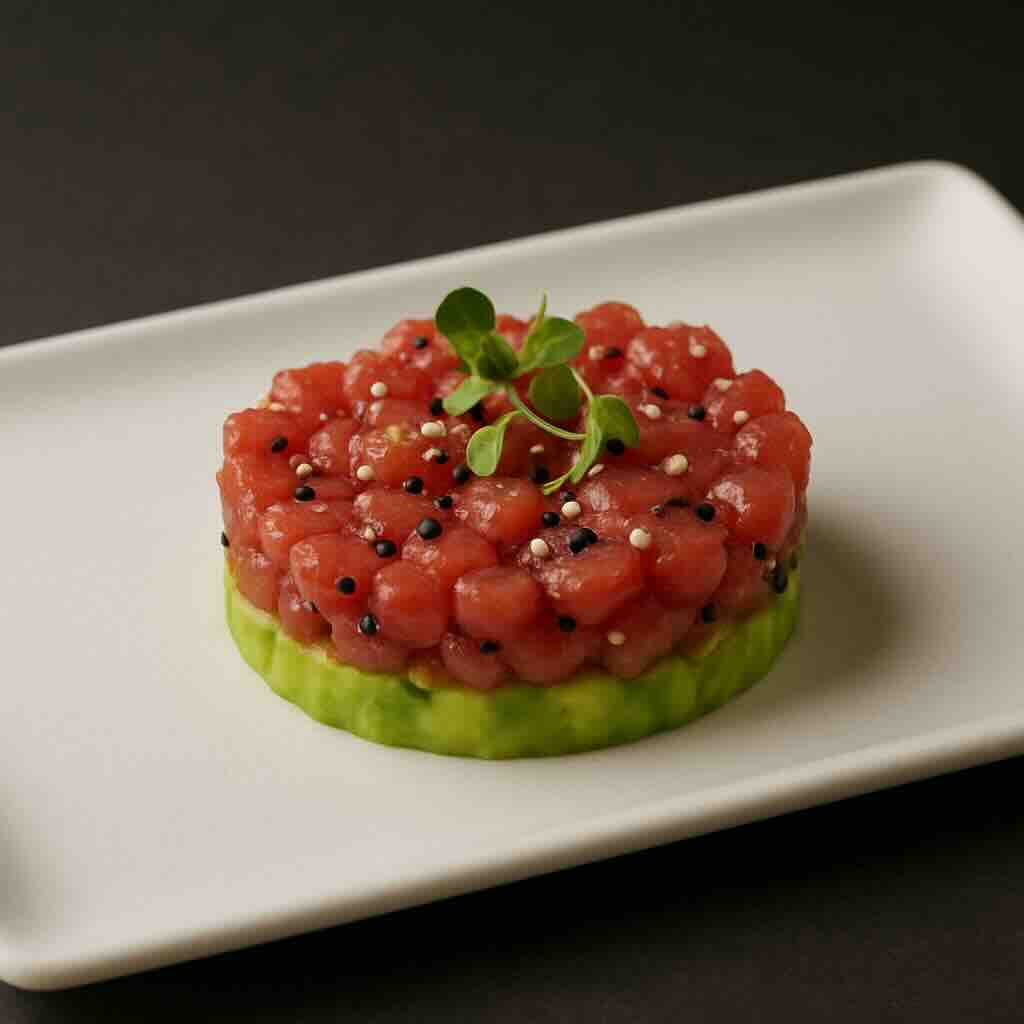
Tuna & Avocado Tartare
Asian-inspired raw tuna dish
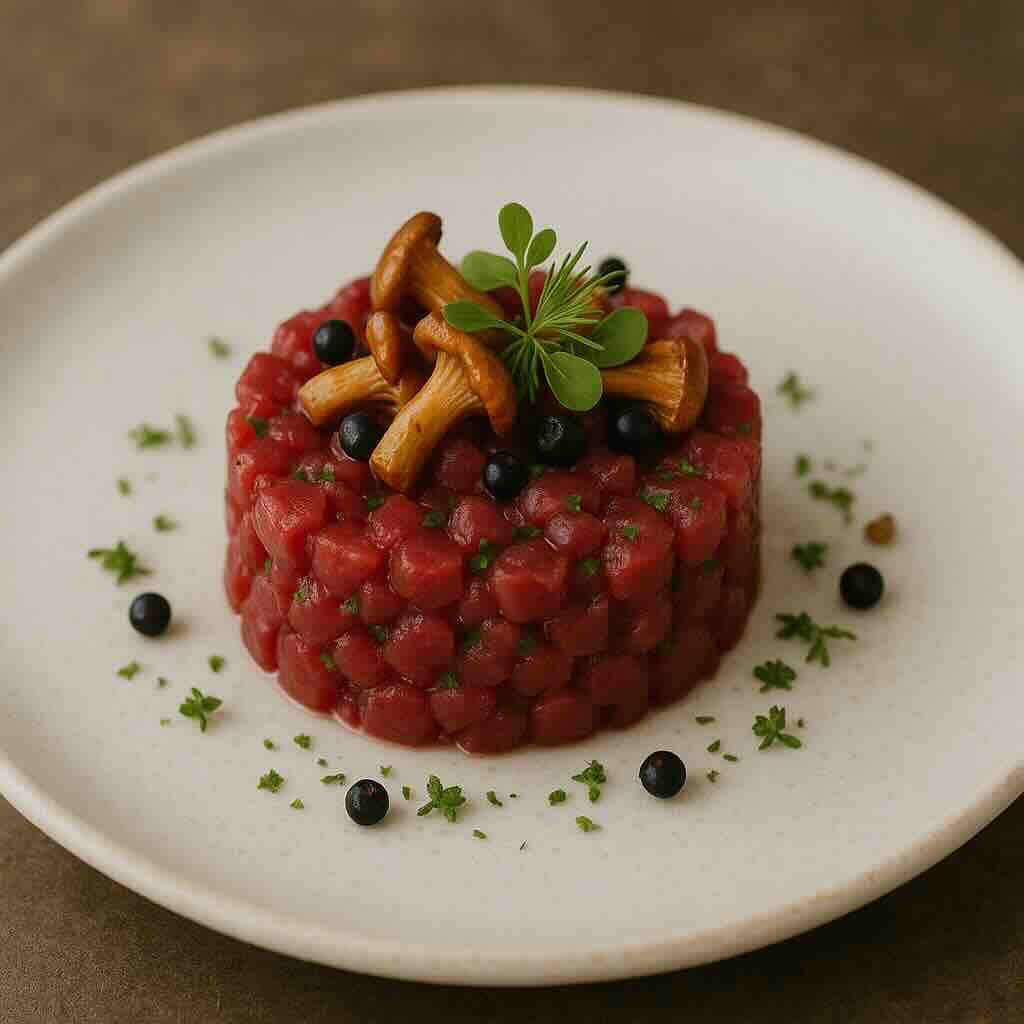
Venison & Juniper Tartare
Game meat with forest flavors
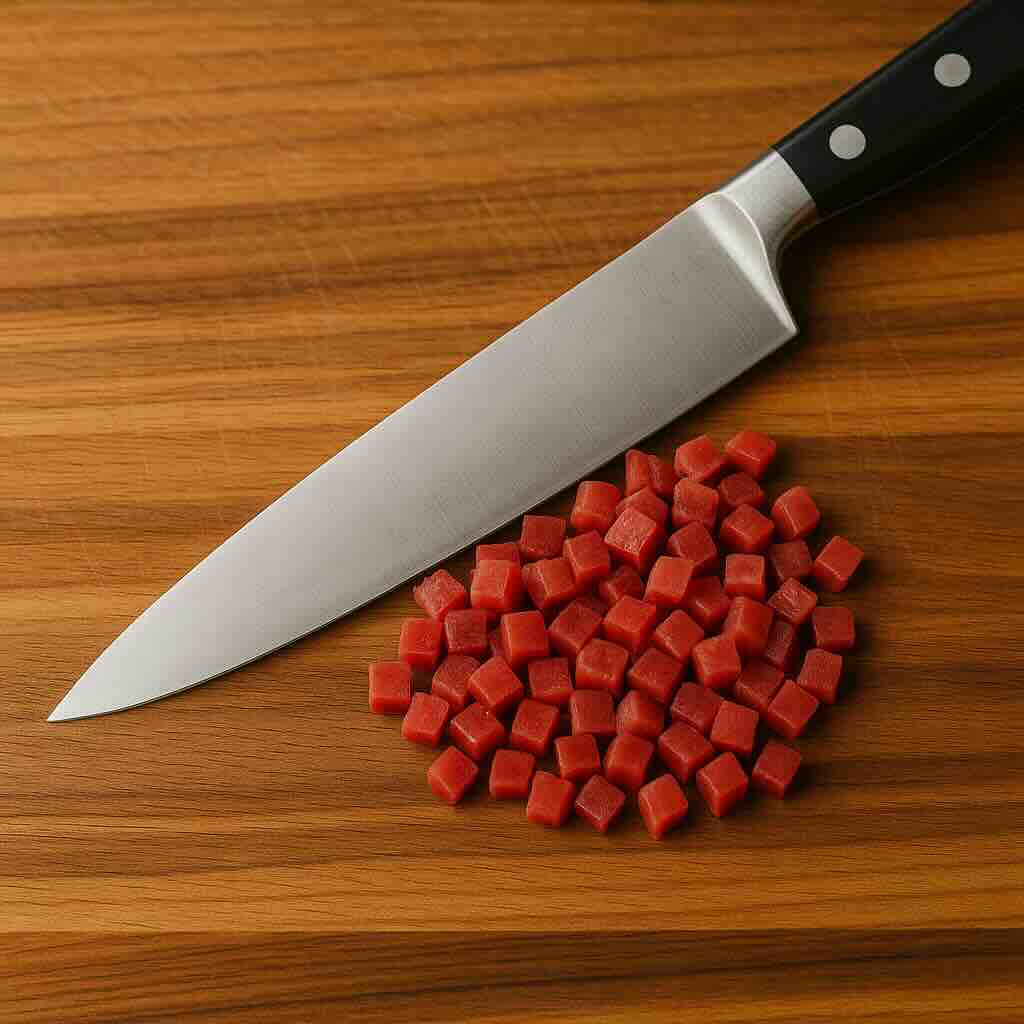
Knife Skills for Tartare
Master the perfect dice