The short, honest answer is: yes, beef tartare can be eaten safely — but only under conditions, and not by everyone. It is raw meat, so the risk never falls to zero. What you can do is make an informed choice and stack the odds heavily in your favour through sourcing, temperature, and speed.
This article explains where the real risk lives, why raw beef is treated differently from raw chicken or pork, and what actually moves the needle. None of it overrides the food-safety guidance of the authority where you live, which takes precedence over anything written here.
The honest answer: yes, with conditions
Healthy adults eat beef tartare in restaurants every day without incident, and it is a long-standing dish in French and many other cuisines. That track record is real, but it rests on assumptions: good meat, kept cold, handled cleanly, cut to order, and served promptly. Remove those conditions — warm meat, a dirty board, a long wait under a lamp — and the picture changes. Safety here is not a property of the dish itself; it is a property of how the dish is handled.
Why raw beef is different from raw chicken or pork
The single most important fact about beef tartare is where contamination lives. On a whole, intact cut of beef, harmful bacteria such as E. coli and Salmonella are overwhelmingly a surface problem. The interior of an intact muscle is, in practice, close to sterile because the bacteria are introduced during slaughter and handling and sit on the outside.
This is why a steak can be seared on the outside and left rare in the middle: the heat hits the surface where the bacteria are. It is also the logic behind tartare made from whole-muscle beef that is trimmed and cut just before serving — the cook is working with the protected interior.
Chicken and pork are different stories. Poultry frequently carries Salmonella and Campylobacter in ways that are not confined to the surface, and the consequences of getting it wrong are higher. Pork historically carries parasite concerns (such as Trichinella) and other pathogens. That is why "raw chicken tartare" is not a mainstream idea and why raw pork dishes like German Mett are eaten only within tightly regulated, very-fresh local supply chains. The lesson is not that raw beef is harmless — it is that the type of risk and how it is distributed differ by animal.
The real risks, named plainly
The pathogens that matter most for raw beef are surface bacteria, chiefly:
- E. coli (including Shiga toxin-producing strains such as O157:H7). These can cause severe illness and, in vulnerable people, serious complications. They are a surface contaminant on whole cuts.
- Salmonella. Less associated with beef than with poultry and eggs, but still possible, again largely on the surface.
- General spoilage and cross-contamination bacteria. Anything that lands on the meat from a dirty knife, board, hand, or another raw food can multiply if the meat sits warm.
Note what is not on this list as a primary beef concern: parasites of the kind associated with raw pork or some wild fish. That is a meaningful difference, but it does not make beef tartare a free pass.
How sourcing, cold chain, and fast prep control the risk
Because the danger is mostly on the surface and grows with time and warmth, three levers do most of the work:
- Sourcing. Buy whole-muscle beef from a butcher or supplier you trust, ideally telling them it will be eaten raw so they can advise. Avoid pre-ground beef for tartare: grinding takes surface bacteria and mixes them all through the meat, which is exactly what you do not want. Grind or hand-chop yourself, from a freshly trimmed whole cut, just before serving.
- Cold chain. Keep the meat cold from shop to plate. Cold slows bacterial growth dramatically. Refrigerate promptly, work with chilled bowls and tools, and keep the meat out of the danger-temperature zone. Follow the specific temperatures and times your local authority publishes.
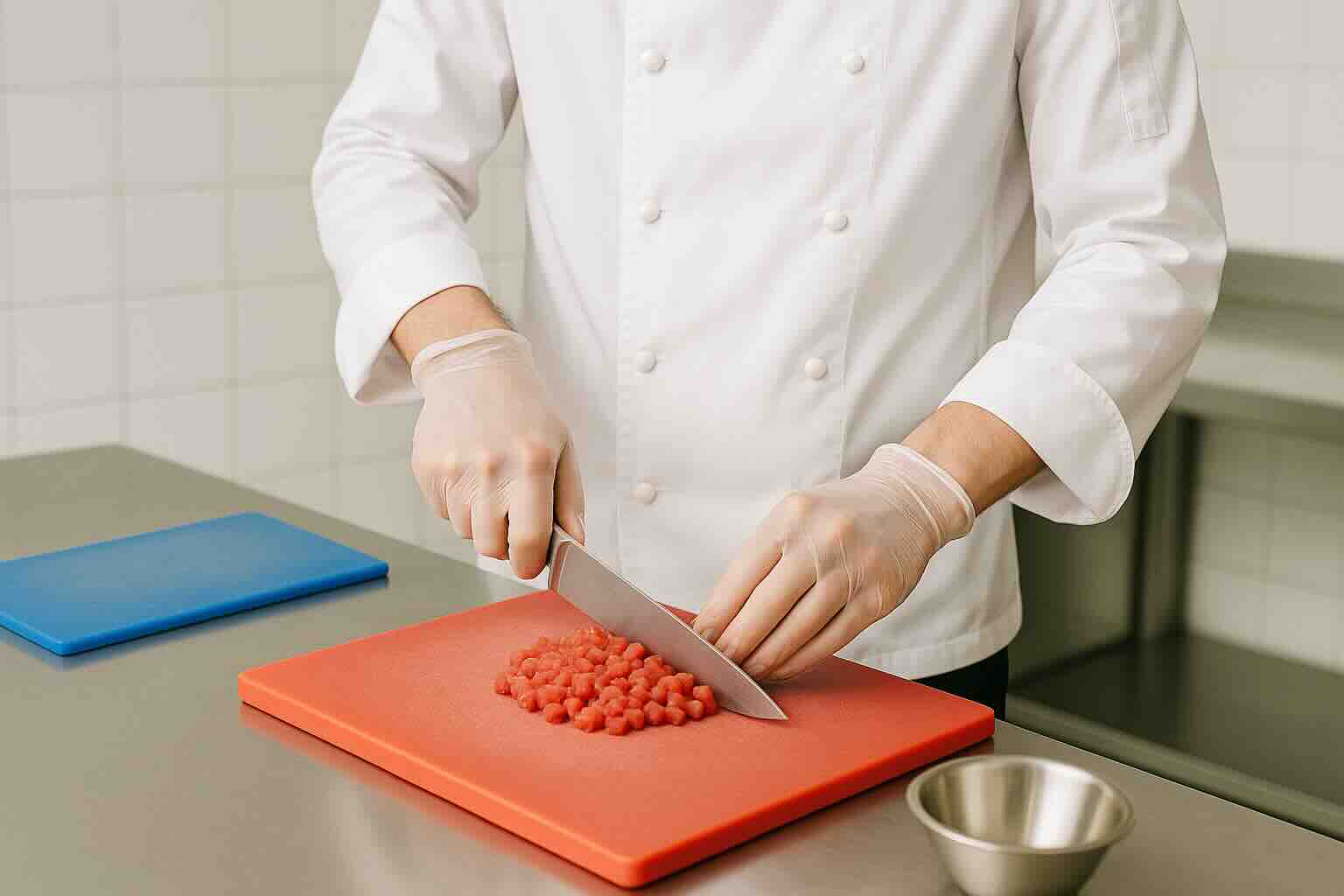
- Speed and cleanliness. Trim the exterior away, cut to order, and serve immediately. Use a scrupulously clean board, knife, and hands, and never let raw-meat surfaces touch ready-to-eat foods.
These steps do not sterilise the meat. They reduce how much bacteria is present and limit the time it has to multiply, which is the realistic goal.
The searing-the-surface option
One practical middle path is to briefly sear the exterior of a whole piece of beef in a hot pan — just a few seconds on each face — then chill it, trim any cooked edge if you wish, and dice the raw interior for tartare. Because contamination is concentrated on the surface, searing it targets the bacteria where they are while leaving the centre raw.
This is a risk-reduction step, not a guarantee, and it is most relevant when you are less certain about handling upstream. It does nothing for meat that has already been ground, where the contamination is no longer only on the outside. It also will not rescue meat that is spoiled or has been mishandled.
Restaurant versus home
A good restaurant has advantages a home cook usually lacks: a reliable supply chain, refrigeration that holds temperature, separate equipment, trained staff, and the volume to use very fresh meat quickly. A reputable kitchen serving tartare regularly is, in many cases, a lower-risk place to try it for the first time.
At home you can absolutely make safe tartare, but you are responsible for every link in the chain. Be honest about your equipment and habits. If you cannot keep the meat reliably cold, cannot source good whole-muscle beef, or cannot serve it promptly, that is a reason to wait — or to cook the dish instead.
The bottom line
Beef tartare is reasonably safe for healthy adults when it is made from well-sourced whole-muscle beef, kept cold, handled cleanly, cut to order, and eaten promptly. It is not appropriate for vulnerable groups, and it is never risk-free. Treat it as a dish that rewards care: the safety comes from the process, not from luck.