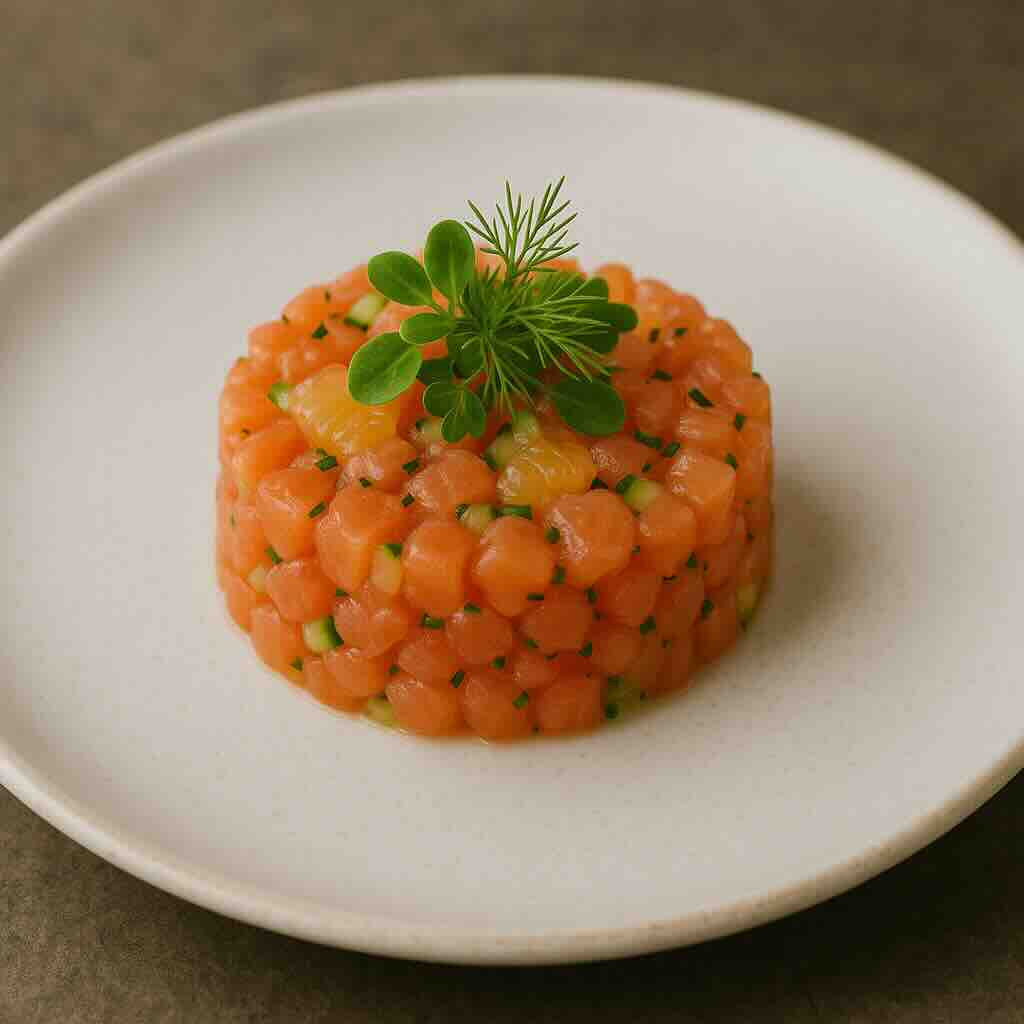
Salmon Citrus Tartare
Instructions
- Chill salmon in freezer for 20 minutes to make cutting easier. Remove skin and any pin bones.
- Using a sharp knife, cut salmon into 1/4-inch dice. Work on a chilled cutting board and keep salmon cold.
- Prepare citrus segments: Remove peel and pith from grapefruit and orange, then cut between membranes to release segments. Reserve any juice.
- In a chilled bowl, gently combine diced salmon with minced shallot, cucumber, dill, and capers.
- In a separate bowl, whisk together lime juice, lime zest, olive oil, Dijon mustard, and 2 tablespoons reserved citrus juice. Season with salt and white pepper.
- Drizzle the citrus dressing over the salmon mixture and fold gently to combine. Taste and adjust seasoning.
- Using a ring mold or spoon, divide tartare among 4 chilled plates. Arrange citrus segments around each portion.
- Garnish with microgreens and serve immediately with crispy rye bread or water crackers.
Nutrition Information (per serving)
Frequently Asked Questions
What is sushi-grade salmon?
"Sushi-grade" is a marketing term, not a regulated standard, but it points at fish that has been frozen to a specified temperature/time to control parasites and handled for raw use. Buy from a reputable fishmonger and confirm the freezing protocol — we cover this in detail in our guide to selecting safe seafood.
Does the lemon juice "cook" the salmon?
No. A brief acid contact firms the surface of the cube and brightens the flavour, but it does not penetrate or pasteurise the fish. The dish is, for safety purposes, raw. We unpack what brief curing actually does in raw, briefly cured, or cooked.
Can I use farmed salmon?
Yes, high-quality farmed salmon is often safer for raw consumption than wild salmon, as it's less likely to contain parasites. Look for organic or responsibly farmed options.
How long can I store the prepared tartare?
Salmon tartare is best consumed immediately. If necessary, it can be stored covered in the refrigerator for up to 2 hours before serving.
Can I substitute other citrus fruits?
Absolutely! Try blood oranges, tangerines, or pomelo. Each will bring a unique flavor profile to the dish.
You May Also Like
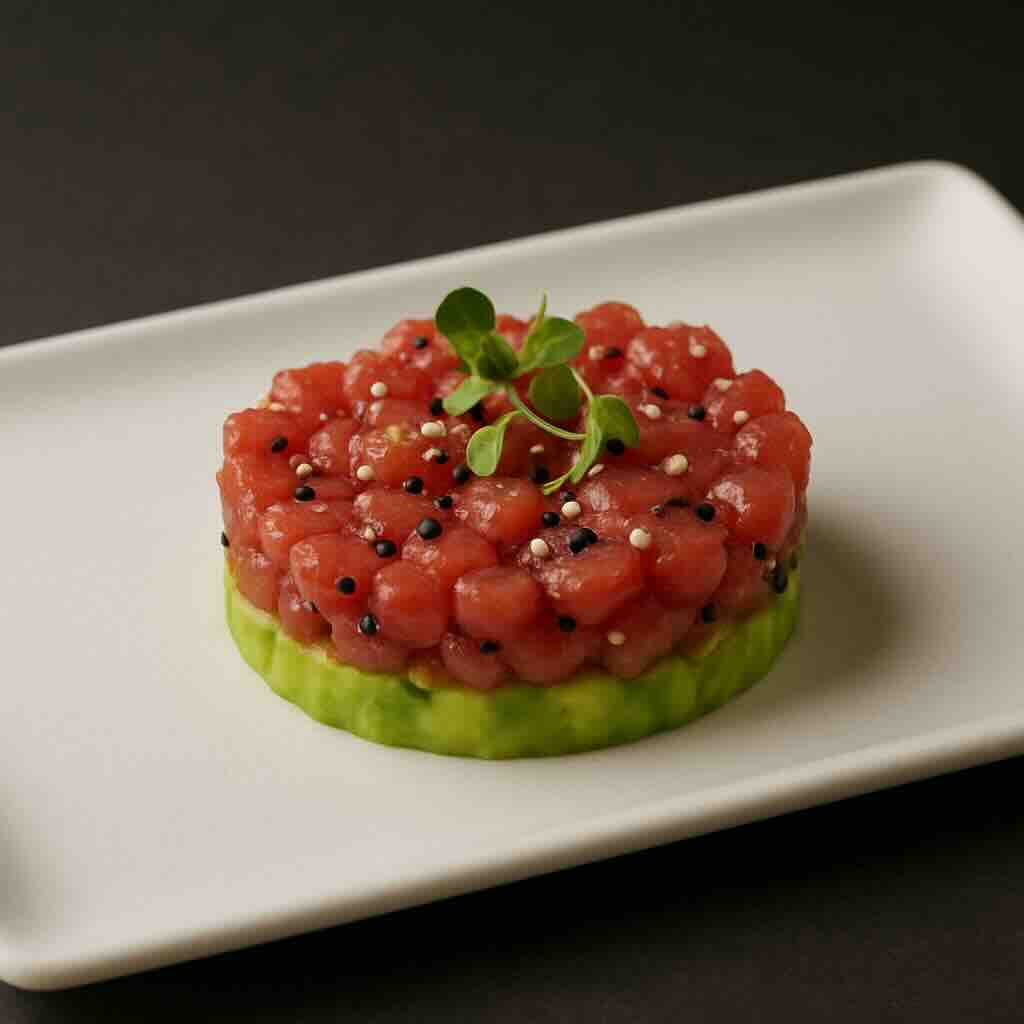
Tuna & Avocado Tartare
Asian-inspired raw tuna with creamy avocado
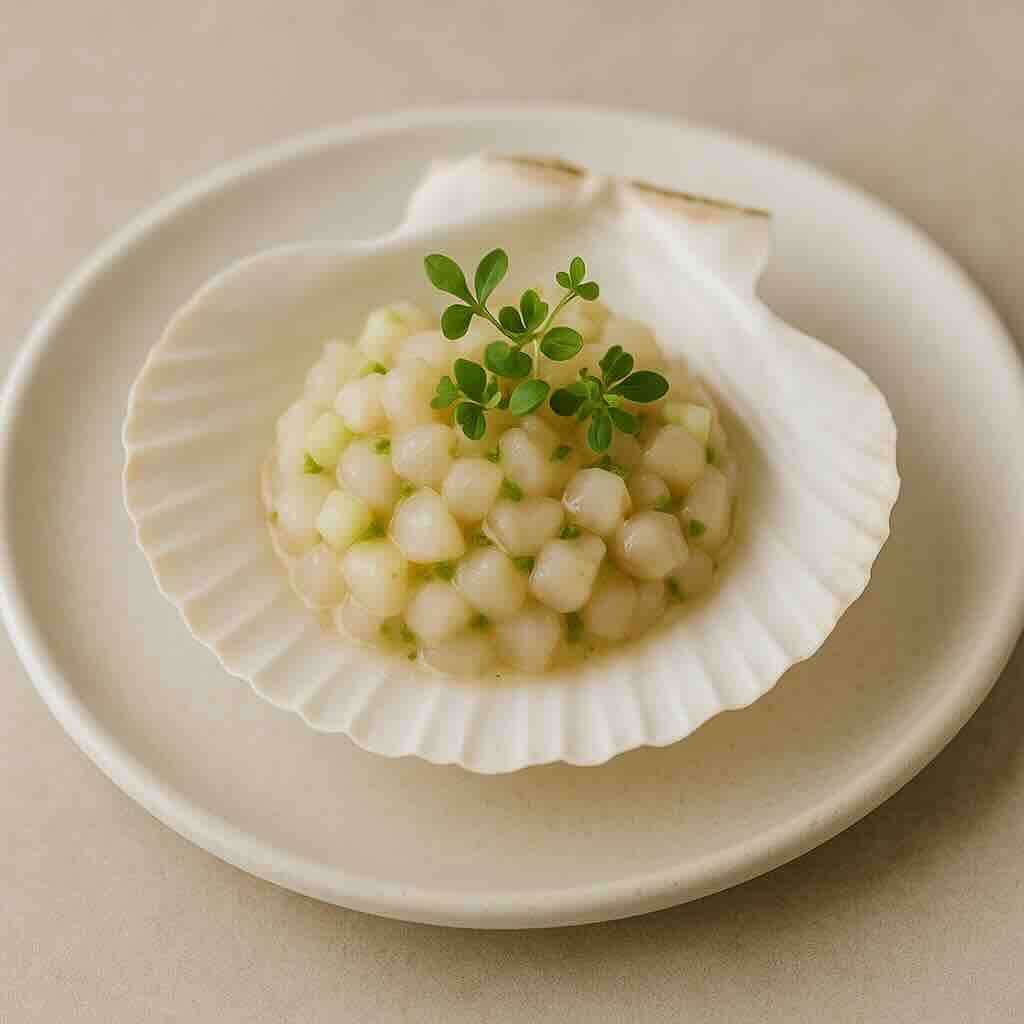
Scallop & Apple Tartare
Sweet scallops with crisp green apple
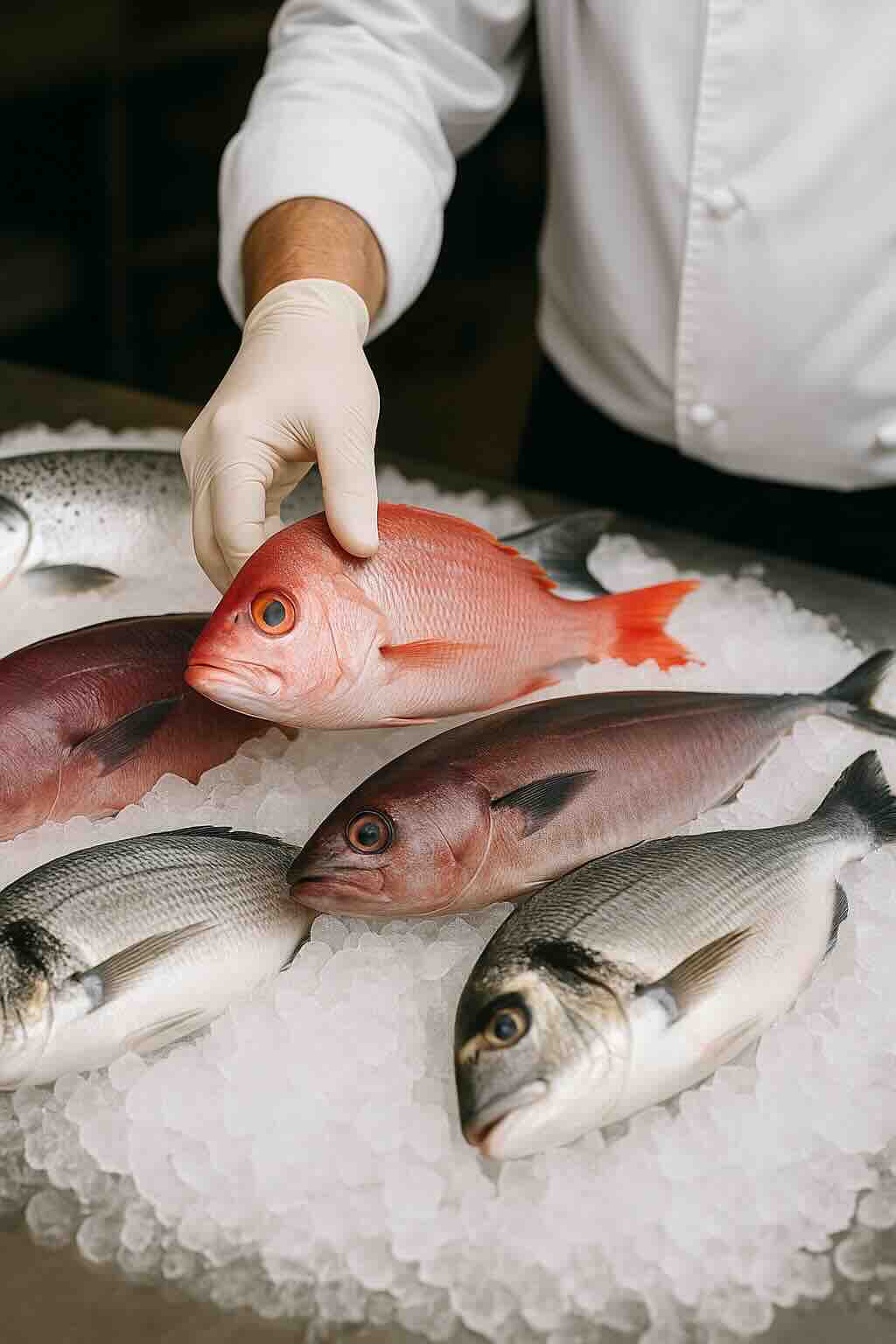
Selecting Safe Seafood
Essential guide to buying fish for raw dishes