Plain beef tartare is one of the most diet-friendly dishes on a restaurant menu if you're eating low-carb. It is essentially seasoned raw beef and fat, with almost nothing in it that pushes up carbohydrates. The short answer to the title question is: yes, beef tartare fits keto, carnivore, and paleo — with a few small caveats, and with the bread set aside.
Below we look at the actual macro profile, then walk through each diet, the seasonings that add trace carbs, and a safety reminder, because none of this matters if the meat isn't handled properly.
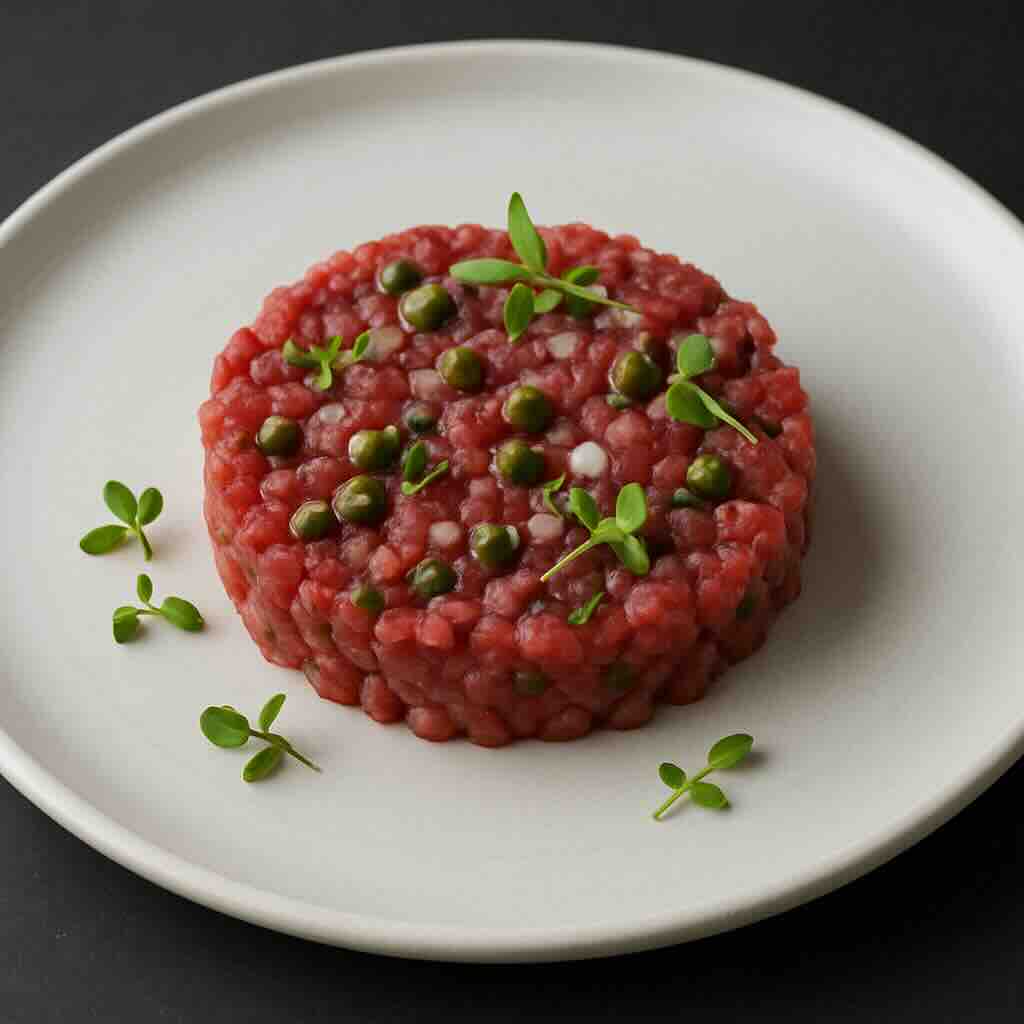
The macro profile of beef tartare
Beef tartare is built from lean beef, a little fat, a raw egg yolk in most versions, and small amounts of seasoning. That gives a dish that is high in protein, moderate-to-high in fat, and very low in carbohydrate.
As a rough guide for a typical starter portion of around 100 g (about 3.5 oz) of seasoned beef plus a yolk (these are estimates — actual values depend on the cut and how it's seasoned):
| Component | Protein | Fat | Carbohydrate |
|---|---|---|---|
| ~100 g lean beef | ~20–22 g | ~6–12 g | ~0 g |
| 1 egg yolk | ~2.7 g | ~4.5 g | ~0.6 g |
| Seasonings (capers, mustard, shallot, Worcestershire) | ~0–1 g | ~0 g | ~1–3 g |
| Approx. total (meat course, no bread) | ~23–26 g | ~11–17 g | ~2–4 g |
These are ballpark estimates for orientation, not precise nutrition facts. Lean cuts will be lower in fat; if you add olive oil or use a fattier blend, fat goes up. The carbohydrate figure assumes you skip the bread, which is where nearly all the carbs in a served plate of tartare actually come from.
The reason tartare lands so well on low-carb diets is that it's one of the few restaurant dishes built almost entirely from a single whole food. There's no batter, no flour-thickened sauce, no hidden sugar in a glaze. What you see is what you eat: beef, fat, a yolk, and a pinch of sharp seasoning. That makes the macros unusually easy to reason about compared with, say, a stew or a marinated dish where the carbohydrate is harder to pin down.
Is beef tartare keto?
Yes. The meat itself contributes essentially no carbohydrate, and the fat content suits a ketogenic macro split well. The total carb load from the seasonings is typically just a few grams, which fits comfortably within most ketogenic carb limits.
If anything, tartare can be too lean for some keto eaters, since the dish is often made from a very lean cut. Keto leans on fat for energy, so if you're using tartare as a meal rather than a starter, it's reasonable to enrich it — a drizzle of good olive oil, a knob of butter, or a fattier beef blend brings the fat-to-protein ratio closer to what most ketogenic plans aim for. The egg yolk helps here too.
The one thing that breaks keto is the bread or toast points served alongside. Eat the tartare on its own, with extra greens, fries-style swaps like cucumber rounds, or a pork-rind cracker if you want crunch, and the plate stays keto.
Is tartare okay on carnivore?
Mostly, with the strictest version requiring edits. A pure carnivore approach is animal foods only — meat, fish, eggs, sometimes dairy. Plain beef and the egg yolk are perfectly on-plan. The plant-based seasonings (capers, mustard, shallot, Worcestershire sauce, parsley) are not, by a strict reading.
In practice, many people on a relaxed carnivore approach keep salt and pepper and skip the rest, or use only minimal seasoning. A "carnivore tartare" is really just very fresh, finely chopped beef with salt, a yolk on top, and maybe a little tallow or butter for richness. Whether the small amount of seasoning matters is a personal call about how strict you want to be.
Is tartare paleo?
Largely yes. Paleo centers on unprocessed animal and plant foods and avoids grains, legumes, refined sugar, and most processed condiments. Beef, egg yolk, shallot, capers, herbs, and lemon are all paleo-friendly.
The grey areas are the condiments: classic Worcestershire sauce often contains added sugar and other non-paleo ingredients, and mustard can contain additives depending on the brand. Use a clean mustard and either skip Worcestershire or use a compliant substitute, and skip the bread, and beef tartare sits well within paleo.
Where the trace carbs come from
- Bread / toast / fries — by far the largest carb source on a served plate. This is the non-keto, non-carnivore, non-paleo part. Set it aside or swap it.
- Worcestershire sauce — contains a small amount of sugar; trace per serving but not carnivore- or strict-paleo-compliant.
- Mustard, capers, cornichons, shallot — each adds only a gram or two of carbohydrate at most, but they are plant foods (relevant for carnivore).
- Ketchup or sweet sauces — not traditional in tartare; avoid if you're watching carbs.
The raw-food and nutrient angle
Part of the appeal of tartare on meat-based diets is that the beef is uncooked, which some people prefer for texture and for the sense that nothing has been lost to heat. Raw beef is a good source of high-quality protein, B vitamins (including B12), iron, and zinc. We cover the nutrition in more depth in our dedicated article on the nutritional profile of tartare, linked below; the practical point here is simply that a plain beef tartare is nutrient-dense and very low in carbohydrate.
Keep expectations realistic, though: "raw" does not mean "more nutritious in every respect," and a balanced diet matters more than any single dish. Treat tartare as a genuinely diet-compatible option, not a magic food.
Ordering and making it diet-friendly
A few practical moves keep tartare on-plan whether you're at a restaurant or in your own kitchen:
- Decline or set aside the bread. Ask for the tartare without toast points, or simply leave them. This single change removes most of the carbohydrate from the plate.
- Ask about the seasoning if you're strict. Worcestershire and some prepared mustards contain sugar. For paleo, a clean mustard and a compliant sauce solve it; for carnivore, plain salt and pepper.
- Add fat if it's your main. Olive oil, butter, or a fattier blend turns a lean starter into a satisfying low-carb meal.
- Swap the crunch. Cucumber rounds, endive leaves, or pork-rind crackers give you a vehicle without the carbs of bread.
None of these change what tartare fundamentally is — they just let you keep the parts that fit your diet and leave the parts that don't.