Both tartare and sashimi are built on raw protein, both are served cold, and both reward the freshest possible ingredient. That shared foundation is exactly why people confuse them. But they come from different culinary traditions and they treat the raw ingredient in almost opposite ways. Once you see the difference in the cut and the seasoning, you will never mix the two up again.
This article explains what actually separates a tartare from a plate of sashimi, why a tuna tartare is not the same thing as tuna sashimi, and which dish suits which occasion. As always, our safety guidance defers to local food authorities; treat anything specific here as our editorial position rather than regulation.
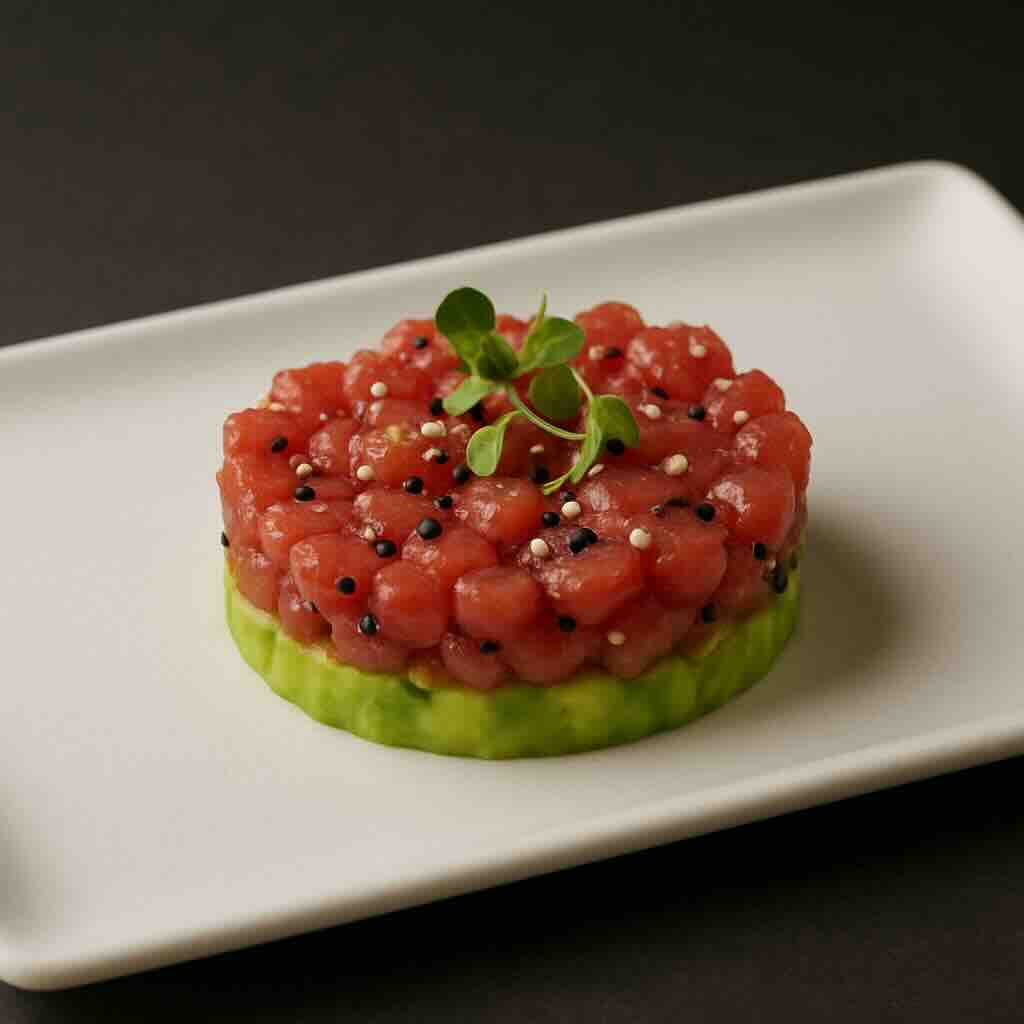
The short answer
Tartare is raw protein diced and seasoned. Sashimi is raw protein sliced and served plain. Tartare is a French preparation defined by what you mix into the meat or fish; sashimi is a Japanese preparation defined by the precision of the cut and the quality of the fish itself, with seasoning kept to the side. That single contrast — mixed-and-seasoned versus sliced-and-bare — drives almost every other difference.
The cut
For tartare, the protein is cut into small dice or hand-chopped. The pieces are deliberately small so the seasoning coats every surface and the texture turns soft and cohesive. A good tartare holds together loosely when molded but breaks apart on the fork.
For sashimi, the fish is cut into clean, deliberate slices — often a few millimetres thick, with the angle and pressure of the knife chosen to suit the species. The slice is the dish. There is no mixing, no molding, and no attempt to bind the pieces together. The skill is in the blade work and the selection of the cut, not in the seasoning.
Seasoning and sauce
Tartare is seasoned into the protein. A classic beef tartare carries mustard, capers, shallot, Worcestershire, salt, pepper, and often a raw yolk folded through or placed on top. A tuna tartare might use soy, sesame oil, scallion, and chili. The seasoning is integral; without it, you simply have minced raw protein.
Sashimi keeps seasoning to the side. You dip the slice lightly in soy sauce, perhaps with a touch of wasabi, and garnishes such as shredded daikon, shiso leaf, or pickled ginger sit on the plate rather than being mixed in. The fish is meant to taste of itself. Over-saucing sashimi is generally considered a mistake.
Cultural origin
Tartare is rooted in French and broader European cuisine; the term and its modern form belong to the Parisian brasserie tradition, and it later expanded to fish and vegetables. Sashimi is Japanese, with a long history tied to the prizing of pristine fish and the discipline of the cut. The two dishes were not designed in conversation with each other — the modern resemblance, especially in fish tartares, comes from later cross-pollination in restaurants.
Typical proteins
Tartare is most associated with beef, but it has become a category: salmon, tuna, scallop, venison, bison, and even vegetables like beet and tomato all appear as tartare. Sashimi is overwhelmingly seafood — tuna, salmon, yellowtail, sea bream, mackerel, scallop, octopus, and more — though a few non-fish examples exist in Japan. You will rarely see beef called sashimi, and you will rarely see a thin plain slice of fish called tartare.
Side-by-side comparison
| Feature | Tartare | Sashimi |
|---|---|---|
| Preparation of protein | Diced or hand-chopped | Sliced into clean pieces |
| Seasoning | Mixed into the protein | Served plain; condiments to the side |
| Typical sauce | Mustard, capers, soy, yolk, oil | A light dip of soy and wasabi |
| Culinary origin | French / European | Japanese |
| Common proteins | Beef, tuna, salmon, scallop, game, vegetables | Tuna, salmon, yellowtail, sea bream, scallop, octopus |
| Texture goal | Soft, cohesive, seasoned | Clean slice; texture of the fish itself |
| Served with | Toast, baguette, fries | Rice on the side, daikon, ginger, wasabi |
Which is "better"?
Neither is better; they suit different moods. Choose sashimi when you want to taste a single superb piece of fish with as little interference as possible. Choose tartare when you want a seasoned, composed bite where the dressing is part of the pleasure. A first-timer nervous about raw protein often finds tartare friendlier, because the seasoning gives the palate something familiar to hold on to.
A note on safety and sourcing
Because both dishes are eaten raw, sourcing is the real safety lever. For fish, that means buying from a counter that handles fish for raw consumption and, where relevant, has used freezing for parasite control. For beef tartare, it means whole-muscle cuts handled cleanly and kept cold. Slicing versus dicing does not change the underlying microbiology — what matters is the quality and handling of the protein before it reaches your board.