The most common reason people hesitate over beef tartare is that they imagine it tastes like a mouthful of raw, bloody meat. It does not. A well-made tartare is one of the more approachable raw dishes precisely because the seasoning does so much work, and because good raw beef tastes far cleaner and milder than most first-timers expect. This article walks through what you will actually taste, the texture, and how to order it so your first plate is a good one.
We will separate two things that people tend to blur together: texture and flavor. Understanding each on its own makes the whole dish much easier to picture before you try it.
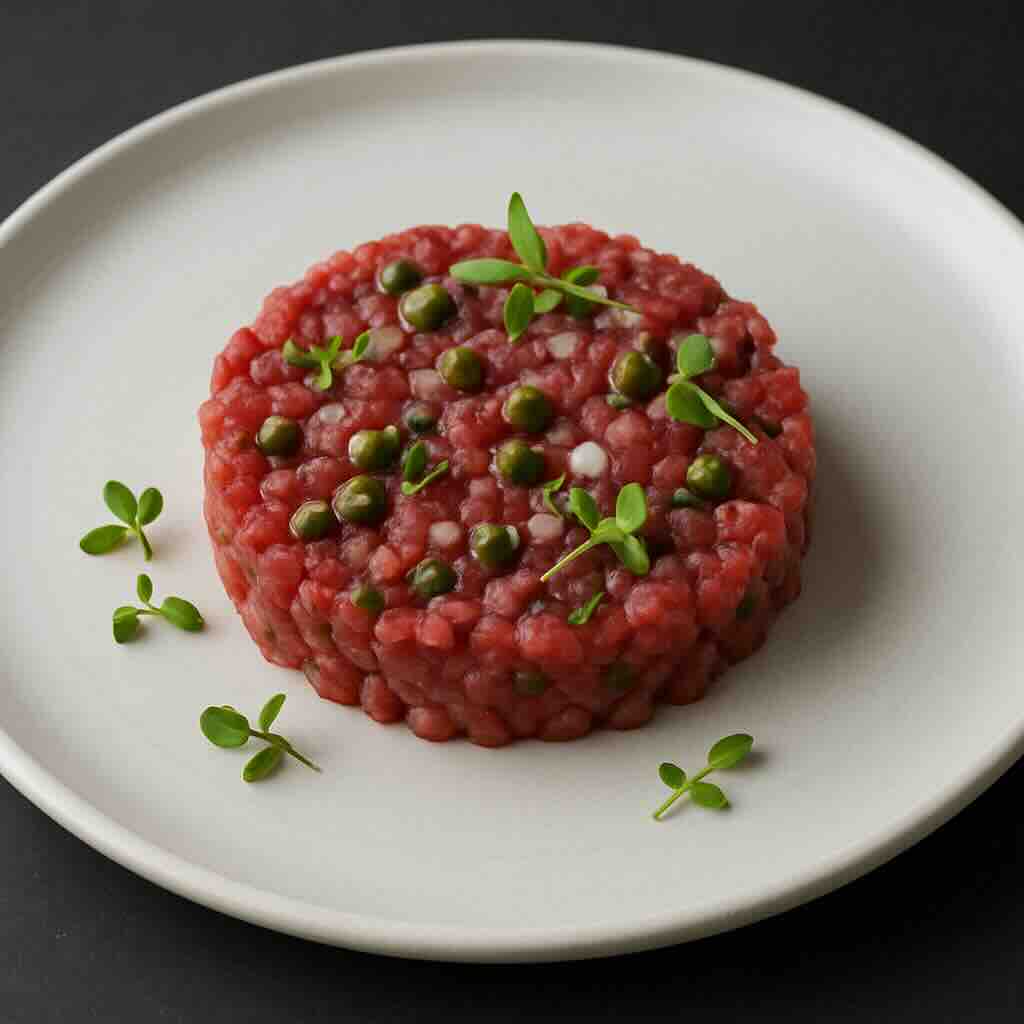
Texture: soft, not chewy
The defining sensation of beef tartare is softness. Because the beef is finely diced or hand-chopped and never cooked, the fibers never tighten the way they do over heat. The result is tender and yielding — closer to a soft, cool spread than to a piece of steak. It should not be chewy, gummy, or stringy. If a tartare feels rubbery or pasty, it has usually been over-processed in a machine or left to sit too long.
Temperature matters too. Served properly cold, tartare is refreshing rather than heavy. The coolness, combined with the soft texture, is a big part of why people who expect it to be off-putting often find it surprisingly easy to eat.
Flavor: savory and clean, not bloody
The flavor of the beef itself is mild, clean, and faintly mineral — far gentler than people assume. Good raw beef does not taste strongly of "blood"; the metallic note some people fear is subtle and is largely balanced out by the seasonings. What you taste most is the savory, umami depth of the meat lifted by the dressing around it.
Compared with a cooked steak, raw beef lacks the browned, roasted flavors that come from searing. Instead you get a purer, more delicate beefiness. If you love the deep char of a grilled steak, tartare will taste different rather than worse — it trades the crust for cleanliness and softness.
The role of fat and seasoning
A tartare is a composed dish, and the supporting cast defines its character:
- Fat — a little marbling or a slick of olive oil or egg yolk gives richness and keeps the bite from tasting lean and flat.
- Capers — salty, briny pops that cut through the richness.
- Mustard — gentle heat and a tang that brightens the meat; it also helps bind the dressing.
- Shallot — a mild oniony sharpness and a little crunch.
- Worcestershire — deep savory, slightly sweet-and-sour umami that adds backbone.
- Egg yolk — a raw yolk coats the meat, adding richness and tying the seasonings together.
Taken together, these turn what could be plain raw beef into a balanced bite: savory, a little briny, a little tangy, rich but not heavy. The meat is the canvas; the seasoning is what most diners actually remember.
Raw vs. cooked: how the same beef changes
The same cut tastes markedly different raw and cooked. Cooking develops bold, roasted, caramelized flavors and firms the texture; eating it raw preserves a softer texture and a cleaner, more delicate taste. Neither is "more correct" — they are different experiences of the same ingredient. If you have only ever had beef cooked, the biggest adjustment is the absence of that seared crust, not the rawness itself.
What first-timers should expect
If it is your first time, expect a cold, soft, savory bite that tastes more of seasoning and richness than of "raw meat." Most people are surprised by how mild it is. Eat it the classic way — spread a little on a toast point or piece of baguette — so each bite has some crunch and the meat is not the only thing on your palate. Start with a small amount and let your palate adjust.
How to order it
To set yourself up for a good first experience:
- Order it at a reputable restaurant that prepares tartare regularly and to order — turnover and care matter.
- If you are nervous about the raw egg, ask for it on the side or left off; the dish works without it.
- Tell the kitchen if you prefer it less seasoned or milder; many will adjust shallot, capers, or mustard.
- Have it as a starter rather than a main for your first time, so you can decide how you feel before committing to a large portion.
If you generally enjoy savory, umami-rich foods — cured meats, anchovies, good cheese — there is a strong chance you will enjoy tartare, even if rare steak has never appealed to you. The dish is less about rawness than about clean beef and confident seasoning.