Classic Salmon Tartare Recipe
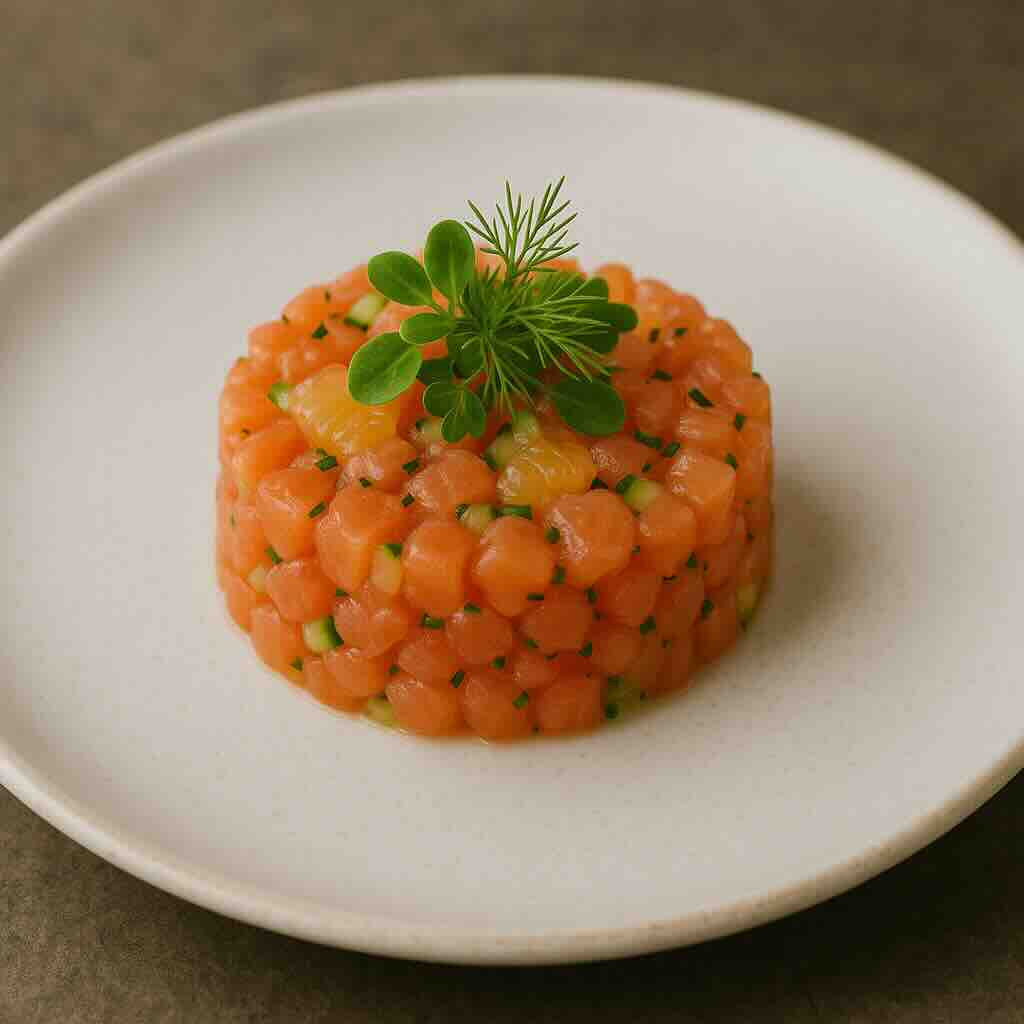
Salmon tartare is raw salmon cut by hand into small, even dice and dressed cold — here in the quiet Nordic register of dill, shallot, capers, lemon, and good oil. It takes about twenty minutes, most of which is knife work, and it asks almost nothing of you beyond buying the right fish. This is the restrained cousin of the brighter citrus salmon tartare elsewhere on the site: where that one leans on lime and chili, this version lets the buttery richness of the salmon stay front and centre.
The whole recipe turns on two decisions made before you pick up a knife: which salmon you buy, and whether it has been frozen to a parasite-destruction standard. Get those right and the rest is seasoning to taste.
Instructions
- Confirm your salmon is suitable for raw eating and has been kept cold. Run your fingers over the fillet and remove any pin bones with tweezers.
- Pat the salmon completely dry and place it in the freezer for 10 to 15 minutes to firm up for cleaner cutting.
- With a sharp knife, cut the salmon into even 1/4-inch dice. Transfer to a chilled bowl and refrigerate.
- In a small bowl, whisk together the olive oil, lemon juice, lemon zest, and Dijon mustard.
- Stir the minced shallot into the dressing and let it soften for 5 minutes to take off its raw edge.
- Add the chopped capers, dill, and chives to the dressing.
- Gently fold the dressing into the cold diced salmon, taking care not to mash the fish.
- Season carefully with sea salt and white pepper, then taste a single piece and adjust.
- Let the tartare rest in the refrigerator for 5 minutes so the flavours come together.
- Shape with a ring mold on chilled plates, or spoon into a neat mound.
- Top with a small quenelle of crème fraîche if using, and a frond of dill.
- Serve immediately with toasted rye bread or crackers.
Nutrition Information (per serving, estimated)
Values are estimates and will vary with the fattiness of the salmon and how much oil and crème fraîche you add.
Choosing salmon for tartare
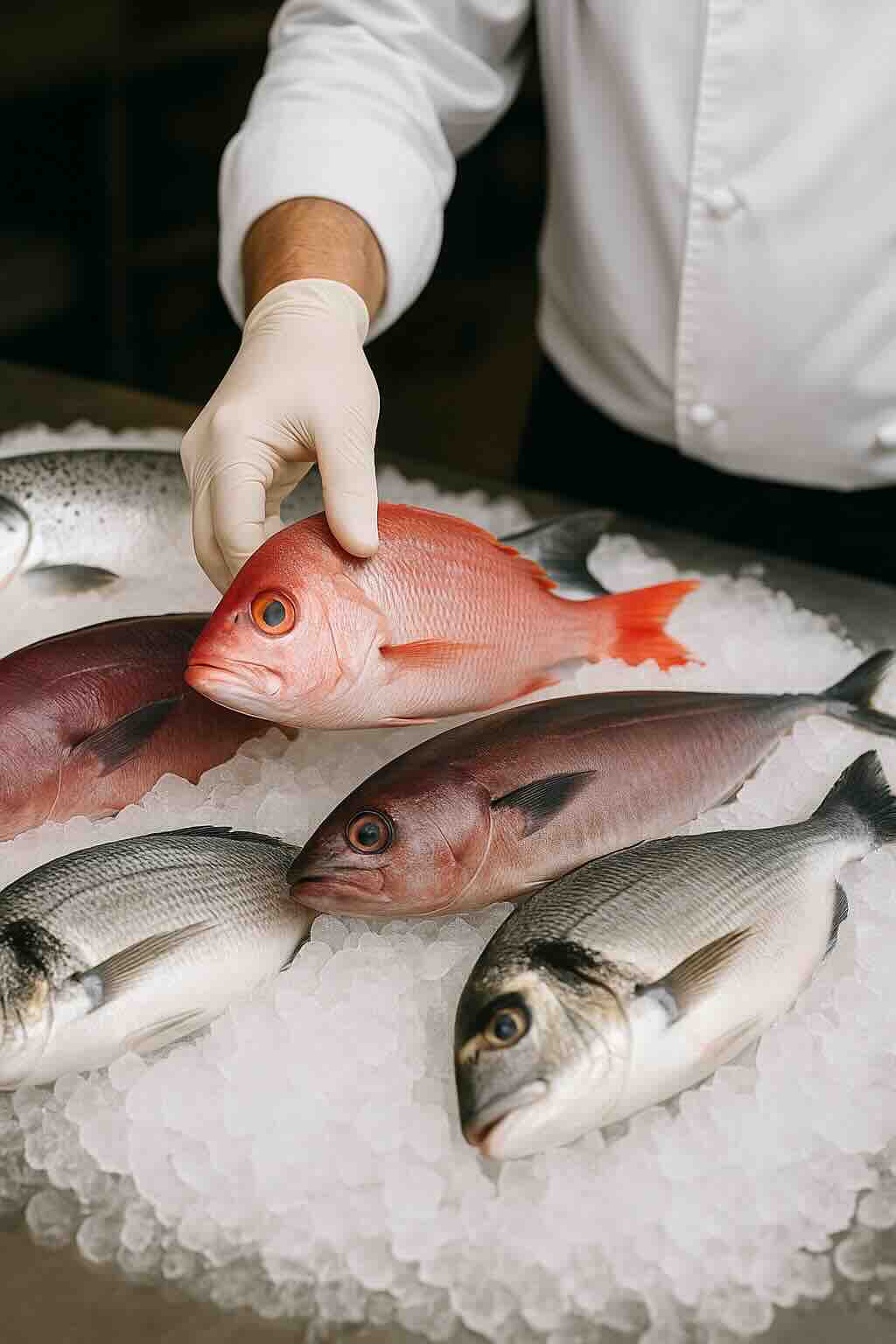
Not all salmon behaves the same way raw. Farmed Atlantic salmon is the default for tartare in most of Europe and North America: it is consistently fatty, mild, and widely available frozen to raw-consumption standard. Wild king (chinook) is richer still and holds its shape beautifully when diced. Sockeye is leaner and firmer, with a deeper colour and a more assertive flavour — excellent, but it can eat slightly dry unless you are generous with the oil. Coho sits between the two. For how salmon compares with tuna, hamachi, and scallops, see the best fish for tartare.
Whatever you buy, ask for a centre-cut loin piece rather than a tail end. The loin is even in thickness, has fewer connective seams, and dices cleanly. Avoid the thin belly flap for tartare; it is delicious but too soft to hold a cube.
Variations on the classic
The base recipe above — salmon tartare with lemon and capers, dill and shallot — is the one to learn first. These variations change the seasoning, not the method: the fish is still cut cold, dressed at the last minute, and eaten straight away.
Salmon and avocado tartare
The most requested version, and the easiest to get wrong: avocado turns grey and mushy if it goes in too early. For 4 servings:
- 12 oz (340g) salmon suitable for raw eating, cut into 1/4-inch (6 mm) dice
- 1 large ripe but firm avocado (about 7 oz / 200g flesh), cut into the same size dice
- 1 small shallot, very finely minced
- 1 tbsp capers, rinsed and chopped
- 1 tbsp chives, finely sliced
- 2 tbsp extra virgin olive oil
- 1 1/2 tbsp lime or lemon juice, plus zest of 1/2 lime
- Flaky salt, white pepper, and a pinch of Espelette or chili flakes
Toss the avocado with half the citrus juice as soon as you cut it. Dress the salmon with the oil, shallot, capers, chives, zest, and the remaining juice; season. Then either fold the avocado in gently at the very end or, for a neater plate, pack the avocado into a ring mold first and spoon the salmon on top. Serve within ten minutes. The same logic drives our tuna and avocado tartare and the vegetarian avocado tartare.
Citrus salmon tartare
For a brighter plate, swap the lemon and Dijon for a mix of lime juice and a little orange: 1 tbsp lime juice, 1 tbsp orange juice, the zest of both, 1 tsp honey, and a few slices of seeded red chili, with cucumber in place of the capers. Citrus firms the surface of the fish within minutes, so dress it at the table. Our full citrus salmon tartare recipe has the complete ingredient list and method.
Salmon tartare with citrus glaze: restaurants sometimes finish citrus salmon tartare with a glossy glaze. Simmer 1/2 cup (120ml) orange juice with 1 tsp honey and 1 tsp soy sauce until reduced to about 2 tbsp and syrupy, then let it cool completely. Drizzle a few drops around or over the tartare just before serving. Never pour a warm glaze onto raw fish — it partly cooks the surface and warms the fish into the temperature range you are trying to avoid.
Marinated salmon tartare
“Marinated” salmon tartare usually means a short soak in a soy- or citrus-based dressing. Mix 1 tbsp soy sauce, 1 tsp toasted sesame oil, 1 tsp rice vinegar, and 1/2 tsp grated ginger, fold it through the diced salmon, and hold it in the refrigerator for 10 to 15 minutes at most, then add sliced scallion and sesame seeds. Much longer and salt and acid firm the fish into something closer to poke or ceviche. A marinade does not make fish safer to eat raw; it only changes the texture.
Other directions
- Crème fraîche and horseradish. A tablespoon of crème fraîche and a little grated fresh horseradish folded through turns this into something closer to a Scandinavian smoked-salmon plate.
- Cucumber and apple. Finely diced cucumber or a tart green apple adds crunch and acidity without adding more liquid to the bowl.
- Spicy. A teaspoon of sriracha or gochujang in a tablespoon of mayonnaise, folded through, borrows from our spicy tuna tartare.
How to season store-bought (premade) salmon tartare
Many fishmongers and supermarket fish counters now sell ready-diced “salmon tartare”, sometimes plain, sometimes already seasoned. It can be very good, but it almost always tastes flat straight from the tub. Before seasoning, check three things: the label says it is intended to be eaten raw (not just “diced salmon” for cooking), it is well within its use-by date, and it has been kept refrigerated all the way home. Eat it the day you buy it.
Then taste a single piece. If it is already seasoned (often salt, oil, and sometimes dill or lemon), you only need to lift it; if it is plain, season it as you would freshly cut fish. For a typical 7 oz (200g) pack, serving two:
- Drain and dry. Tip out any liquid and blot the fish lightly with kitchen paper. Excess water dilutes everything you add.
- Add texture. 1 heaped tsp finely minced shallot and 1 tsp chopped capers (or 2 tbsp diced cucumber) give the bite pre-diced fish lacks.
- Add freshness. 1 tbsp chopped dill or chives, and the zest of 1/4 lemon.
- Add fat. 1 tbsp good olive oil, or 1 tsp crème fraîche for a softer, richer finish.
- Add acid last. Up to 2 tsp lemon juice, stirred in only when you are about to serve.
- Salt carefully. Pre-seasoned tartare is often already salty; add flaky salt and white pepper only after tasting.
If the pack is mushy or smells strongly fishy rather than clean and briny, do not try to rescue it — season it and cook it, or discard it. For what to look for at the counter, see where to buy sushi-grade fish and how to tell if fish is safe to eat raw.
Serving and timing
Dress the salmon no more than ten minutes before it reaches the table. Lemon juice cures the surface of the fish on contact, and left to sit the dice turns opaque, firm, and slightly chalky — pleasant as a ceviche, but no longer tartare. Shape it in a ring mold if you want height, or simply spoon a quenelle onto a chilled plate.
Serve with thin, crisp rye toast, blinis, or good potato crisps. A dry Riesling, Chablis, or a bone-dry rosé all work; see our notes on wine pairing with tartare. Do not keep leftovers — dressed raw fish should be eaten in one sitting.
Frequently Asked Questions
What is salmon tartare?
Salmon tartare is raw salmon, suitable for raw eating, cut by hand into small even dice and dressed cold just before serving, typically with lemon, capers, shallot, dill or chives, and olive oil. It is served straight away, often with rye toast, crackers, or blinis.
Is it salmon tartare or salmon tartar?
Salmon tartare is the correct spelling. “Salmon tartar” is a common misspelling, and tartar sauce is a separate mayonnaise-based sauce served with fried fish. Our tartare vs tartar sauce guide explains the difference.
What is the best salmon tartare recipe?
The best salmon tartare recipe keeps it simple: 1 lb (450g) of parasite-safe salmon cut into 1/4-inch dice, a small minced shallot, 1 tbsp capers, 2 tbsp dill, 1 tbsp chives, 2 tbsp olive oil, 1 tbsp lemon juice with zest, and a little Dijon, dressed no more than ten minutes before serving. Quality fish, cold knife work, and last-minute seasoning matter more than extra ingredients.
How do you make salmon tartare with lemon and capers?
Whisk 2 tbsp olive oil with 1 tbsp lemon juice, the zest of half a lemon, and 1/2 tsp Dijon, then stir in a minced shallot, 1 tbsp rinsed chopped capers, dill, and chives. Fold this through 1 lb (450g) of cold diced salmon, season with salt and white pepper, and serve within about ten minutes.
What is citrus salmon tartare?
Citrus salmon tartare replaces the lemon-and-Dijon dressing with lime, orange, and sometimes grapefruit juice and zest, often with cucumber, chili, and a touch of honey. See our full citrus salmon tartare recipe.
How do you make salmon tartare with citrus glaze?
Reduce 1/2 cup (120ml) orange juice with 1 tsp honey and 1 tsp soy sauce to about 2 tbsp of syrup, let it cool completely, and drizzle a few drops over the finished citrus salmon tartare just before serving. Never add a warm glaze to raw fish.
How do you season premade salmon tartare?
Drain and blot it, taste a piece, then for a 7 oz (200g) pack add 1 tsp minced shallot, 1 tsp chopped capers, 1 tbsp chopped dill or chives, lemon zest, and 1 tbsp olive oil. Stir in up to 2 tsp lemon juice only just before serving, and salt only after tasting, as many premade tartares are already salted. Eat it the day you buy it.
Can you marinate salmon tartare?
Briefly. A soy, sesame, rice vinegar, and ginger dressing can sit on diced salmon for 10 to 15 minutes in the refrigerator. Longer than that and the salt and acid firm the fish toward poke or ceviche. Marinating changes texture only; it does not make fish safer to eat raw.
Is it safe to eat raw salmon?
Raw salmon can be enjoyed by healthy adults when it comes from a reputable source, has been handled correctly, and has been frozen to a parasite-destruction standard where local guidance calls for it. People who are pregnant, very young, older, or immunocompromised should avoid it entirely.
Does salmon need to be frozen first?
Many food-safety authorities advise that salmon for raw consumption be commercially frozen to a parasite-destruction standard, often cited as around −20°C/−4°F for about 7 days. Most home freezers cannot reach this reliably, so buy salmon sold for raw use or labelled previously frozen for that purpose. More in does freezing kill parasites in fish?
What is the best salmon for tartare?
Choose a firm, bright fillet from the thicker part of the fish that is sold for raw eating and smells clean and oceanic. Both farmed and wild salmon can work; what matters most is freshness, careful handling, and an unbroken cold chain.
Do I need to remove the skin and pin bones?
Yes. Use a skinless fillet or remove the skin yourself, and run your fingers along the flesh to find pin bones, pulling them out with tweezers before you dice. This gives a clean, even tartare.
You May Also Like
Salmon Citrus Tartare
The brighter, citrus-forward salmon version
Seafood Tartare Guide
Every fish and shellfish worth serving raw
Selecting Safe Seafood
Essential guide to buying quality seafood
Does Freezing Kill Parasites in Fish?
What freezing does and does not make safe