Mustard is a quiet workhorse in a beef tartare. People notice the capers, the shallot, the yolk; they rarely think about the half-teaspoon of mustard doing two jobs underneath all of it. Choosing the right mustard, and using the right amount, is one of the easiest ways to make a tartare taste balanced rather than either bland or harsh. This guide explains what mustard does, compares the main types, and gives practical guidance on quantity and timing.
This is a flavour-and-technique question, not a safety one. Use whatever good mustard you like; the notes below are about getting the most out of it.
What mustard does in tartare
Mustard plays two roles, and both matter:
- It binds the dressing. Mustard is a mild natural emulsifier. When you whisk together oil, mustard, and the other liquid seasonings, the mustard helps them hold as a cohesive dressing rather than splitting. That dressing then coats the diced beef evenly.
- It adds bite and acidity. Mustard contributes a sharp, slightly hot, slightly acidic note that cuts the richness of raw beef and the fattiness of a yolk. Without it, a tartare can taste a little flat and one-dimensional.
Because the emulsifying job is structural, the type of mustard you choose is mostly about the second role — the flavour and the level of heat you want.
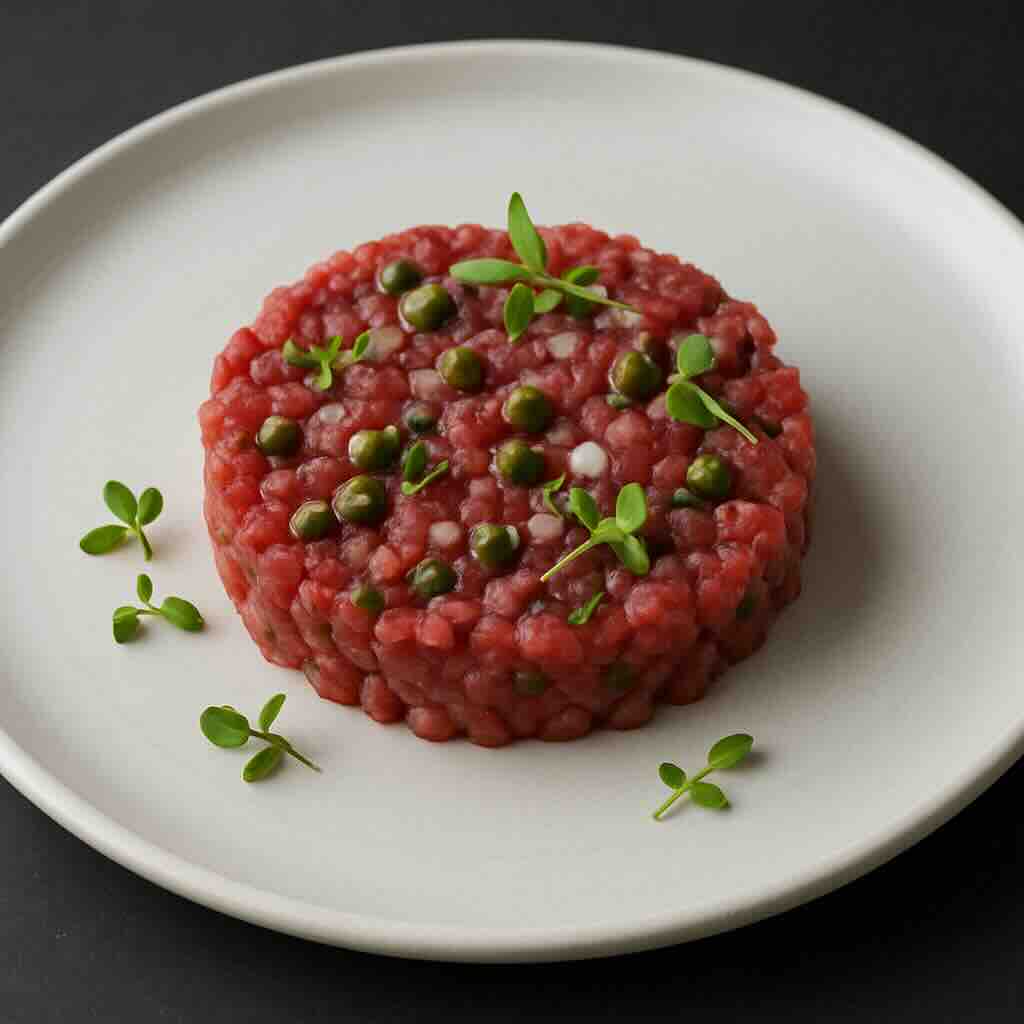
The main types compared
Four mustards turn up most often in tartare. Here is how they differ and when each shines:
Dijon (smooth)
The classic choice and our default. Smooth Dijon is sharp and clean, with moderate heat that fades quickly, and it emulsifies beautifully. It seasons without leaving visible specks, so the tartare stays smooth in texture. If you only keep one mustard for tartare, this is it.
Whole-grain
Whole-grain (or grainy) mustard keeps the seed coats intact, which gives little pops of texture and a milder, rounder, slightly sweeter flavour. It is lovely when you want a more rustic plate, but it changes the mouthfeel and emulsifies less smoothly. Use it as an accent or alongside a little smooth Dijon rather than as the sole binder.
Hot English
English mustard is much hotter and more pungent, with a heat that climbs into the nose. A small amount adds real lift, but it is very easy to overdo — a level that works in a sandwich will dominate a delicate tartare. Treat it as a half-measure: use less than you would Dijon and taste carefully.
Mild yellow
American-style yellow mustard is mild, tangy, and slightly sweet, coloured with turmeric. It is the gentlest option and a reasonable fallback if it is all you have, though it brings less depth and a more one-note tang than Dijon. Fine for an easygoing tartare; not the choice for a refined one.
| Mustard | Heat | Texture | Best for |
|---|---|---|---|
| Dijon (smooth) | Moderate, clean, fades fast | Smooth; emulsifies well | The all-round default for a classic tartare |
| Whole-grain | Mild, rounder, slightly sweet | Grainy, with seed pops | A rustic plate or a textural accent |
| Hot English | High, pungent, rises to the nose | Smooth but intense | A small lift when you want noticeable heat |
| Mild yellow | Low, tangy, slightly sweet | Smooth | A gentle fallback when it's what you have |
How much to use
The most common mistake is using too much. Mustard should support the beef, not announce itself. A good starting point is about half a teaspoon of smooth Dijon per portion (roughly 100–125 g of beef). From there:
- Mix in the starting amount, taste, and add a little more only if needed.
- For hot English, start with closer to a quarter of that and build up.
- For whole-grain, you can use a similar volume to Dijon but expect more texture and less binding.
When to add it
Add mustard with the rest of the wet seasonings, before you fold in the chopped aromatics and just before serving. Two reasons:
- Emulsion first. Whisking the mustard into the oil and other liquids first lets it do its binding job, so the dressing coats the beef evenly.
- Freshness of bite. Mustard's sharp, volatile heat is at its liveliest when freshly mixed. Dress the tartare close to service rather than seasoning it an hour ahead, which also keeps the raw beef cold and at its best.
If you want to omit mustard
You can make tartare without mustard, but you lose both the bite and the emulsifying effect, so compensate for both:
- For the bite: lean a little harder on acidity (lemon or a few drops of vinegar) and on the capers and cornichons.
- For the binding: a teaspoon of good mayonnaise, or the raw yolk itself, will help hold the dressing together. A little extra olive oil whisked in vigorously also helps.
- For depth: horseradish gives a different but related heat if you want a sharp note without mustard's specific flavour.
Common mistakes
- Overdoing it. Too much mustard buries the beef. Start small; you can always add more.
- Reaching for English by habit. Its heat is far stronger than Dijon's; a Dijon-sized spoon of it will overwhelm the plate.
- Relying on grainy mustard to bind. It emulsifies less well; pair it with smooth Dijon or another emulsifier.
- Seasoning too far ahead. Mustard's brightest bite fades; dress the tartare close to serving.