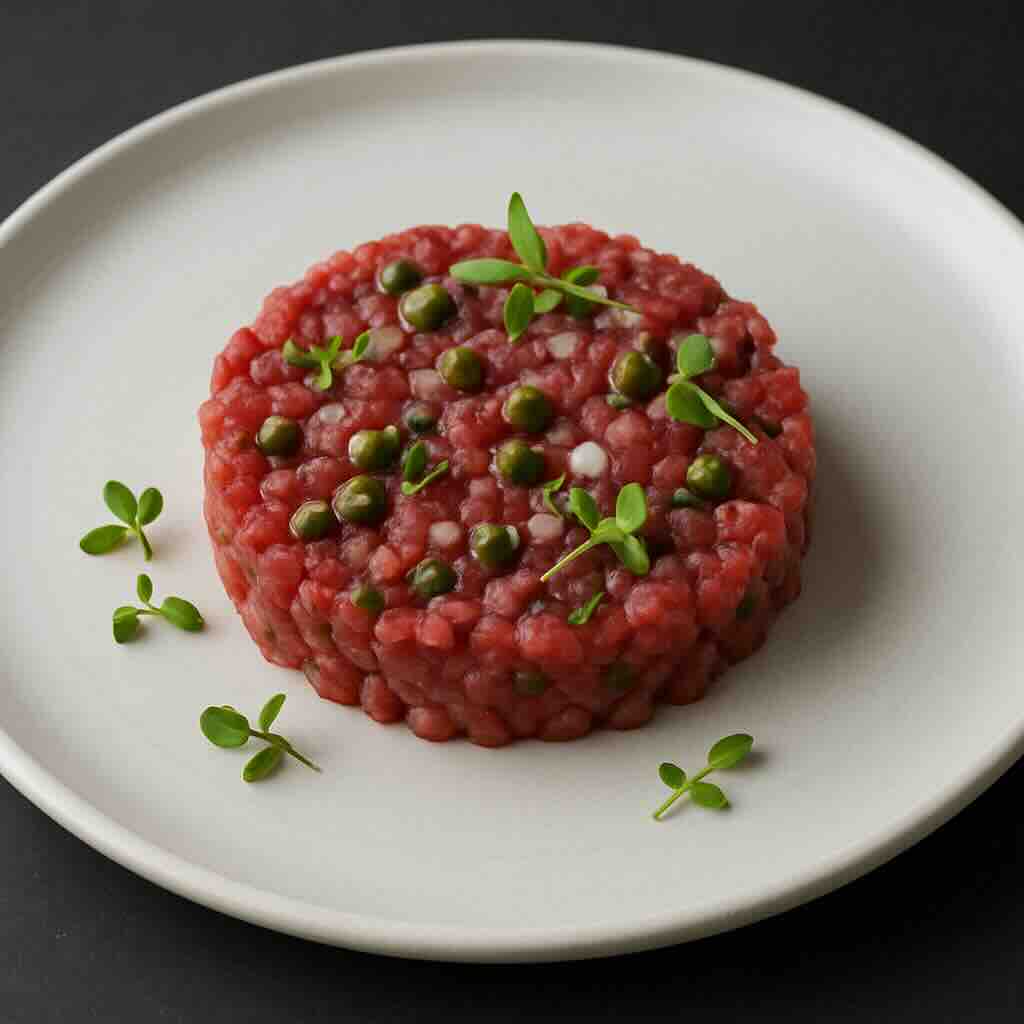
Worcestershire is one of those small bottles that does an outsized amount of work. A few dashes in a beef tartare add a savoury backbone that ties the mustard, capers, and shallot together. But it is not always on hand, it contains anchovy and gluten in its classic form, and some cooks would rather not use a proprietary blend at all. This article explains what Worcestershire actually contributes, then gives you substitutes with rough ratios so you can rebuild that flavour from things you may already have.
None of this is a safety question — it is purely about seasoning. Treat the ratios as starting points and taste as you go, because tartare is seasoned to the plate, not by formula.
What Worcestershire contributes
Traditional Worcestershire is a fermented condiment. Its flavour is layered, which is exactly why a single substitute rarely matches it perfectly. Four things are happening at once:
- Fermented umami. The base is aged and fermented, giving a deep, savoury, almost meaty note that amplifies the beef without tasting of anything specific.
- Tang. Vinegar (and tamarind) provide a gentle acidity that lifts the whole seasoning and keeps it from reading flat.
- Anchovy depth. Anchovies are a defining ingredient. They contribute a salty, savoury background that you notice only by its absence.
- A slight sweetness. Molasses or sugar and tamarind round off the edges, balancing the salt and acid.
A good substitute therefore tries to recreate umami + tang + a salty-savoury note + a touch of sweet. The closest single swaps lean on soy or fish sauce for umami and salt, then borrow acidity and sweetness from elsewhere.
Substitutes and rough ratios
The ratios below assume you are replacing roughly 1 teaspoon of Worcestershire in a two-portion tartare. Mix the components, add about half, taste, and adjust. It is much easier to add than to claw back.
| Substitute | Rough ratio (per 1 tsp Worcestershire) | What it covers | Notes |
|---|---|---|---|
| Soy sauce + vinegar + anchovy | ½ tsp soy + a few drops red wine or cider vinegar + ¼ mashed anchovy fillet | Umami, tang, anchovy depth | The closest all-round match. Start light on the soy — it is saltier than Worcestershire. |
| Fish sauce | ¼ tsp, used sparingly | Umami, salt, fermented savoury note | Potent and distinctly funky. Add a drop at a time and pair with a pinch of sugar to soften it. |
| Tamari | ½ tsp + a few drops vinegar | Umami, salt, tang (gluten-free) | Rounder and less sharp than regular soy; a good default for gluten-free cooks. |
| Coconut aminos | ¾–1 tsp + a small pinch salt | Mild umami, natural sweetness (gluten-free, soy-free) | Sweeter and milder than soy, so use a touch more and lean on salt elsewhere. |
| Anchovy or colatura | ¼ mashed fillet, or a few drops colatura | Anchovy depth, salt, umami | Colatura (anchovy liquid) is clean and intense; excellent if you want the savoury note without soy. |
| Balsamic vinegar | A few drops, alongside one of the above | Sweetness, tang, colour | Not a standalone swap. Use it to add back the molasses-like sweetness Worcestershire has. |
Gluten-free notes
Classic Worcestershire is typically not gluten-free, because the malt vinegar in many formulations is barley-derived. Some brands now make a gluten-free version, but you should read the specific label rather than assume. If you need to avoid gluten and don't have a certified bottle:
- Use tamari (a soy sauce usually made without wheat — again, check the label) in place of regular soy.
- Add acidity with a non-malt vinegar such as red wine, cider, or balsamic.
- Bring in the savoury depth with anchovy or colatura, which are naturally gluten-free.
Vegan notes
The anchovy in classic Worcestershire makes it non-vegan, so vegan cooks need it more often than most. To rebuild the flavour without fish:
- Soy sauce, tamari, or coconut aminos for the umami and salt.
- A few drops of vinegar or a squeeze of lemon for the tang.
- A tiny pinch of sugar or a drop of balsamic for the sweetness.
- A small amount of dried mushroom powder or a dab of miso for extra depth, if you have it.
Note that this matters for the seasoning of a meat-based tartare only insofar as you are cooking for a vegan diner; for a fully vegan or vegetable tartare, the same blend slots straight in.
Can you just leave it out?
Yes. Worcestershire is a supporting player, not a load-bearing one. A tartare seasoned with good salt, mustard, capers, shallot, and a squeeze of lemon is complete on its own. If you omit Worcestershire entirely:
- Check the salt at the end — you may want a touch more, since Worcestershire was contributing some.
- Consider a few extra drops of acid (lemon or vinegar) to keep the seasoning lively.
- If the result tastes a little flat, that "missing" note is the umami; a single mashed anchovy or a few drops of soy will restore it without committing to a full substitute.
Common mistakes
- Treating soy as a one-to-one swap. Soy is saltier and lacks the sweetness and tang; use about half the volume and add back acid and a pinch of sugar.
- Pouring fish sauce in to taste. It is far stronger than Worcestershire. A few drops is usually enough for two portions.
- Forgetting the sweetness. The most common reason a substitute tastes "harsh" is the missing molasses note. A drop of balsamic fixes it.
- Assuming Worcestershire is gluten-free or vegan. Classic versions are usually neither. Check the label, or rebuild from components.