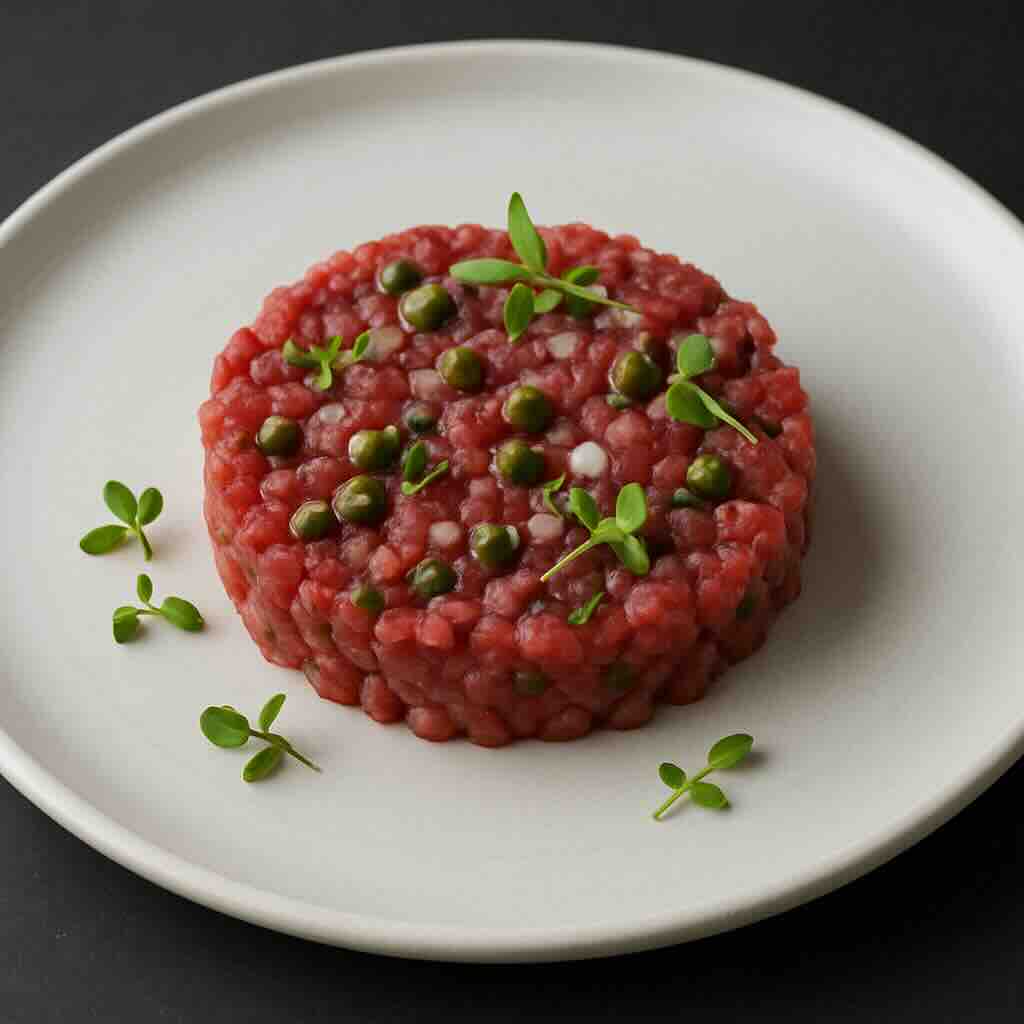
Capers and cornichons sit side by side in almost every beef tartare recipe, and they are easy to lump together as "the pickled bits." But they are doing genuinely different things on the plate. Understanding what each contributes makes it obvious why most recipes call for both — and tells you what you actually lose if you only have one. This guide compares them, covers substitution, and gives practical quantities and prep.
Both are pantry seasonings, so this is a matter of taste and texture rather than safety. Adjust to your own palate.
What capers contribute
Capers are the pickled flower buds of the caper bush, sold either brined or salt-packed. In tartare they bring:
- A briny, salty pop. Each caper bursts with concentrated salt and brine, punctuating the rich beef.
- A floral, slightly mustardy note. Capers contain compounds that give a distinctive floral aroma you don't get from any other pickle. This is their signature, and it's irreplaceable.
- Very little texture. Capers are soft; they dissolve into the seasoning rather than adding bite.
Salt-packed capers tend to have a cleaner, more floral flavour than brined ones, but they must be rinsed and soaked before use. Brined capers are more common and perfectly good; just drain them.
What cornichons contribute
Cornichons are small, tart French gherkins pickled in vinegar, often with tarragon. In tartare they bring:
- Crunch. This is their main job. Finely diced cornichon adds a crisp texture that contrasts with the soft beef and is something capers cannot provide.
- Sharp vinegar tang. Cornichons are more acidic than capers, lending a bright sourness that cuts the richness.
- A gentle vegetal sweetness. Underneath the vinegar there's a mild cucumber sweetness that rounds out the seasoning.
Side by side
| Attribute | Capers | Cornichons |
|---|---|---|
| Flavour | Briny, salty, floral, faintly mustardy | Sharp vinegar tang, mildly sweet, vegetal |
| Texture | Soft; bursts but adds no crunch | Crisp; adds noticeable crunch |
| Main role in tartare | Salty, floral pops of seasoning | Texture and bright acidity |
| Saltiness | High (especially salt-packed) | Lower; acidity dominates |
| Prep | Drain (or rinse and soak if salt-packed); chop if large | Finely dice |
Can you substitute one for the other?
In a pinch, yes — but understand the trade-off, because they are not equivalents:
- Capers only (no cornichons): you keep the salty, floral pops but lose the crunch and some of the bright acidity. Add a little extra lemon or a few drops of vinegar to make up for the missing tang.
- Cornichons only (no capers): you keep the crunch and tang but lose the floral, briny note that is so characteristic of tartare. Nothing fully replaces it; a tiny amount of finely chopped olive can lend back some brine.
Quantities, rinsing, and chopping
- How much: a good starting point is about a teaspoon of each, finely chopped, per portion (roughly 100–125 g of beef). Taste and adjust — both are assertive.
- Rinsing: rinse salt-packed capers and soak them briefly; drain brined capers. You generally don't need to rinse cornichons, but pat them dry so they don't water down the dressing.
- Chopping: chop both finely so no single bite is dominated by one. For cornichons, a fine dice keeps the crunch while distributing it evenly. For large capers, a rough chop helps; small nonpareil capers can go in whole.
- Mind the salt: both add salt and acid, so season the tartare with them in before you add finishing salt, then taste.
Alternatives if you have neither
If you're out of both, a few substitutes get you close, though each shifts the balance:
- Regular gherkins or dill pickle: finely diced, they stand in for cornichons' crunch and tang. They're often milder and sweeter, so taste for acidity.
- Pickled shallot or red onion: adds sharp acidity and a little crunch, plus its own oniony note — useful if you also want to dial back fresh shallot.
- Chopped green olives: bring back some of the brine and salt you'd miss without capers, though they read olive-y rather than floral.
- A squeeze of lemon plus extra salt: won't replace the texture, but covers the acidity and seasoning if you're truly out of pickles.
Common mistakes
- Treating them as interchangeable. They cover different bases; swapping one for the other changes the dish.
- Skipping the drain. Wet capers and cornichons loosen the dressing and water down the seasoning.
- Chopping too coarse. Big pieces mean some bites are all pickle and others none; a fine, even chop spreads them through.
- Over-salting on top. Both are salty; add finishing salt last, after tasting.