People often want a single test that tells them a fish is safe to eat raw. There isn't one. What there is, instead, is a set of signals that together build confidence — and an honest acknowledgement that the most important factors, sourcing and handling, are decided long before the fish reaches your eyes and nose.
This article walks through the freshness signals you can check yourself, explains why provenance matters more than appearance, and gives you the questions to ask and the situations where the right move is simply to walk away. As always, the food-safety authority where you live takes precedence; treat our specifics as editorial guidance.
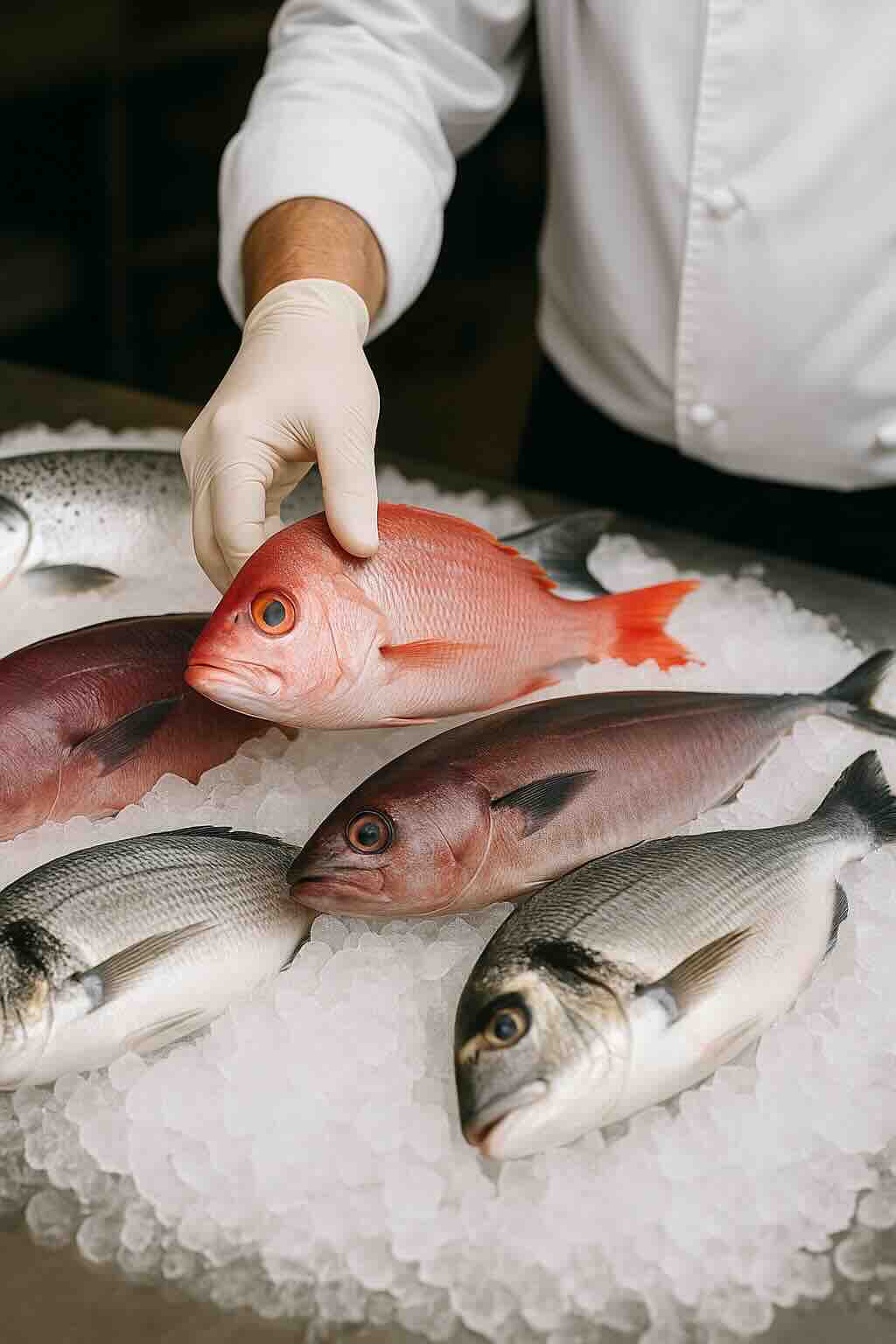
Why appearance is the second question, not the first
It is tempting to judge fish entirely by how it looks and smells, but freshness signals only tell you about the fish in front of you right now. They cannot tell you whether the fish was caught and chilled properly, kept cold throughout its journey, or — for species that need it — frozen to inactivate parasites. A beautiful-looking fillet that has never been handled for raw consumption is not a safe raw fillet.
So the order of operations is: first establish provenance and handling (where did it come from, was it intended and handled for raw use, was it frozen for parasite control if relevant), and then use the freshness signals below to confirm the specific piece is in good condition. Appearance is a veto, not a green light.
The freshness signals that matter
When you can inspect the fish — ideally a whole fish, but much of this applies to fillets too — check the following:
- Smell. This is the most useful single signal. Fresh fish smells clean, mild, and faintly of the sea. A strong "fishy" odour, or any sour, ammonia, or off note, means the fish is past the point you want for raw use. Trust your nose over everything else.
- Eyes (whole fish). Eyes should be clear, bright, and full, sitting near flush or slightly bulging. Sunken, cloudy, or grey eyes indicate age.
- Flesh. The flesh should be firm and spring back when pressed gently, not stay dented. It should look moist and glossy, not dull, dry, or gaping along the muscle lines.
- Blood line and colour. The dark blood line in a fillet (for example in tuna) should look clean and not brown or smeared; the overall colour should be even and natural for the species, not faded or rainbow-sheened from oxidation.
- Gills and skin (whole fish). Gills should be bright red or pink and not slimy; skin should be shiny with scales firmly attached.
One signal does not override the others. A fish can look acceptable and still smell wrong — in which case the smell wins. Any single clear failure is a reason to pass.
Provenance and handling: the real determinants
The factors that most determine whether fish is safe to eat raw are largely invisible at the counter:
- How it was caught and chilled. Fish intended for raw use is ideally bled and brought down to temperature quickly after catch, then kept cold without interruption.
- Whether it was frozen for parasite control. For many species, food-safety guidance calls for freezing under specific conditions to inactivate parasites before raw consumption. Certain tuna are commonly exempt. See our article on whether freezing kills parasites in fish.
- The reliability of the seller. A high-turnover counter with knowledgeable staff who handle fish for raw use is worth more than any label. As we explain in sushi-grade vs sashimi-grade fish, those terms are not regulated and only mean as much as the person using them.
Previously-frozen fish is often the right choice
Many people assume "fresh, never frozen" is the gold standard for raw fish. For parasite control, the opposite is often true: fish that has been commercially frozen to standard has had its parasite risk addressed, while truly fresh, never-frozen fish (outside exempt species like certain tuna) may not have. "Previously frozen" on a label is not a downgrade for tartare — for many species it is exactly what you want. What matters is that it was frozen properly and then handled and thawed correctly.
Questions to ask the counter
The right questions do more work than any inspection:
- "Is this fish suitable for eating raw?"
- "Has it been frozen to a parasite-control standard, or is it a species that's exempt?"
- "When did it arrive, and how has it been stored?"
- "Can you cut a fresh piece from the centre rather than the display edge?"
Confident, specific answers build trust. Hedging, irritation, or "it should be fine" are signals to choose cooked instead.
Storing it at home
Once you have good fish, do not undo it on the way to the plate:
- Get it home cold — an insulated bag and ice for anything more than a short trip.
- Keep it on ice or in the coldest part of the fridge, in a leakproof container set over a tray.
- Use it as soon as possible. As general guidance, raw fish for a tartare is best used within roughly 24 hours of purchase; the sooner the better, and follow any "use by" date and your local guidance.
- Dice and season just before serving, serve promptly, and do not keep leftovers of a raw preparation.
When to walk away
Pass on the fish — or cook it instead — whenever:
- It smells sour, ammoniated, or strongly "fishy".
- The flesh is soft, mushy, dull, dry, or gaping.
- The seller can't or won't tell you how it was handled or whether it's suitable raw.
- It has been sitting warm, in standing liquid, or out of proper refrigeration.
- You simply aren't sure. Doubt is a reason to cook it; cooking to a safe temperature resolves nearly all of these concerns.
The takeaway
Judging raw fish is two jobs, not one. First confirm it was sourced, handled, and (where needed) frozen for raw consumption; then use smell, eyes, flesh, and the blood line to confirm the piece is in good shape. When the answers are good and the signals are clean, you have a sound candidate for tartare. When they aren't, the safest, best dish is the cooked one.