Kibbeh Nayyeh (Lebanese Raw Kibbeh)
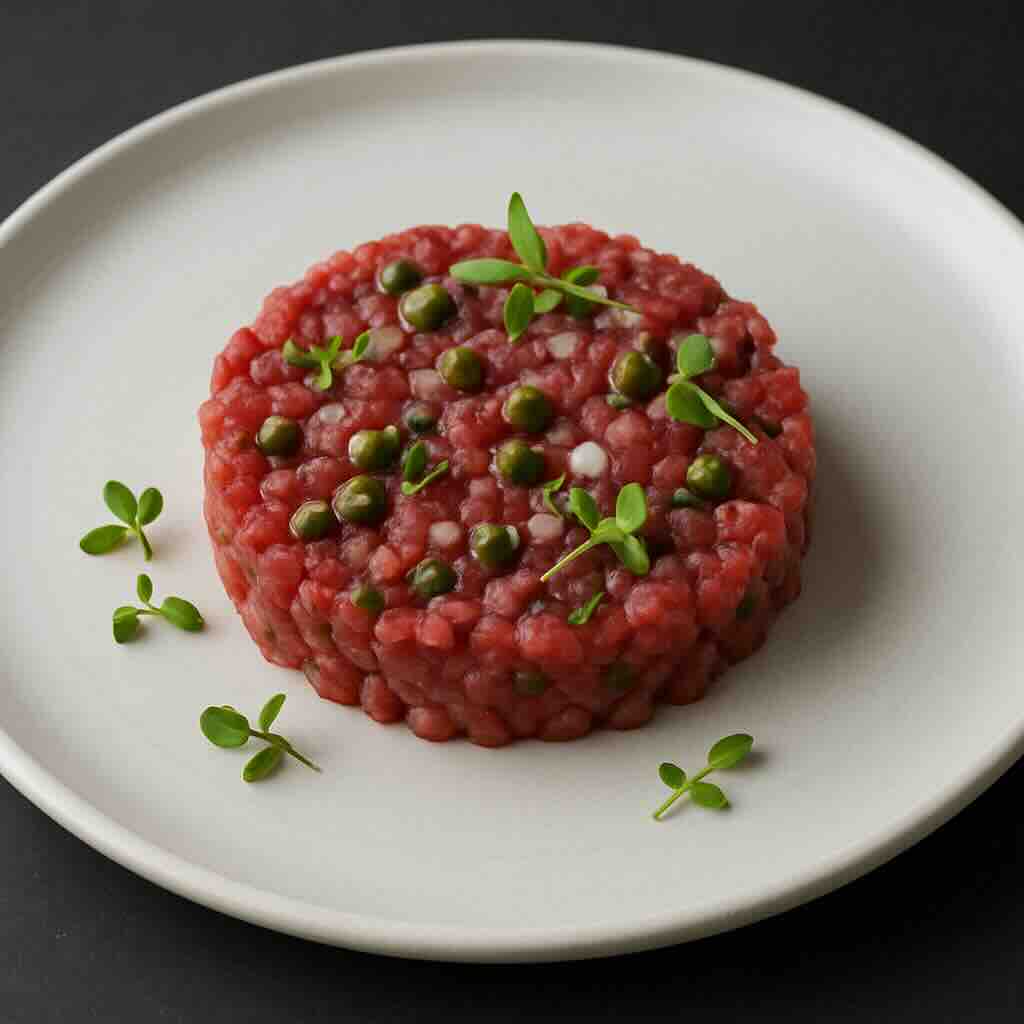
Kibbeh nayyeh (also spelled kibbeh nayeh, “raw kibbeh”) is the Levant's great raw meat dish. Very lean lamb or beef is pounded until smooth, then kneaded with fine bulgur, grated onion and spice into a soft, rosy paste. It is spread on a plate, grooved with a fingertip, flooded with olive oil, and eaten by scooping it up with pita, a leaf of fresh mint, a bite of spring onion or raw onion, and sometimes a green chilli. It is a Sunday-lunch and celebration dish in Lebanon and Syria, and a fixture of the mezze table.
Where a French steak tartare keeps the meat in distinct pieces, kibbeh nayyeh goes the other way: the aim is a completely smooth, cold, almost mousse-like texture. The bulgur gives body and a faint nuttiness, the spice runs warm rather than sharp, and the olive oil does the job that egg yolk does in Paris.
Instructions
- Chill everything: the bowl of a food processor (or a mincer's plates and blade), a mixing bowl and a serving plate go in the freezer for 30 minutes.
- Rinse the bulgur in a sieve, then soak it in cold water to cover for 10–15 minutes until just tender. Drain and squeeze it hard in your hands or a clean cloth until dry.
- Trim the meat meticulously — kibbeh nayyeh should contain no visible fat, gristle or silverskin. Cut it into 2cm cubes and return to the fridge or freezer for 10 minutes to firm up.
- Process the meat in two batches in the chilled food processor with a tablespoon of iced water each, pulsing until very smooth and paste-like, or pass it twice through the fine plate of a chilled mincer. Traditionally this is done by pounding in a stone mortar (jurn).
- Add the onion, salt, spice, pepper and mint and pulse or knead to combine. Add the squeezed bulgur and knead with wet hands (or pulse briefly) until smooth and cohesive. Add iced water a spoonful at a time if it feels stiff; it should be soft and spreadable.
- Taste a tiny amount and adjust salt and spice. Keep the mixture cold at all times — set the bowl over ice if your kitchen is warm.
- Spread the kibbeh on the chilled plate in an even layer about 1.5cm thick. Draw patterns or grooves across the surface with a fingertip or the back of a spoon, and pour olive oil generously into the grooves.
- Serve at once with pita, mint leaves, spring onions, raw onion wedges and green chilli.
Nutrition Information (per serving)
Estimates for 5 servings with lamb and 1 tbsp olive oil per serving; bread is excluded.
Kibbeh nayyeh in Lebanese food culture
Kibbeh is a whole family of dishes built on meat and bulgur: fried torpedo-shaped shells stuffed with spiced mince, baked trays (kibbeh bil saniyeh), kibbeh in yoghurt, even pumpkin and potato versions for Lent. Nayyeh means raw, and the raw version is the one that shows off the meat. It is traditionally made the morning it is eaten, from an animal the family trusts, and in the mountains and the south of Lebanon it is a point of pride for the cook who pounds it.
Seven-spice or kammouneh?
Both are correct; they come from different regions and households. Seven-spice (baharat) is the general Lebanese blend — typically allspice, black pepper, cinnamon, clove, nutmeg, coriander and ginger, though every family's mix differs. Kammouneh is associated with southern Lebanon: a blend built on cumin with dried herbs such as mint and marjoram, often with dried rose petals, pepper and sometimes chilli, and it is frequently mixed with bulgur and onion into a seasoned base before meeting the meat. Kammouneh gives a greener, more herbal kibbeh; seven-spice a warmer, sweeter one. Recipes and proportions vary a great deal, so treat the quantities above as a starting point.
Pounding, grinding and texture
The traditional tools are a stone mortar and wooden pestle, and the pounding — with cold water and sometimes an ice cube worked in — is what gives the paste its smoothness. A food processor with a chilled bowl gets you very close. The one thing to avoid is warmth: fat and protein that warm up turn greasy and grey. Some cooks now keep the meat lightly textured rather than completely smooth; that is a matter of taste.
How it compares
Kibbeh nayyeh has close relatives: Turkish çiğ köfte, whose raw-meat version is now largely replaced by a meatless one in commercial settings, and Brazilian kibe cru, brought by Lebanese immigrants. For a hand-cut lamb dish with a similar spice profile, see our lamb tartare; for another tradition of spiced raw beef, see Ethiopian kitfo. Arak, the anise spirit of the Levant, diluted with water and ice, is the classic drink alongside.
Variations
- Beef instead of lamb. Very common today and milder. Use eye of round or topside, trimmed completely.
- Kammouneh base. Mix the soaked bulgur with the onion, kammouneh, salt and a little chilli first, rest it for 10 minutes, then knead into the meat.
- Cooked kibbeh from the same mixture. For anyone who should not eat raw meat, shape part of the mixture into small patties and pan-fry in olive oil for 3–4 minutes per side until cooked through (71°C/160°F in the centre for minced meat), or press into an oiled dish and bake as kibbeh bil saniyeh.
- Brazilian kibe cru. Beef-only, finished with lime juice and served with raw onion and chilli sauce as bar food.
Troubleshooting
- Grainy or crunchy. The bulgur was too coarse or under-soaked. Use #1 fine bulgur and soak until it gives between your teeth.
- Sticky, greasy or grey. The meat warmed up or still had fat on it. Trim thoroughly and chill the equipment; work in small batches.
- Too stiff to spread. Knead in iced water a spoonful at a time.
- Wet and loose. The bulgur was not squeezed dry, or the grated onion was very juicy. Squeeze both before adding.
Make-ahead & storage
Kibbeh nayyeh does not keep. You can soak and squeeze the bulgur and mix the spice base a few hours ahead, but process the meat, mix and serve within the same hour, and keep it on a chilled plate. Anything left after the meal should not be saved raw; if you have made too much, cook the surplus straight away as patties or baked kibbeh, cool it quickly and refrigerate it for up to two days.
Frequently Asked Questions
What is kibbeh nayyeh?
Kibbeh nayyeh is Lebanese raw kibbeh: very lean lamb or beef pounded or ground until smooth and kneaded with fine bulgur, onion, mint and spice. It is spread on a plate, drizzled with olive oil and eaten with pita, mint, spring onion and raw onion.
Is kibbeh nayyeh safe to eat?
It carries the same risks as any raw meat, and somewhat more than hand-cut tartare because the meat is ground. Raw lamb can carry Toxoplasma. Pregnant people, young children, older adults and anyone immunocompromised should avoid it. Others should use fresh whole-muscle meat processed the same day on clean chilled equipment, and eat it straight away.
Is kibbeh nayyeh made with lamb or beef?
Both. Lamb is the older tradition in much of Lebanon, but lean beef is very common today, especially in restaurants and abroad. Either way the meat must be completely trimmed of fat and sinew.
What spices go in raw kibbeh?
Lebanese seven-spice (allspice, pepper, cinnamon, clove, nutmeg, coriander, ginger) or southern Lebanese kammouneh, a cumin-based blend with dried mint, marjoram and rose petals. Salt, pepper, onion and mint are constant; the rest varies by family.
Can I use supermarket minced meat for kibbeh nayyeh?
No. Pre-minced meat has been exposed to air, equipment and time and should be cooked. Start from a whole piece and grind or pound it yourself, or ask a butcher to grind it to order on cleaned equipment, then use it immediately.
What do you serve with kibbeh nayyeh?
Olive oil poured over the top, warm pita or flatbread, fresh mint leaves, spring onions, raw white onion, green chillies, and other mezze such as hummus, tabbouleh and pickles. Arak is the traditional drink.
You May Also Like
Lamb Tartare
Hand-cut lamb with warm spices
Ethiopian Kitfo
Raw beef with spiced butter and mitmita
Complete Food Safety Guide
Handling raw meat at home