The question “what is the best cut of beef for tartare?” is really two questions wearing one coat. The first is about eating quality: which muscle gives you tenderness without chew, beef flavour without funk, and a clean dice that holds its shape on the plate. The second is about safety: which piece of beef can you reasonably eat raw at all. The good news is that the two answers point in the same direction — lean, whole-muscle cuts from the loin and round.
Below is the working shortlist, in the order a butcher would suggest them, followed by the cuts to leave alone and the one question that matters more than any of it.
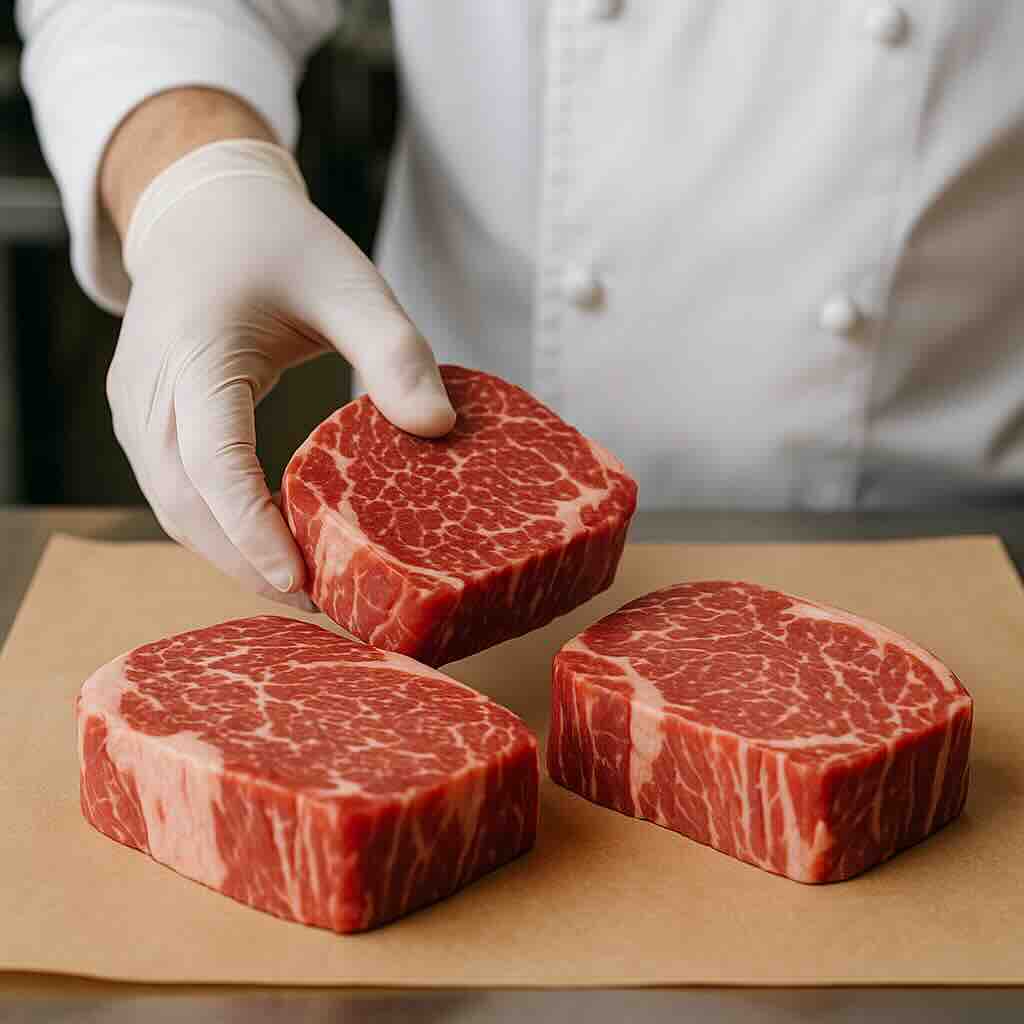
The shortlist, ranked
1. Tenderloin (filet, filet mignon)
The default choice, and the one most home cooks should start with. Tenderloin is the least-worked muscle on the animal, so it is exceptionally tender, almost entirely free of intramuscular connective tissue, and very lean. It dices cleanly at 3–5 mm and needs almost no trimming beyond the silverskin. Its flavour is mild — some cooks find it too mild — which is precisely why the classic seasoning of shallot, caper, Dijon and Worcestershire exists. Ask for a centre-cut piece; the tapered tail end is uneven and awkward to dice.
2. Top round (topside)
The value pick, and the cut used in a great many French bistros for exactly that reason. Top round is lean, large-grained, and considerably beefier in flavour than tenderloin, at a fraction of the price. It is firmer, so it needs a genuinely sharp knife and a little patience with trimming, but the resulting tartare has more character. If you are making tartare regularly rather than as an occasional treat, this is the cut to learn.
3. Eye of round
A cylindrical, very lean muscle with almost no seams running through it, which makes it one of the easiest cuts to break down into an even dice. It is slightly less tender than top round and benefits from being cut a touch finer. Its uniform shape is a real advantage if you are prepping for a group.
4. Sirloin (rump)
Workable, flavourful, and widely available, but more variable. Sirloin carries more seams of fat and connective tissue than the cuts above, so your yield after trimming is lower and you have to be disciplined about removing every piece of sinew. Chewy fragments are the single most common fault in home tartare, and sirloin is where they usually come from.
Cuts to avoid for tartare
- Anything pre-ground. Not a cut at all, but the most important entry on this list — see the section below.
- Chuck, brisket, shin, flank, skirt. These are hard-working muscles built around collagen. Collagen needs long, slow heat to become gelatine; raw, it is simply rubbery. No amount of fine dicing fixes it.
- Ribeye and other heavily marbled cuts. Marbling that melts gloriously in a cooked steak stays firm and waxy at fridge temperature. Raw fat is unpleasant in the mouth, which is why tartare cuts are chosen for leanness rather than richness.
- Very long-aged beef. Dry-ageing concentrates flavour, but the funky, blue-cheese notes it develops sit oddly in a raw preparation, and the dried outer crust must be cut away entirely.
Mince versus hand-cut: why it matters
This is where cut selection and food safety meet, and it is worth being blunt about. On a whole muscle, bacteria live overwhelmingly on the exterior surface; the interior of an intact muscle from a healthy animal is close to sterile. Grinding takes that contaminated surface and distributes it evenly through the entire batch, while also mixing meat from many animals and dramatically increasing the surface area available for bacterial growth. That is precisely why ground beef must be cooked through, and why raw ground-beef dishes such as the Wisconsin cannibal sandwich draw public-health warnings that classic tartare does not.
Hand-cutting also produces a better dish. A knife severs the muscle fibres cleanly; a grinder crushes and smears them, rupturing cells and releasing liquid, which is why minced tartare turns pasty and weeps on the plate within minutes. Hand-cut tartare has distinct, glossy cubes that stay separate. If you genuinely cannot cut by hand, the acceptable compromise is to have the butcher grind a whole, trimmed piece to order in front of you, on a clean plate, and to use it that same day — not to buy mince from the counter.
How much to buy
Trimming losses on whole-muscle beef run roughly 10–20%, and more on sirloin. Plan about 70–85 g of trimmed beef per person as a starter and 150–170 g as a main, then buy 15–25% above that figure. Our portion guide has the full table by protein and course.
What to ask the butcher
The cut name is the easy part. These four sentences do more for your tartare than any choice between tenderloin and top round:
- “I’m making tartare, so this is going to be eaten raw.” A good butcher will immediately change what they hand you and how they handle it. If the reaction is a shrug, buy elsewhere.
- “Can you cut it fresh from the whole muscle, today?” Not from a tray that has been sitting in the case.
- “Please don’t grind it.” Take it whole and cut it yourself at home.
- “When did this come in?” You want beef that is well within its window, not at the end of it.
Carry it home cold — a cool bag is not overkill — keep it below 4°C/40°F, and cut it the same day. Our guide to sourcing quality meat for tartare goes further on suppliers, labelling, and what a good counter looks like.