Tartare is one of the easier dishes to misjudge on quantity. Because it is rich, served cold, and eaten in small, deliberate bites, a portion that looks modest on the plate often turns out to be exactly right — and a portion that looks generous can defeat a diner halfway through. This guide gives you working numbers, organised the way you actually plan a meal: by course and by protein.
The figures below are planning ranges, not rules. Appetite varies with the rest of the menu, the time of day, and how rich the seasoning is. When in doubt for a first course, err smaller; tartare is meant to wake the palate, not flood it.
The short answer
For beef, plan roughly 80–100g (about 3–3.5oz) of trimmed meat per person when tartare is a starter, and roughly 150–200g (about 5–7oz) when it is the main event, as it usually is in a French bistro with frites. Other proteins sit a little lower — see the table below. Leaner proteins and very rich seasonings push you toward the lower end of each range; a plain, beefy main course can sit at the higher end.
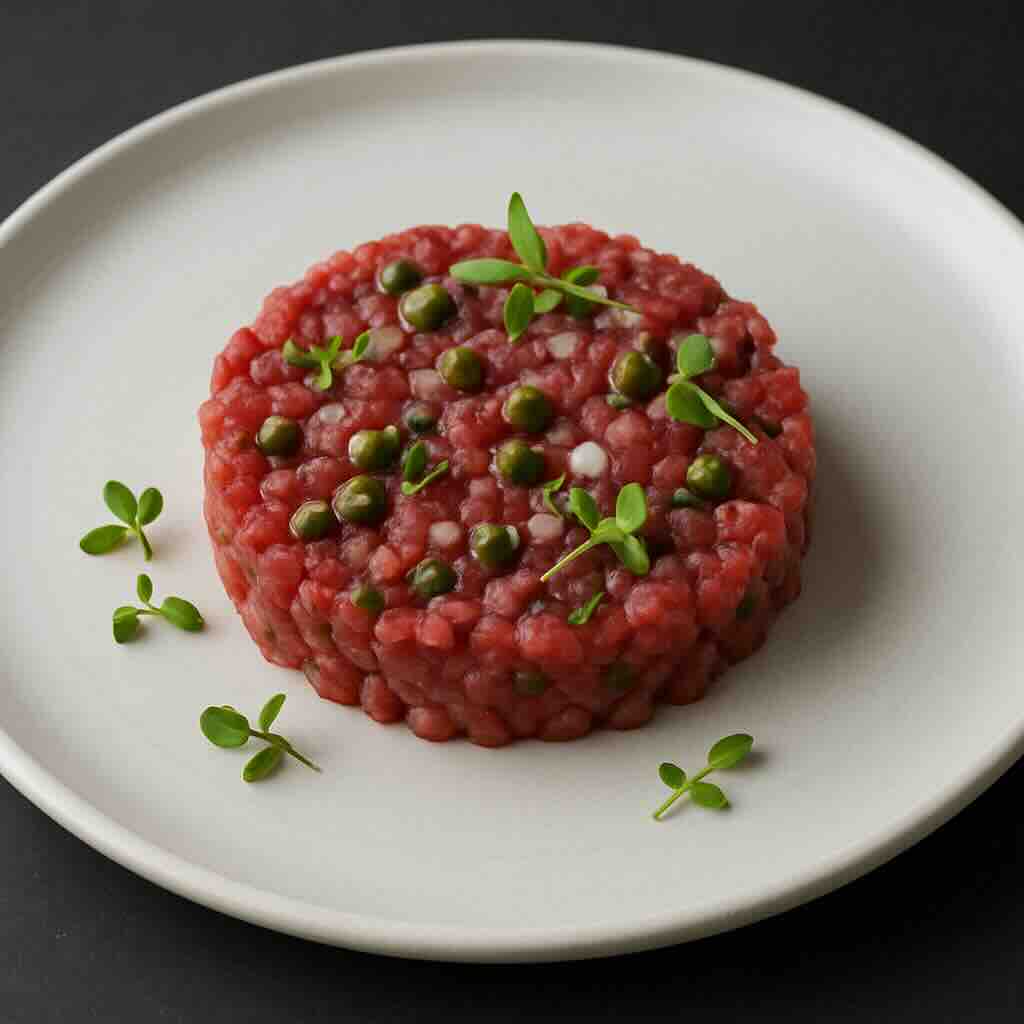
Portion table by course and protein
These weights refer to the trimmed, ready-to-eat protein — not the weight you buy. Plan to purchase more than this to allow for trimming (see the note below the table).
| Protein | Starter / appetizer (per person) | Main course (per person) | Notes |
|---|---|---|---|
| Beef | 80–100g (3–3.5oz) | 150–200g (5–7oz) | The classic benchmark; tolerates a generous main portion. |
| Bison / venison / other lean game | 60–75g (2–2.5oz) | 130–150g (4.5–5oz) | Very lean; richer with added oil, but still eats lighter than beef. |
| Lamb | 60–75g (2–2.5oz) | 130–150g (4.5–5oz) | Assertive flavour; smaller portions usually satisfy. |
| Tuna | 60–80g (2–3oz) | 140–160g (5–5.5oz) | Meaty for a fish; works as a light main. |
| Salmon | 60–80g (2–3oz) | 130–150g (4.5–5oz) | Fattier than tuna; sits heavier in larger amounts. |
| Scallop / delicate seafood | 55–70g (2–2.5oz) | 120–140g (4–5oz) | Best as a refined starter; mains are uncommon. |
| Vegetable / vegan (e.g. beet, tomato, avocado) | 80–110g (3–4oz) | 160–200g (6–7oz) | Less dense and less rich, so portions run larger. |
Beef tartare scaling table: 1 person to 1 kg
This table uses the same proportions as our classic beef tartare recipe (400g of trimmed beef for four starters). Starter portions are 100g; main portions are 150–200g. "Yolks in dressing" are hen's yolks folded into the meat; "yolks on top" are one quail or small hen's yolk per plate.
| Trimmed beef (buy) | Starters | Mains | Shallots | Capers | Cornichons | Dijon mustard | Worcestershire | Yolks in dressing | Yolks on top |
|---|---|---|---|---|---|---|---|---|---|
| 100g (~120g) | 1 | – | ½ | 1½ tsp | 1½ tsp | ¾ tsp | ½ tsp | none | 1 |
| 200g (~240g) | 2 | 1 | 1 | 1 tbsp | 1 tbsp | 1½ tsp | 1 tsp | none, or ½ | 1–2 |
| 400g (450–500g) | 4 | 2 | 2 | 2 tbsp | 2 tbsp | 1 tbsp | 2 tsp | 1 | 2–4 |
| 600g (~720g) | 6 | 3–4 | 3 | 3 tbsp | 3 tbsp | 1½ tbsp | 1 tbsp | 1–2 | 3–6 |
| 1kg (~1.2kg) | 10 | 5–6 | 5 | 5 tbsp (⅓ cup) | 5 tbsp (⅓ cup) | 2½ tbsp | 5 tsp (about 1½ tbsp) | 2–3 | 5–10 |
Shallots are medium, about 30g each. "Yolks on top" equals the number of plates, so the lower figure applies to mains and the higher to starters. Capers, cornichons and Worcestershire vary widely in salt and acidity, so treat their quantities as a starting point and taste before plating.
How many egg yolks for 1 kg of beef tartare?
For 1kg of trimmed beef, fold 2–3 hen's egg yolks into the dressing. If you serve it the classic way, add one yolk on top of each plate: 10 as starters, or 5–6 as mains. If you leave out the yolk on top, use about 4–5 yolks in the mix so the tartare stays glossy and bound. Put in fewer and the meat tastes dry; put in more and it turns loose and eggy. For guests in a higher-risk group, use pasteurised eggs or bind with mustard and oil instead — see egg yolks on raw preparations.
Portion pour un tartare: French bistro quantities
In France and Belgium, tartare de bœuf is most often a main course, and bistros commonly serve around 180–200g of beef with frites and salad. A starter portion (en entrée) is usually closer to 80–100g. So if you are wondering how much to plan par personne, count about 100g for a starter and 180–200g for a main — the same figures as the table above.
How seasoning and format shift the numbers
The protein weights above assume a fairly classic treatment. A few things move the target:
- Mix-ins. If you fold in diced avocado, apple, or vegetables, the plate grows even though the protein weight stays the same. Keep the protein at your target and let the additions push the visual size.
- Toast and bread. When tartare is served on or with toast points, baguette, or chips, diners fill up faster. You can hold the protein at the lower end of the range.
- Course position. A tartare that opens a long tasting menu can drop to 40–50g per person; one served as the only starter before a light main can sit at the top of the starter range.
- Richness. Egg yolk, bone marrow, crème fraîche, and heavy oils all make a portion eat larger than its weight suggests. Trim the quantity, not the richness.
Scaling for a party
For a crowd, multiply the per-person figure by your headcount and round up modestly — but think about format first.
- Plated starters: multiply your chosen starter weight by the number of guests. For 8 people at 90g, that is 720g of trimmed beef.
- Passed canapés or spoons: plan 1–2 bites per guest per pass, roughly 15–25g each. These add up quickly across a long event, so count the passes, not just the guests.
- A shared bowl or board: reduce the per-person figure by about 20%; people rarely eat as much from a communal portion as from their own plate. Keep the bowl small and refill from a chilled reserve rather than putting everything out at once.
Leftovers and timing
The honest answer on leftovers is: don't plan for them. Raw, seasoned, finely cut protein has an enormous amount of exposed surface area, it has been handled extensively, and salt and acid in the seasoning begin to break down the texture almost immediately. Tartare is at its best within minutes of being dressed.
Practically, this means you should size each batch to be eaten in one sitting. If you have prepped more trimmed protein than you served, the safer move is to cook the remainder promptly (a quick sear or a beef burger) rather than refrigerating dressed tartare to finish later.
A worked example
Say you are serving beef tartare as a starter to six guests, followed by a substantial main. Plan about 100g of trimmed beef each, or 600g plated. Buy around 700–750g of whole-muscle beef to allow for trimming. From the scaling table above, that 600g takes 3 shallots, 3 tbsp each of capers and cornichons, 1½ tbsp Dijon, 1 tbsp Worcestershire, 1–2 yolks in the dressing and 6 yolks on top. Keep it cold, dice and dress just before service, and plate immediately. If two guests are in a vulnerable group, set their portions aside as a cooked alternative from the start.