Aged beef is prized for steaks, so it is natural to wonder whether it makes better tartare. The answer depends on which kind of ageing, how long, and how carefully the meat is handled. Raw beef shows every characteristic of the meat more plainly than cooked beef does — the good ones and the flaws — so ageing matters more here, not less. For the biochemistry of ageing in depth, see our companion piece on the science of meat aging; this article is the practical buying-and-trimming guide.
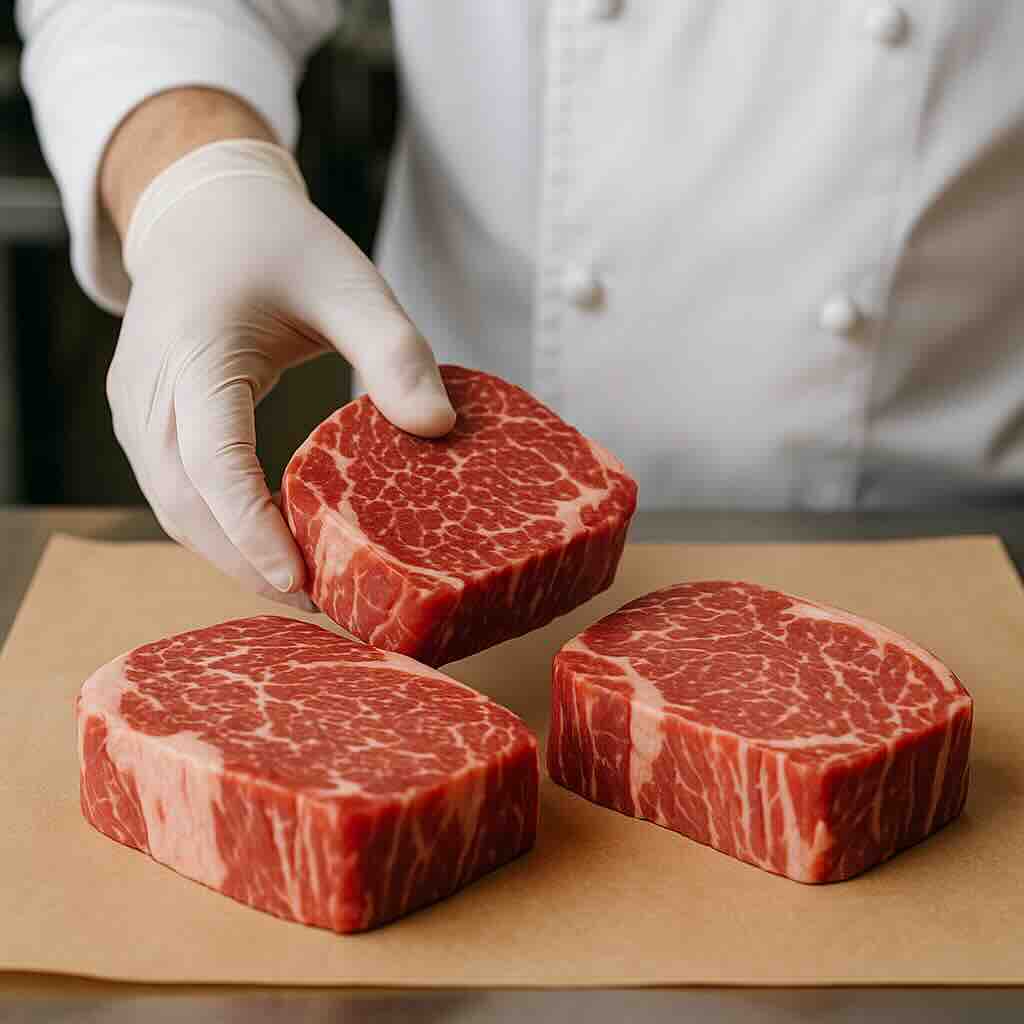
What ageing actually does
All beef is aged to some degree between slaughter and sale. During that time the muscle’s own enzymes slowly break down structural proteins, which makes the meat more tender and releases free amino acids and other flavour compounds. The two methods differ in what happens to the surface and to the water.
- Wet ageing happens inside a vacuum bag, usually in the chilled supply chain on the way from packer to shop. The meat loses almost no moisture, so it stays juicy and its flavour stays clean, bright and “beefy”. Most supermarket and a great deal of butcher beef, including tenderloin, is wet-aged by default, often for two to four weeks.
- Dry ageing happens unwrapped, in a chamber held just above freezing with controlled humidity and air flow. Water evaporates from the surface, which dries into a hard, dark bark; the meat inside loses moisture and concentrates. Flavour develops further, towards nutty, roasted and, with long ageing, cheesy or blue notes. It is usually done on large bone-in primals such as rib or sirloin, and the trim loss makes it expensive.
How each tastes and feels raw
| Wet-aged | Dry-aged | |
|---|---|---|
| Flavour raw | Clean, sweet, mildly metallic; the classic tartare taste | Deeper and savoury; nutty at 3–5 weeks, increasingly funky beyond that |
| Texture raw | Moist, soft, very tender (especially fillet) | Denser and slightly drier; can turn pasty if very long-aged |
| Colour when cut | Bright to deep red after blooming in air | Deep red interior under a dark crust |
| Trimming | Silverskin and fat only | Entire outer crust must be removed, plus silverskin |
| Usable yield | High | Lower — bark and trim can be a large share of the weight |
| Cost | Standard | Premium |
| Seasoning | Takes the full classic garnish well | Season more lightly so the aged flavour shows |
Raw, the flavour gap between the two is noticeable but narrower than on a grilled steak, because much of what people love in dry-aged steak is expressed through browning. What you taste in a dry-aged tartare is concentration and savouriness, not crust. That is why many cooks find a modest dry age the sweet spot, and why very long-aged beef (60 days and more) can taste out of balance raw: the funk that reads as complexity on a charred steak can read as simply strong in a cold bowl.
Tartare with dry-aged beef: the crust must go
The outer bark of a dry-aged primal is not food. It is dried, oxidised meat that has been exposed to the air of the ageing chamber for weeks and carries the surface moulds and bacteria that grow there. Cooking would deal with some of that on a steak; tartare has no cooking step. So:
- Buy it trimmed if you can. Ask the butcher to remove the crust and cut you a clean interior piece, ideally from sirloin, rump or the eye of the rib. This is the best option, because they have the right knives and a clean board.
- If you trim it yourself, use one knife and board for the crust and a separate clean knife and board for the interior. Cut away every dark, hard or discoloured surface until only uniformly red, moist meat remains. Do not let the cut interior touch the crust side again.
- Remove silverskin and hard fat as with any tartare, then chill the clean piece hard before dicing.
Trimmed properly, the interior of a well-managed dry-aged piece is suitable for tartare in the same way as other whole-muscle beef: contamination on intact whole muscle is concentrated on the surface, and you are removing that surface. It is not “sterile”, and the same raw-meat caveats apply. Only buy dry-aged beef for raw use from a butcher who ages it in a dedicated, temperature-controlled chamber and can tell you how long it has been aged.
Is a 21-day wet-aged fillet OK to use for tartare?
Yes, as a rule. A tenderloin or fillet labelled “aged 21 days” has almost always been wet-aged in its vacuum bag, and that is a perfectly normal starting point for tartare — it is very likely what many restaurants use. Check these points:
- The pack is intact and tight. A bag that has lost its vacuum, is puffed up with gas, or is leaking should go back to the shop.
- It is within its use-by date and has been refrigerated at 0–4°C/32–40°F throughout, including the journey home. Use-by is the limit that counts for raw eating; do not stretch it.
- The smell on opening. Vacuum-packed beef often has a slightly sour, tangy “confinement” odour when first opened, and the meat may look dark purple. Both are normal: rinse nothing, pat it dry, leave it on a plate in the fridge for 10–15 minutes, and the smell should fade and the colour bloom to red. If an unpleasant, sulphurous or putrid smell persists, or the surface is slimy, discard it.
- Trim the surface. Pat dry and shave off a thin outer layer along with the silverskin before dicing, then use it the same day it is opened.
The safety nuance is the cold chain, not the ageing. Vacuum packing keeps out air, not every bacterium, and some, such as Listeria, can grow slowly at fridge temperatures. That is why use-by dates on vacuum-packed meat are set carefully, and why beef that has been warm at any point, or that has sat opened in the fridge for days, is not tartare material however good it looks.
Our recommendation
- For a classic bistro tartare: fresh wet-aged fillet, top round or sirloin from a good butcher, in date and cold, trimmed and cut the day you eat it. Clean, tender and easy to season.
- For a richer, more savoury tartare: dry-aged sirloin or rump at roughly 21–35 days, crust fully removed by the butcher, seasoned more lightly — a little shallot, salt, good oil, perhaps just the yolk — so the ageing is not buried under mustard and Worcestershire.
- Avoid for tartare: very long-aged beef unless you know you like the flavour raw; any aged beef whose age, storage or origin you cannot confirm; out-of-date or damaged vacuum packs; and anything pre-ground.
Once you have the beef, the rest is technique: see our classic beef tartare recipe, the guide to sourcing quality meat, and, if you are ordering out, prepared vs unprepared tartare.