"Tartare" describes a method as much as an ingredient: a raw (or, in the vegan case, simply uncooked) ingredient, finely diced by hand and dressed with sharp, bright seasonings. That method has been applied to far more than beef. This guide maps the main families of tartare, says a little about what makes each one distinctive, and links to a recipe in every category so you can go straight from idea to plate.
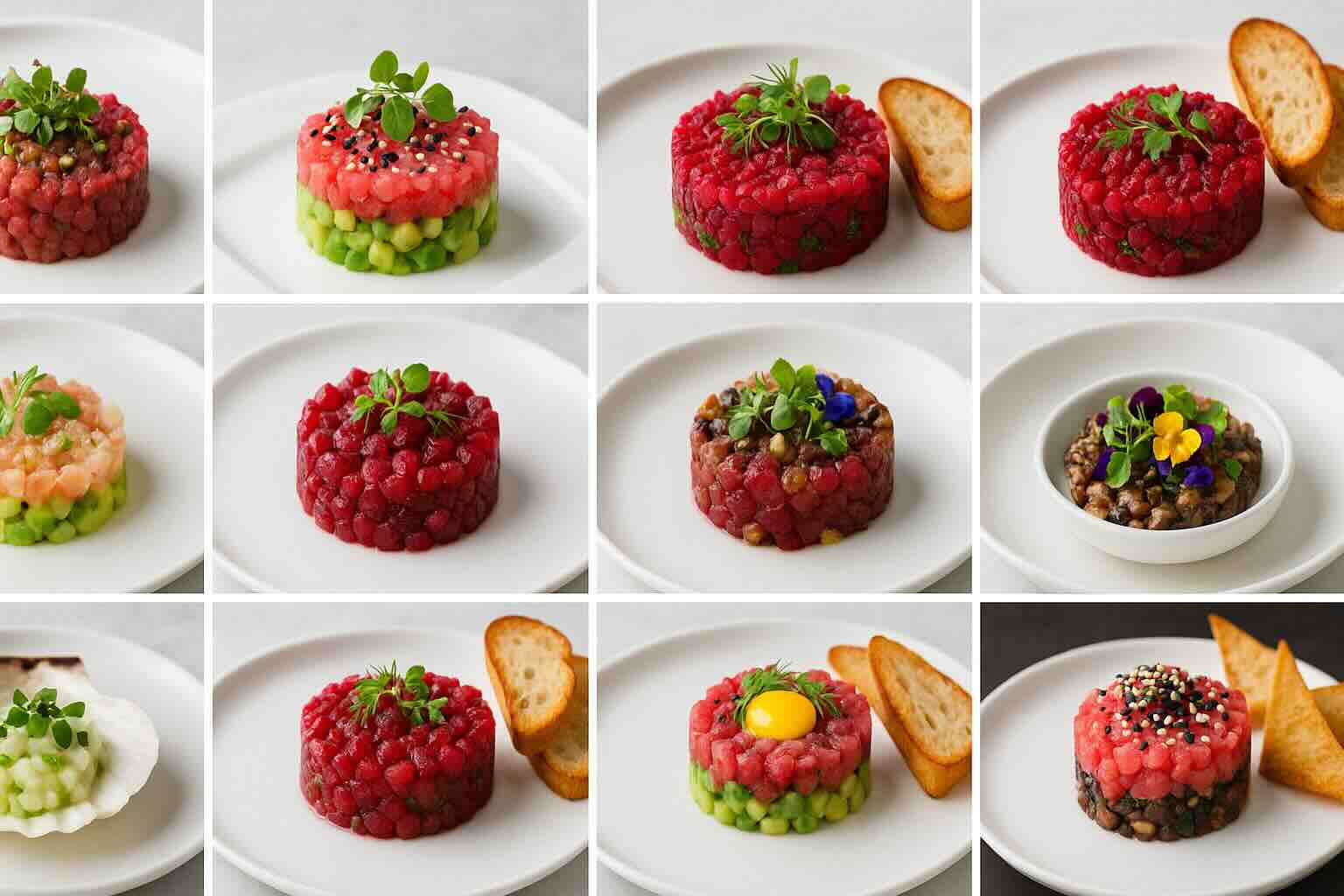
The categories below are a practical grouping rather than a strict taxonomy. Plenty of dishes straddle them — a global beef variant is still beef, and a vegan dish that borrows the classic seasoning is still recognisably tartare. Use the families to navigate, not to argue.
Beef & game
This is the original and still the reference point. Beef tartare is built on a clean whole-muscle cut, hand-cut, and seasoned with capers, shallot, mustard, Worcestershire, and often a raw yolk. Game versions lean leaner and gamier, usually wanting a little added fat or oil to compensate.
- Classic Beef Tartare — the canonical French preparation; the baseline every other meat tartare is measured against.
- Kitfo — the Ethiopian version, minced beef enriched with spiced clarified butter (niter kibbeh) and mitmita, served raw or gently warmed.
- Mett — the German raw, seasoned pork tradition; a cultural dish that comes with significant safety caveats outside its home context.
- Cannibal Sandwich — the Wisconsin "tiger meat" of raw seasoned ground beef on rye, with public-health warnings worth reading first.
- Venison Juniper Tartare — lean game venison brightened with juniper and berry notes.
- Bison Tartare — very lean bison, classic seasoning adjusted with added oil for richness.
- Lamb Tartare — lean leg of lamb with Mediterranean accents like mint, harissa, and preserved lemon.
- Horse Tartare — lean and slightly sweet, eaten in parts of Europe and given the classic tartare treatment.
Fish & seafood
Seafood tartare is lighter, cleaner, and more about freshness than seasoning. The dressing usually steps back — citrus, sesame, soy, herbs — to let the fish lead. Sourcing and freezing for parasite control matter more here than in beef.
- Tuna & Avocado Tartare — meaty tuna with creamy avocado and Asian-leaning seasoning; a crowd favourite.
- Spicy Tuna Tartare — the same base with sriracha or chili, sesame oil, and scallion, served on wonton or cucumber.
- Salmon Citrus Tartare — bright, citrus-forward salmon in a Nordic spirit.
- Classic Salmon Tartare — a more traditional dill, shallot, caper, and lemon treatment.
- Hamachi (Yellowtail) Tartare — delicate yellowtail with yuzu or ponzu, jalapeño, and scallion.
- Raw Shrimp Tartare — very fresh, sashimi-grade shrimp with lime, chili, and herbs.
- Scallop & Apple Tartare — sweet raw scallop balanced by crisp green apple and citrus.
Vegetable & vegan
Vegetable tartares borrow the form — fine dice, sharp seasoning, neat presentation — without any raw animal protein. They are the natural choice when you want to offer the tartare experience to guests who cannot or prefer not to eat raw meat or fish.
- Roasted Beet Tartare — deep, earthy roasted beet that mimics the colour and bite of beef tartare.
- Wild Mushroom Tartare — savoury, umami-rich mushrooms given the classic dice-and-dress treatment.
- Avocado Tartare — creamy diced avocado with tomato, lime, shallot, capers, and herbs.
- Tomato Tartare — ripe concassé tomato with shallot, capers, olive oil, and basil; a summer dish.
- Roasted Eggplant Tartare — roasted-then-diced eggplant with capers, lemon, and parsley, Mediterranean in spirit.
Global variants
Tartare-style dishes appear independently across many cuisines, often predating or developing separately from the French version. They are worth knowing both as recipes and as a reminder that "raw, diced, seasoned" is a near-universal idea.
- Korean Yukhoe — seasoned raw beef with sesame oil, pear, and often a yolk; a distinct tradition with its own seasoning logic.
- Kitfo — Ethiopia's spiced-butter beef tartare (also listed under beef & game), eaten with injera.
- Mett — Germany's raw pork, eaten very fresh and under specific local conditions.
- Cannibal Sandwich — an American-Midwest holiday tradition of raw seasoned ground beef.
- Horse Tartare — a European specialty in regions where horse is eaten.
What ties them together
Across every category, the same principles hold: a knife-cut (not a grinder) for texture, cold ingredients and cold tools, bright acidic and salty seasonings that wake the main ingredient without burying it, and service at the last possible moment. Master those, and any of the recipes above becomes a variation on a technique you already know.