Beef tartare is a rich, intensely savory dish that arrives cold and soft. Almost everything you serve alongside it is solving one of two problems: giving the diner something crisp to put it on, and cutting through the richness so the last bite tastes as good as the first. Get those two jobs right and the rest is taste.
This guide covers the classic accompaniments, what not to overdo, drink pairings, how portioning changes between a starter and a main, and a sample menu you can build around it.
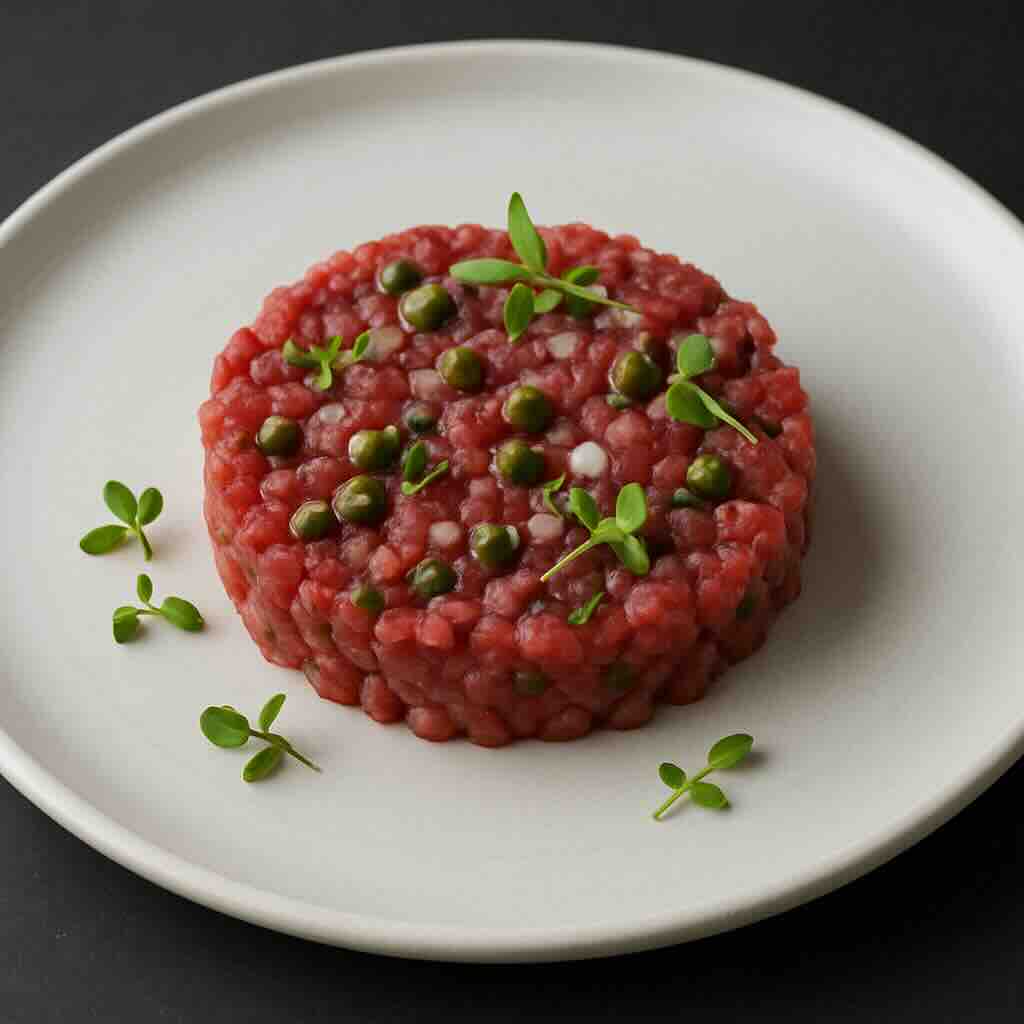
The job of a side: crunch and contrast
Tartare is soft and fatty. The accompaniments that have stuck around for a century all do one of two things: they add a crisp vehicle, or they add acid, salt, or sharpness to reset the palate. Keep that framework in mind and you can improvise confidently.
It helps to think about texture first. A plate of tartare on its own is one note — cool, yielding, dense. Every classic pairing exists to interrupt that note. Crisp bread or fries give the bite somewhere to go; sharp pickles and acid stop the fat from coating your palate; a few fresh leaves lift the whole thing. When a tartare plate feels heavy or monotonous, the fix is almost always more contrast, not more food.
Something to put it on
- Toast points. Thin white or sourdough bread, crusts off, toasted and cut into triangles. The most classic restaurant presentation. They stay crisp and don't compete with the beef.
- Sliced baguette / grilled bread. A cut baguette, lightly grilled or toasted and rubbed with nothing more than a whisper of garlic, is the simplest home option. Avoid anything heavily seeded or sweet.
- French fries — specifically pommes allumettes. Thin matchstick fries are the bistro pairing (steak tartare et frites). The heat and crunch against the cold meat is the whole point.
- Plain crackers or crostini. A neutral, crisp cracker works if you want something lighter than bread. Skip strongly flavored crackers.
Whatever the vehicle, toast or fry it close to serving and keep the tartare cold until the last moment. A warm crisp base against cold seasoned beef is far better than both at room temperature.
Sharp, salty, acidic garnishes
These are often folded into the tartare itself, but a small extra dish on the side lets each diner adjust:
- Cornichons — tiny, sharp French pickles; the classic cutting element.
- Capers — briny pops of salt and acid.
- Shallot or red onion — finely minced, for bite.
- A small lemon wedge or a few drops of good olive oil — to brighten or enrich to taste.
- Flaky salt and freshly cracked pepper — let diners finish their own.
A green note
A small, lightly dressed green salad — frisée, arugula, or mâche with a sharp vinaigrette — is the standard plate-mate. It adds freshness and turns a starter portion into something that feels complete. Dress it lightly so the vinaigrette doesn't bleed into the meat.
What not to overdo
The most common mistake is crowding the plate. Tartare is the point; the sides are support.
- Don't stack competing sauces. The tartare is already seasoned. A second strong sauce (a creamy dressing, a heavy aioli) muddies it.
- Don't go sweet. Sweet breads, sweet pickles, or fruit chutneys fight the savory profile.
- Don't over-garnish. Three or four sharp accompaniments are plenty; ten is chaos.
- Don't serve it ice-cold-then-let-it-sit. The plate is about contrast and freshness, not abundance.
Drink pairings
The richness and the iron-bright flavor of raw beef want a drink with acidity or a clean palate-resetting quality.
- Dry, crisp whites — a high-acid white (think Chablis-style Chardonnay, dry Riesling, or Sauvignon Blanc) cuts the fat cleanly.
- Light, bright reds — a chilled, low-tannin red such as a Beaujolais-style Gamay or a young Pinot Noir works without overpowering.
- Sparkling wine or Champagne — the bubbles and acidity are a reliable, festive match, especially for a starter.
- Beer — a crisp pilsner or a dry saison plays the same acidity-and-bubbles role.
- Non-alcoholic — sparkling water with lemon, or a dry, tart kombucha, keeps the same refreshing contrast.
For a deeper look at matching wine to the dish, see our dedicated wine-pairing guide linked below.
The principle behind all of these is the same one that governs the food: contrast. Raw beef is rich and faintly metallic; a sweet, heavy, or oaky drink leans into that and makes the dish feel cloying, while an acidic or effervescent drink resets the palate between bites. If you're unsure what to open, default to "crisp and dry" and you'll rarely go wrong. Serve whites and light reds cool — a slight chill on a Gamay or Pinot is a feature here, not a flaw.
Starter or main? Portioning and the plate
How you serve tartare changes what goes with it:
- As a starter (roughly 60–85 g / 2–3 oz of beef per person): a neat molded round, a few toast points, a small cluster of cornichons and capers, and maybe a few leaves of dressed greens. Light and quick.
- As a main (roughly 150–170 g / 5–6 oz per person): the same tartare with a generous pile of thin fries, a proper green salad, and more bread. This is the bistro "tartare-frites" plate. A glass of crisp white or a chilled red rounds it out.
For detailed quantities and scaling for a group, our portion guide goes deeper.
A sample menu
If you're building a dinner around tartare as a starter:
- Aperitif: a glass of dry sparkling wine.
- Starter: beef tartare, toast points, cornichons, dressed frisée.
- Main: a roasted or grilled dish — something cooked, to balance the raw opener (e.g. roast chicken or a vegetable gratin).
- Dessert: something light and not too sweet, like a citrus tart or fresh fruit.
If tartare is the main event, lead with a light soup or a crudo, then serve the tartare-frites plate with a green salad, and finish with cheese or a simple dessert.
One sequencing note worth keeping in mind: because tartare is raw and cool, it works best when what follows it is cooked and warm. A menu that opens with tartare and then serves a roast or a braise feels balanced, while a menu of raw-after-raw can feel one-dimensional. The same logic applies within the plate — the hot fries against the cold beef are doing exactly this on a smaller scale.
Building your own plate
If you remember three things when you plate tartare, remember these:
- One vehicle, kept crisp. Toast points or fries, prepared at the last minute. Don't offer three different breads.
- Two or three sharp accents, not ten. Cornichons, capers, and a little onion are plenty; let the diner adjust salt and acid to taste.
- A drink with acidity or bubbles. It does the same job as the pickles, in the glass.
Everything else is personal taste. The dish has survived a century on French menus precisely because it is simple; the accompaniments are there to frame it, not to hide it.