The point of cooking for someone on Valentine's night is not to disappear into the kitchen for two hours. It's to make something that feels considered and a little special while still actually being in the room. Tartare is unusually good at this. It's a restaurant dish that home cooks rarely attempt, the bulk of the work happens before your guest arrives, and the final assembly is a calm five minutes.
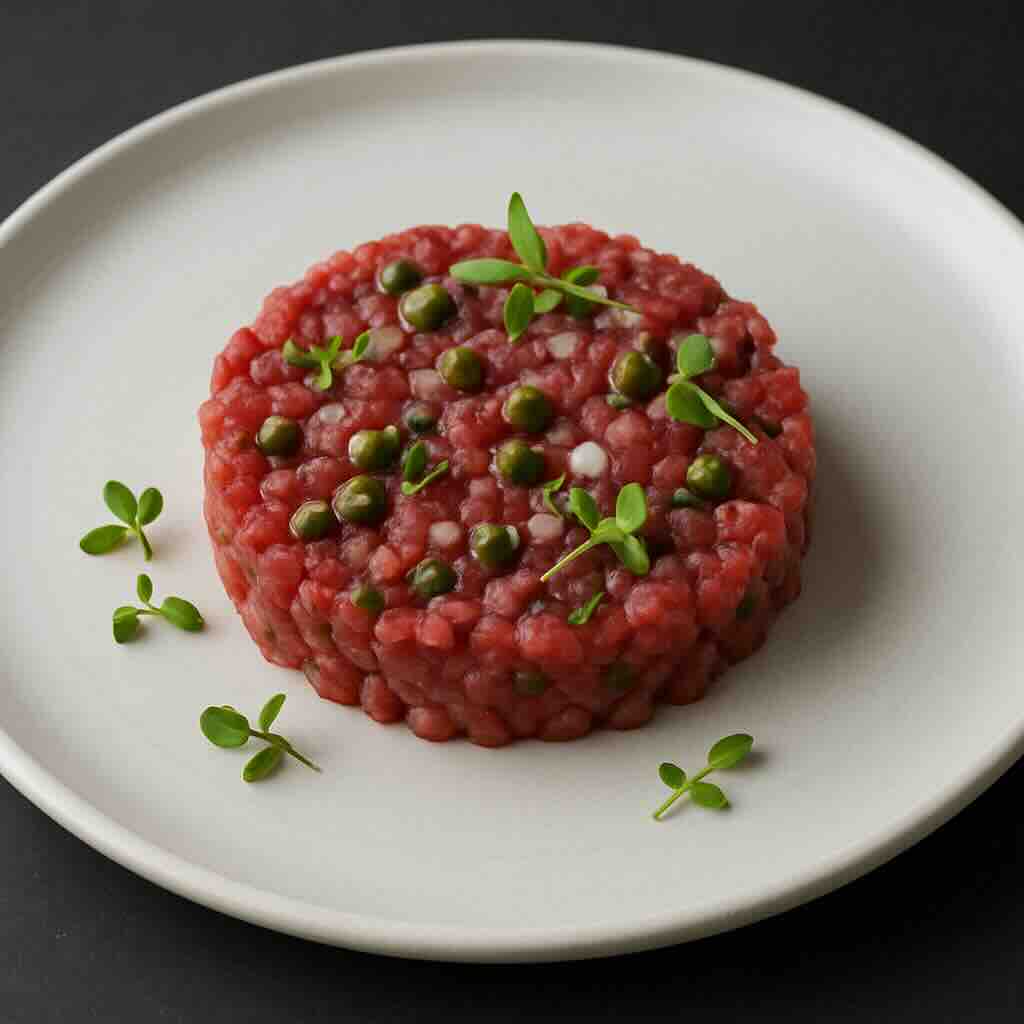
This is a plan for two: why the dish works for a date, how to scale a recipe down without it going wrong, a simple two-course structure, plating touches that elevate it, what to pour, and how to time the evening so you're never stuck at the counter.
Why tartare makes a good date-night dish
- It's impressive. Hand-cut tartare signals effort and confidence. Most people have only had it in restaurants, so making it at home reads as generous and a little daring.
- It's intimate. A small, beautifully composed plate suits a table for two far better than a heaving roast. The scale is right.
- It's mostly prep-ahead. The chopping, the dressing, the garnishes — all done in advance and chilled. You're not flipping pans while your guest sits alone.
Scaling a recipe down to two
Most tartare recipes are written for four. Scaling to two is mostly a matter of halving, but a few things deserve attention.
- Protein: plan a modest portion each as a starter — this is rich food, and you have a second course to follow. Buy the best small piece you can rather than a large cheaper one.
- Seasonings: halve the mustard, capers, cornichons, shallot, and oil, but don't add them all at once. Dress to about three-quarters, taste, and adjust. Small batches over-season easily.
- Egg: a single yolk is often plenty to bind two small portions, or use one quail yolk per plate for a neat look. Skip it entirely if either of you would rather.
- Acid and salt: a squeeze of lemon and flaky salt are easiest to judge right at the end, plate by plate.
The general principle: under-dress, taste, and bring it up. You can always add; you can't take seasoning back out of two precious portions.
A simple two-course plan
Keep it light. Tartare is the centrepiece; everything else stays out of its way.
- First: a classic beef tartare for two, with toasted baguette or thin crisps and a few dressed leaves on the side.
- Second: something warm and simple that needs little attention — a seared steak to share, a roast chicken thigh, or a pan of mushrooms and a good loaf. The contrast of cold-then-warm carries the meal.
Resist adding a third course. Two well-executed plates and an unhurried evening beat three rushed ones. If you want a sweet finish, buy it — good chocolate or a tart from a bakery — rather than cooking it.
Plating touches
A few small moves make a home plate look deliberate:
- Use a ring mold (or a clean tin) to shape a neat disc, then lift it slowly. A tidy cylinder instantly looks composed.
- Make a shallow indent on top for the yolk so it sits rather than rolls.
- Keep garnish restrained: a scatter of chopped chive, a few capers, a thread of good oil, a little flaky salt at the table.
- Chill the plates. A cold plate keeps the tartare crisp and reads as care.
- Wipe the rim. One pass with a clean cloth is the difference between "made at home" and "looks like the restaurant."
Wine pairing
Tartare wants a wine with acidity and freshness to cut its richness rather than something heavy and tannic. A crisp white, a dry sparkling, or a light, chilled red all work; with a fish tartare, lean firmly toward the white or sparkling. Sparkling has the obvious advantage of feeling festive, which suits the night.
For specifics — styles, why high acidity matters, and matches for beef versus fish tartare — see our dedicated guide to wine pairing for tartare. Open and chill whatever you choose before your guest arrives so it's ready to pour.
Timing so you're not stuck in the kitchen
The whole appeal collapses if you spend the evening at the counter. A sample run:
| When | Do this |
|---|---|
| Afternoon | Shop for the protein, chill the wine and the plates, set the table. |
| An hour or two before | Chop aromatics, mix the dressing base, prep garnishes, cover and refrigerate. Toast the bread. |
| Just before serving | Cut the chilled protein, dress lightly, taste, mold and plate. Five minutes. |
| Between courses | Sear or warm the second course while you both finish the tartare and the first glass. |
Putting it together
A halved classic beef tartare, a warm and simple second course, chilled plates, a crisp wine, and a timeline that front-loads the work: that's a Valentine's dinner that looks like real cooking and still leaves you present for it. Keep it small, keep it cold until the last minute, and don't over-season two precious portions.
Frequently asked questions
Is tartare a good date-night dish?
Yes. Tartare is impressive because most people have only had it in restaurants, intimate because a small composed plate suits a table for two, and convenient because nearly all the work is done in advance and chilled. Final assembly takes about five minutes, so you spend the evening with your guest rather than stuck at the stove.
How do I scale a recipe for two?
Mostly halve a four-portion recipe, but under-dress and adjust. Plan a modest starter portion of protein each, halve the mustard, capers, shallot and oil but add them to about three-quarters then taste, use a single yolk to bind both small portions, and judge the lemon and salt at the end, plate by plate. Small batches over-season easily.
What wine pairs well?
Choose a wine with acidity and freshness to cut the richness rather than a heavy, tannic one: a crisp white, a dry sparkling, or a light chilled red all work, and you should lean toward white or sparkling with a fish tartare. Sparkling feels festive, which suits the occasion. Open and chill it before your guest arrives.
How do I make it feel special?
Shape a neat disc with a ring mold and lift it slowly, make a small indent for the yolk, keep the garnish restrained, chill the plates, and wipe the rim before serving. Pour a chilled wine, keep the menu to two unhurried courses, and do all the prep ahead so the only live job is assembling two plates.