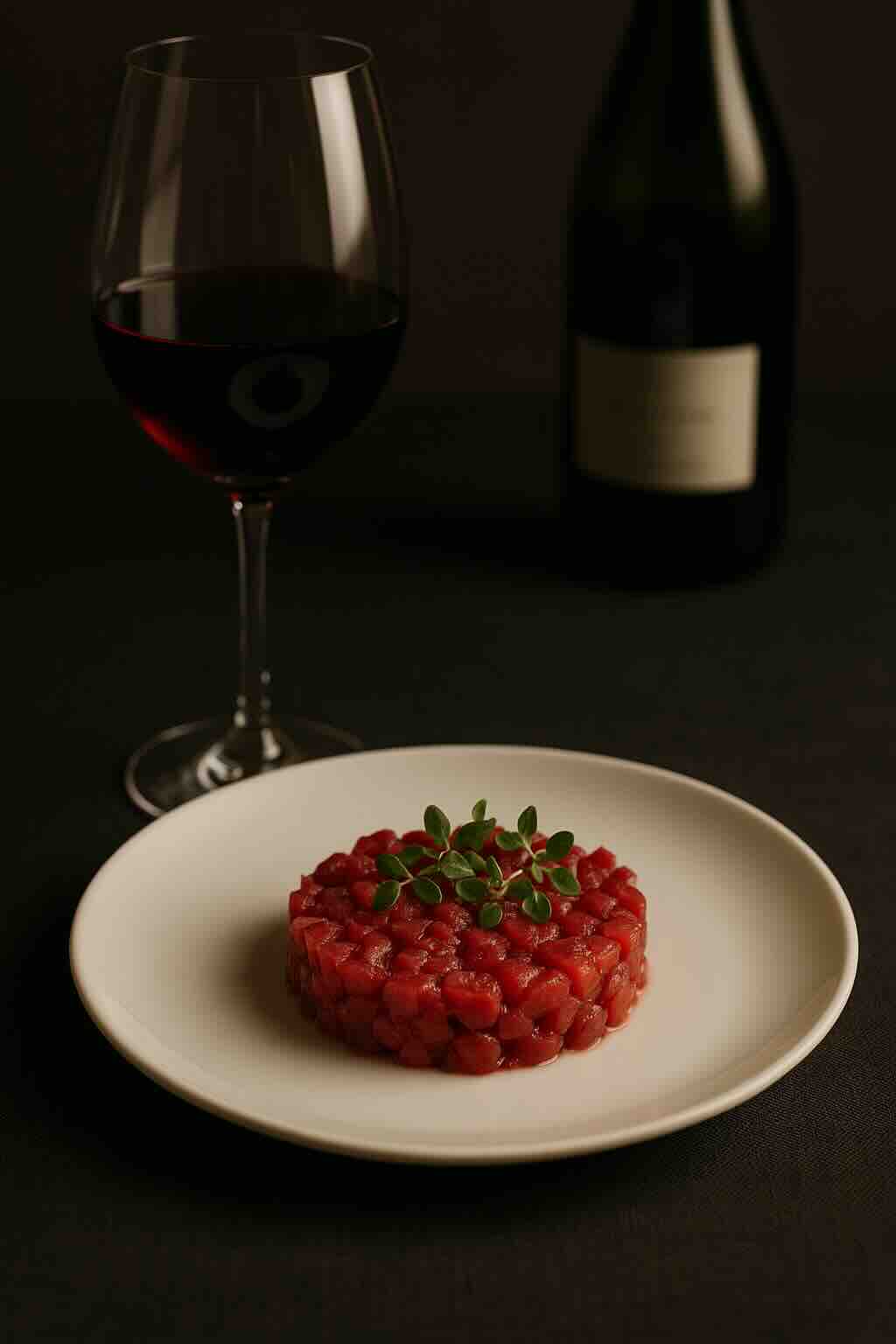
The marriage of wine and tartare represents one of gastronomy's most sophisticated pairings. Raw preparations demand wines that complement rather than compete, enhance rather than overpower, and bridge the gap between the pristine purity of uncooked ingredients and the complex flavors developed through careful seasoning. This comprehensive guide explores the nuanced art of selecting the perfect wine for every style of tartare.
Short answer: the safest wine to pair with steak tartare is a dry, high-acid wine with little or no oak and low tannin. Brut Champagne or crémant, Chablis or another unoaked Chardonnay, Sancerre, dry Riesling and lightly chilled Beaujolais or Pinot Noir all work. Avoid big, oaky, tannic reds. The capers, mustard, shallot and cornichons in a classic tartare need acidity to meet them, and raw beef has no charred crust to stand up to heavy tannin.
Quick reference: what wine pairs well with each tartare
Use this table if you just need a bottle for tonight. The sections below explain why each one works.
| Tartare | First choice | Also good | Avoid |
|---|---|---|---|
| Classic beef (steak) tartare | Brut Champagne, Chablis, cru Beaujolais | Red Burgundy, Sancerre, Aligoté, dry rosé | Heavily oaked Chardonnay, big Cabernet |
| Tuna tartare | Blanc de blancs, dry Riesling | Albariño, Grüner Veltliner, light Pinot Noir | Tannic reds with soy-dressed tuna |
| Salmon tartare | Sancerre, Chablis | Rosé Champagne, dry rosé, Grüner | Oaky, buttery whites |
| Kitfo (spiced butter, mitmita) | Off-dry Riesling, or tej (Ethiopian honey wine) | Gewürztraminer, chilled Gamay | High-alcohol reds that amplify chilli heat |
| Vegan tartare (beet, mushroom, tomato) | Pinot Noir (beet, mushroom), Provence rosé (tomato) | Chablis, Muscadet, aged Champagne | Heavy tannic reds |
Understanding the Unique Challenges of Raw Cuisine
Pairing wine with tartare presents distinct challenges that differentiate it from traditional cooked dishes:
- Textural Considerations: Raw proteins have different mouthfeel than cooked
- Temperature Contrast: Cold dishes affect wine perception
- Delicate Flavors: Subtle tastes can be easily overwhelmed
- Acidity Balance: Raw preparations often include acidic elements
- Umami Intensity: Concentrated savory flavors need careful matching
Classic Beef Tartare Pairings
Traditional French Approach
The birthplace of beef tartare offers time-tested pairing wisdom:
Burgundy Reds (Pinot Noir)
- Why it works: Earthy minerality complements beef's iron notes
- Recommended regions: Gevrey-Chambertin, Nuits-Saint-Georges
- Serving temperature: 60-62°F (15-17°C)
- Best with: Classic preparations with capers and shallots
Beaujolais Cru
- Why it works: Fresh fruit balances rich meat, low tannins won't clash
- Recommended: Morgon, Moulin-à-Vent, Fleurie
- Temperature: Slightly chilled, 55-58°F (13-14°C)
- Best with: Herb-heavy tartares with fresh garnishes
Modern International Selections
| Wine Style | Region | Key Characteristics | Pairing Rationale |
|---|---|---|---|
| Oregon Pinot Noir | Willamette Valley | Bright acidity, red fruit | Complements without overwhelming |
| Barolo Chinato | Piedmont, Italy | Herbal complexity | Matches herb and spice elements |
| Rhône Valley Red | Côtes du Rhône | Peppery, medium body | Spice notes enhance seasoning |
| Chianti Classico | Tuscany | Bright acidity, cherry notes | Acidity cuts through richness |
Champagne and Sparkling Wine with Beef Tartare
Beef tartare and Champagne is a bistro classic for good reason. The high acidity cuts through the egg yolk and the fat of the beef, the bubbles clean your palate between rich forkfuls, and the toasty, bready notes of bottle-aged sparkling wine echo the toast or fries on the side. With classic tartare, a brut or extra brut works best: the drier the wine, the better it copes with capers and mustard.
- Blanc de blancs (100% Chardonnay): the most precise match. It is lean, chalky and lemony, and suits a lightly dressed tartare or any fish tartare.
- Blanc de noirs or Pinot-led brut: has more body and red-fruit depth, so it stands up to a heavily seasoned beef tartare with Worcestershire and Tabasco.
- Rosé Champagne: a lovely middle ground with beef, salmon or beet tartare.
- Crémant (de Bourgogne, de Loire, d'Alsace, du Jura): made by the same traditional method, at a fraction of the price. Crémant de Bourgogne is Chardonnay and Pinot Noir from the same region as the classic red and white pairings, which makes it the best-value bottle for a tartare party.
- Cava and English sparkling: both are good, dry, high-acid alternatives. Prosecco is usually too soft and fruity for a mustardy tartare.
Pairing Beef Tartare with Chardonnay
Chardonnay can be one of the best white wines to pair with beef tartare or one of the worst. It depends on how it was made.
Unoaked or lightly oaked: yes
- Chablis (Petit Chablis, Chablis, Premier Cru) is the classic white for steak tartare. It is steely and mineral, with lemon and green-apple acidity that mirrors the capers and cornichons.
- Mâcon-Villages, Saint-Véran, Pouilly-Fuissé are a little rounder and riper, and suit a creamier tartare made with more yolk or aioli.
- Cool-climate New World Chardonnay made in a restrained, low-oak style works on the same logic.
Heavily oaked and buttery: usually no
- Big vanilla, toast and butter notes from new oak and full malolactic fermentation flatten the fresh, clean taste of raw beef. The oak also clashes with the vinegar in pickles and mustard, and the wine can taste sweet and heavy next to the dish.
- The exception is a tartare with a smoky or rich element, such as smoked egg yolk, bone marrow or a truffle dressing. A well-balanced oaked white Burgundy (Meursault style) can work there, as long as the acidity is still high.
Other White Wines to Have with Beef Tartare
Many people only think of red with beef, but a crisp white often suits tartare better because the dish is served cold and seasoned with sharp, acidic ingredients.
- Sancerre and Pouilly-Fumé (Sauvignon Blanc): flinty and herbal, great with plenty of chives, parsley or tarragon. New Zealand Sauvignon can be too loud. Pick a restrained one.
- Grüner Veltliner: the white pepper and lentil-like savouriness suit Dijon and shallot. Austria's classic partner for Beef Tatar, and a natural answer to "Weine zu Tatar".
- Dry Riesling: German trocken, Alsace, Austrian or Clare Valley Riesling. Its high acidity and lime notes are excellent with tartare that uses Worcestershire and hot sauce, and with Asian-style tuna tartare.
- Bourgogne Aligoté: the sharp Burgundian white used in kir. It is cheap, tart and brilliant with a bistro tartare and fries.
- Dry rosé: Provence, Tavel or Sancerre rosé bridges red and white and suits a summer lunch.
In German-speaking countries the usual picks with Tatar are a dry Riesling, a Grüner Veltliner, or a light Spätburgunder (Pinot Noir), all following the same principle: high acid, low tannin.
Best Australian Wine Pairings for Beef Tartare
Australia's cooler regions make exactly the style tartare wants:
- Chardonnay from the Yarra Valley, Adelaide Hills, Mornington Peninsula or Tasmania: the modern, tight, low-oak style is close to Chablis in spirit.
- Riesling from the Clare Valley or Eden Valley: bone-dry, with lime and high acidity. It is a great match for classic or spicy tartare.
- Pinot Noir from the Yarra, Mornington, Tasmania or Adelaide Hills: light enough to serve slightly chilled with beef tartare.
- Tasmanian sparkling: traditional-method fizz that stands in well for Champagne.
Skip warm-climate Barossa Shiraz and big Coonawarra Cabernet for tartare. Save them for the grilled steak.
Seafood Tartare Wine Selections
White Wines for Fish
Fish tartares require wines with minerality and precision:
Sancerre and Loire Valley Whites
- Grape: Sauvignon Blanc
- Profile: Crisp minerality, citrus notes, herbal undertones
- Perfect for: Salmon, tuna, and sea bass tartares
- Why: The minerality echoes the ocean while acidity brightens flavors
Albariño and Vinho Verde
- Origin: Spain and Portugal
- Character: Saline minerality, bright acidity
- Ideal match: Scallop and shellfish tartares
- Temperature: Well-chilled, 45-48°F (7-9°C)
Sparkling Wine with Seafood Tartare
The same logic as for beef applies, only more so: a lean blanc de blancs or a good crémant suits tuna, scallop and salmon tartare, while blanc de noirs has the weight for richer, oilier fish. See Champagne and sparkling wine above for the full breakdown.
🥂 Sommelier's Secret: The Champagne Rule
When in doubt with any tartare, quality Champagne rarely fails. The acidity, bubbles, and complexity work with virtually every raw preparation while elevating the dining experience.
Game Meat and Bold Flavors
Venison and Wild Game Pairings
Game meats require wines with intensity and character:
- Northern Rhône Syrah: Peppery, smoky notes complement gamey flavors
- Brunello di Montalcino: Structured tannins and earthiness
- Aged Tempranillo: Spanish reds with leather and earth notes
- Washington State Cabernet: Bold fruit with structured tannins
Herb and Spice Considerations
When tartares include bold seasonings:
- Juniper (with venison): Gin-botanical wines like some Austrian Grüner Veltliners
- Asian spices: Off-dry Rieslings or Gewürztraminers
- Mediterranean herbs: Provençal rosés or Southern Italian reds
- Peppery elements: Syrah-based wines with natural pepper notes
Vegetarian and Vegan Tartare Pairings
Plant-Based Complexity
Vegetable tartares open new pairing possibilities:
Beet Tartare Wines
- Earthy reds: Burgundy, Oregon Pinot Noir
- Mineral whites: Chablis, Muscadet
- Rosé options: Provence rosé, Tavel
- Why: Earth-to-earth connections, mineral echoes
Mushroom Tartare Selections
- Forest floor wines: Aged Burgundy, mature Barolo
- Umami-rich options: Aged Champagne, mature Riesling
- Natural wines: Unfiltered wines with earthy characteristics
Regional Pairing Traditions
French Regional Harmony
Exploring terroir connections:
- Normandy: Calvados or dry cider with apple-garnished tartares
- Provence: Local rosés with Mediterranean-inspired preparations
- Alsace: Riesling or Gewürztraminer with spiced tartares
- Bordeaux: Left Bank Cabernets with rich, traditional preparations
International Approaches
- Japanese: Sake, especially junmai styles, with Asian-influenced tartares
- Italian: High-acid Sangiovese with tomato-garnished preparations
- German: Dry Riesling with tartares featuring pickled elements
- Spanish: Tempranillo or Godello with Iberian-style preparations
Technical Pairing Considerations
Acidity Management
Understanding acid interactions:
- High-acid tartares: Need wines with matching or higher acidity
- Citrus elements: Pair with citrusy wines like Sauvignon Blanc
- Vinegar-based dressings: Choose wines with bright acidity
- Low-acid preparations: Can handle rounder, softer wines
Tannin Considerations
Raw proteins interact differently with tannins:
- High tannins: Can overwhelm delicate raw flavors
- Soft tannins: Provide structure without domination
- Fat content: Richer tartares can handle more tannin
- Age considerations: Older wines with resolved tannins work better
Serving and Presentation
Temperature Protocols
Proper temperature enhances both wine and food:
- Whites and rosés: 45-50°F (7-10°C)
- Light reds: 55-60°F (13-15°C)
- Full-bodied reds: 60-65°F (15-18°C)
- Sparkling wines: 42-46°F (6-8°C)
Glassware Selection
- Burgundy bowls: For complex reds with aromatics
- Bordeaux glasses: For structured, full-bodied wines
- Champagne flutes: Preserve bubbles and focus aromatics
- Universal glasses: Versatile option for mixed pairings
Budget-Conscious Pairing Strategies
Value Wine Categories
Excellent pairings without premium prices:
- Portuguese wines: Exceptional value in both reds and whites
- Spanish regions: Ribeira Sacra, Valdeorras for unique options
- Eastern European: Austrian, Hungarian wines offer complexity
- New World alternatives: South African, Chilean premium options
Strategic Shopping
- Focus on lesser-known regions from famous countries
- Seek out indigenous grape varieties
- Build relationships with knowledgeable wine shops
- Explore natural and biodynamic producers
Seasonal Pairing Adaptations
Spring Selections
- Fresh, young wines with bright acidity
- Loire Valley whites and light reds
- Young Beaujolais and Loire reds
- Crisp rosés and dry sparkling wines
Summer Preferences
- Chilled wines with refreshing qualities
- Provençal rosés and Italian whites
- Albariño and Vinho Verde
- Light, chillable reds
Fall and Winter Choices
- More structured wines with complexity
- Aged Burgundy and mature Champagne
- Italian Barolos and Spanish Riojas
- Full-bodied whites with some age
Professional Service Considerations
Restaurant Wine Programs
Building a tartare-friendly wine list:
- Include a range of styles and price points
- Offer half-bottles for intimate dining
- Train staff on specific pairing recommendations
- Consider wine flights that complement tasting menus
Wine Storage and Service
- Proper cellar conditions for wine quality
- Correct serving temperatures for each style
- Appropriate glassware for different wine types
- Proper decanting for wines that benefit
Common Pairing Mistakes
Avoiding Pitfalls
- Over-oaking: Heavily oaked wines can overwhelm delicate flavors
- Too much alcohol: High-alcohol wines can mask subtle tastes
- Clashing temperatures: Serving wines too warm with cold dishes
- Ignoring preparation: Not considering sauces and seasonings
- One-size-fits-all: Using the same wine for all tartare styles
Future Trends in Wine Pairing
Emerging Styles
- Natural wines: Unmanipulated wines with food-friendly qualities
- Orange wines: Skin-contact whites offering complexity
- Pet-nat: Natural sparkling wines with rustic charm
- Low-intervention: Minimal sulfite wines with pure expression
Global Exploration
- Wines from emerging regions
- Indigenous grape varieties
- Ancient winemaking techniques
- Climate-adapted viticulture
Planning the rest of the plate? See what to serve with beef tartare, what beef tartare tastes like, prepared vs unprepared tartare and our seafood tartare guide.
Conclusion
The art of pairing wine with tartare represents the pinnacle of culinary sophistication, where the purity of raw ingredients meets the complexity of fermented grapes. Success lies not in following rigid rules but in understanding the fundamental principles of harmony, balance, and enhancement that create memorable dining experiences.
Whether you're serving a classic beef tartare with traditional Burgundy or experimenting with innovative vegan preparations and natural wines, the key is to taste, experiment, and trust your palate. The best pairing is ultimately the one that brings you the most pleasure and enhances your appreciation of both the wine and the dish.