Beef tartare (in French, steak tartare) is one of those dishes whose reputation is more complicated than its ingredient list. There is no cooking, no sauce to build, and no long list of components. It is raw beef and a handful of sharp, salty, acidic things that keep the beef from tasting flat. Understanding what each element is doing is most of what you need to make it well.
What follows is the classic French composition, ingredient by ingredient, with a note on which parts are genuinely traditional and which are optional. If you want the method rather than the anatomy, go straight to our classic beef tartare recipe.
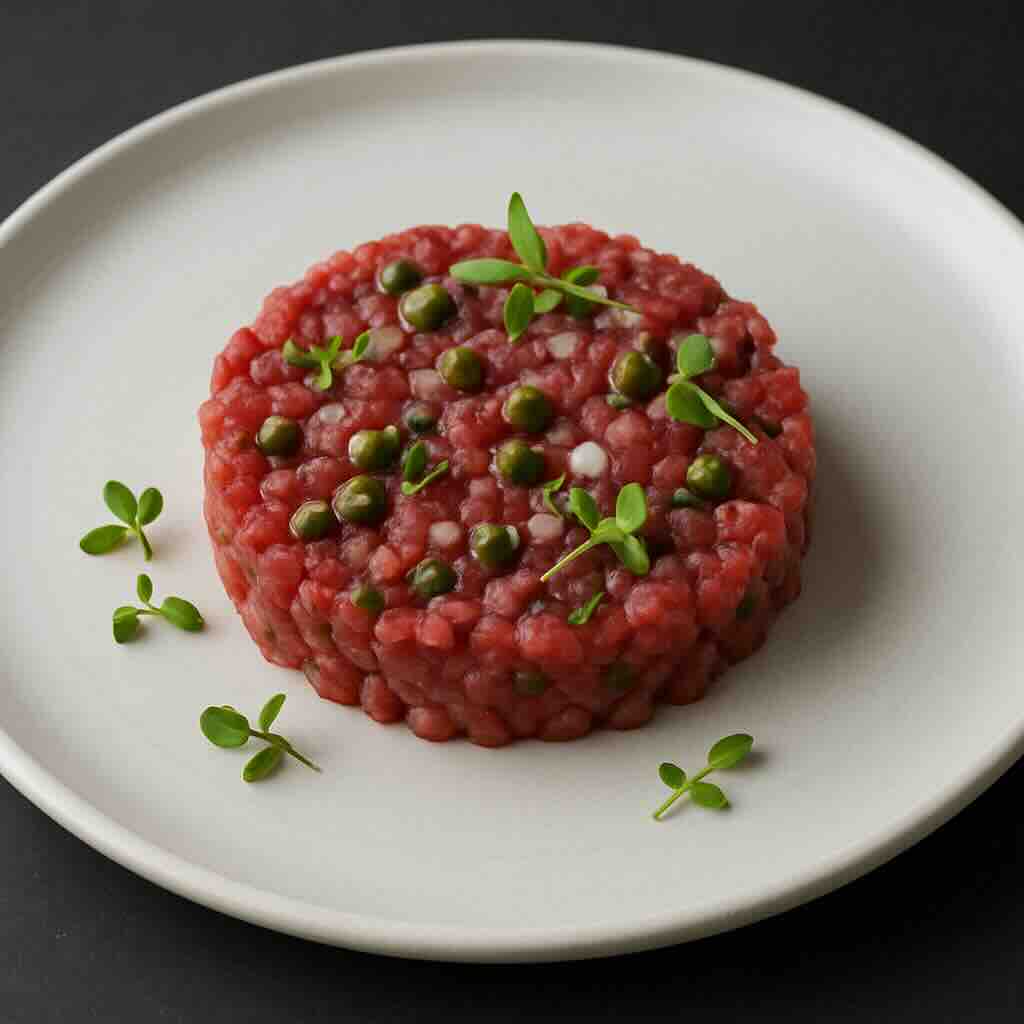
The beef itself
The single largest ingredient, and the one that decides whether the dish works. Tartare uses lean, whole-muscle beef — tenderloin, top round, or eye of round — trimmed of every scrap of silverskin and fat, and cut by hand into 3–5 mm dice. It is never made from pre-ground beef: grinding distributes surface bacteria through the whole batch and crushes the fibres into paste. Our guide to the best cut of beef for tartare covers the choice in detail.
The classic seasoning, and what each part does
| Ingredient | Typical amount (per 500 g beef) | What it contributes |
|---|---|---|
| Shallot, very finely diced | 1 small (about 30 g) | Sweet, mild allium bite; sharper than onion but without the harshness. |
| Capers, rinsed and chopped | 1–2 tbsp | Salt and a floral, briny sourness that lifts the whole bowl. |
| Cornichons, finely diced | 3–4 | Vinegar acidity plus the crunch that keeps the texture from being uniform. |
| Dijon mustard | 1–2 tsp | Heat, acidity, and emulsification — it binds the oil and yolk into the meat. |
| Worcestershire sauce | 1–2 tsp | Savoury depth from anchovy and tamarind; the closest thing tartare has to an umami backbone. |
| Egg yolk | 1 per portion, or 1 whole for the mix | Richness and body; it turns the seasoning into a dressing that coats each cube. |
| Salt and black pepper | To taste | Added last, because salt draws moisture out of raw beef if it sits. |
Those seven make a complete, recognisable steak tartare. Notice what they have in common: salt, acid, and pungency. Raw beef is soft, cold, and mild, and without sharp counterweights it reads as bland and slightly cloying. Every classic garnish is there to cut through it.
Common optional additions
- Flat-leaf parsley or chives — freshness and colour; almost universal in France.
- Olive oil — a tablespoon added with the yolk gives gloss and helps the seasoning coat evenly.
- Tabasco or cayenne — a few drops of heat; common in bistro versions.
- Anchovy, mashed to a paste — deepens the savoury note if you are not using Worcestershire.
- Brandy or cognac — a teaspoon; traditional in some older recipes, divisive today.
- Ketchup or tomato — found in some Central European versions; not part of the French classic.
Is the raw egg yolk essential?
Traditionally yes, practically no. The yolk is doing a real job — it emulsifies the mustard and oil into a dressing and adds fat that lean beef lacks — but you can get most of the way there with a spoonful of good mayonnaise, a little crème fraîche, or simply more olive oil. Raw egg carries its own small salmonella risk, which pasteurised eggs largely remove; our article on egg yolks on raw preparations covers the trade-offs.
What beef tartare is served with
The composed plate is as fixed as the seasoning: toasted bread or toast points, often rye or sourdough; frequently fries, in the bistro tartare-frites pairing; a small green salad dressed in vinaigrette; and extra capers and cornichons on the side so each diner can adjust. Our guide to what to serve with beef tartare takes it further, including drinks.
How it differs from related dishes
The ingredient list is what separates tartare from its relatives. Carpaccio is thinly sliced rather than diced, and dressed with oil, lemon, and Parmesan instead of the caper-and-mustard set. Ceviche is fish cured in citrus, so acid is a cooking method rather than a seasoning. Kitfo, the Ethiopian dish, replaces the entire acidic French garnish set with spiced clarified butter and chili. See tartare vs carpaccio and tartare, carpaccio, crudo, ceviche for the full comparison.