Abalone Tartare
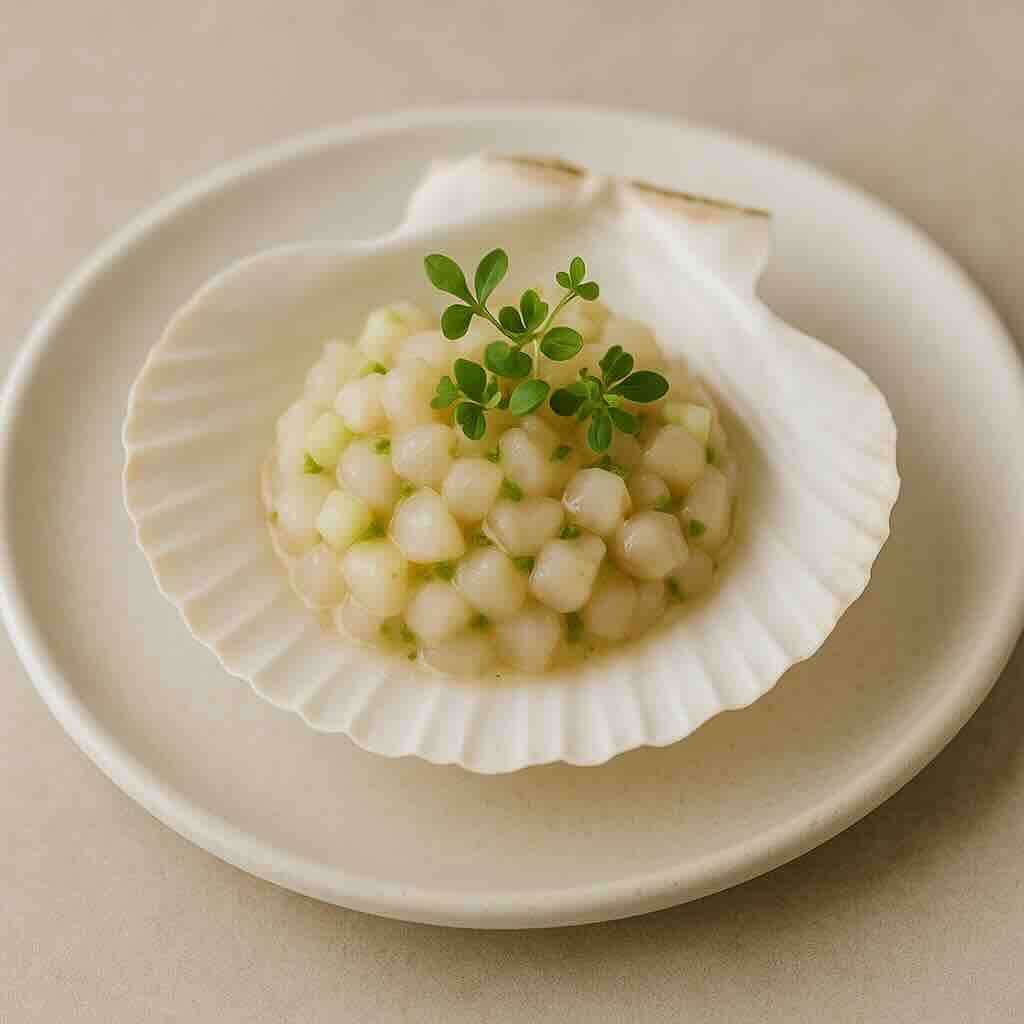
Raw abalone tartare is crisp and clean. The texture is somewhere between a firm clam and a raw water chestnut, and it tastes lightly sweet and faintly of the sea. It is not a novelty. In Korea, raw abalone (jeonbok) is sliced and eaten as jeonbok-hoe, usually with sesame oil and salt or a sweet-sour chilli sauce. In Japan, raw awabi is a classic sashimi prized for its crunch. This recipe takes the same approach, cuts the abalone into small dice, and dresses it at the last moment.
Almost all of the work is preparation: scrubbing, shucking, trimming and dicing. Once you have done it once, it takes about ten minutes per abalone. The small dice matter most. Large pieces of raw abalone are chewy, while 3–4 mm cubes are pleasantly crisp. For how abalone compares with other raw seafood, see our seafood tartare guide.
Buying abalone for tartare
Buy live, farmed abalone. Farmed abalone is sold live by Asian fishmongers and online seafood suppliers, and it usually comes from Korea, Australia, South Africa, New Zealand or California. Wild abalone is protected or heavily restricted in many places, and in some it cannot be harvested at all, so farmed is both easier to find and the responsible choice. A live abalone should be clamped firmly to its container or shell, and the foot should contract when you touch it. It should smell clean and briny. Anything that is limp, slack or sour-smelling goes in the bin. For raw eating, the goal is a clean source and a short, cold chain rather than parasite freezing. Our guide to selecting safe seafood covers what to ask.
Farmed abalone of about 80–120 g in the shell yields roughly 40–60 g of trimmed meat. Two per person makes a generous starter.
Instructions
- Chill everything. Put a board, a mixing bowl and the serving plates in the fridge. Keep the abalone on ice until the moment you work on it.
- Scrub. Rub the exposed foot and the rim of each abalone firmly with coarse salt and a stiff, clean brush (a new toothbrush is ideal). This removes slime and the dark pigment around the edge. Rinse under cold running water.
- Shuck. Slide a sturdy spoon or butter knife between the shell and the flesh, starting at the thin end of the shell. Work it along the underside of the round adductor muscle and lever the meat free in one piece.
- Remove the viscera. Gently pull or cut away the soft organ sac (the dark green or cream crescent). You can keep it for Korean abalone porridge, but it does not go into the tartare.
- Remove the mouth. At the narrow front end of the foot there is a small, hard, reddish mouthpart. Cut it out with a small V-shaped cut and discard it.
- Trim. Scrub the dark frilled skirt again, or trim it off if you want a paler tartare. Rinse the meat, then pat it completely dry.
- Tenderise. Wrap the meat in cling film and tap it firmly all over with the flat of a cleaver or a rolling pin, 10–15 light blows. This relaxes the muscle without crushing it. Then chill it again for 10 minutes.
- Dice. Slice the foot into 3–4 mm sheets across the grain, cut the sheets into strips, then cut across into small cubes. Keep the dice in the chilled bowl set over ice.
- Make the dressing. Whisk the ponzu, sesame oil, rice vinegar and ginger together in a small bowl.
- Dress and serve. Just before serving, fold the dressing, scallion and pear (if using) through the abalone. Taste, add a pinch of flaky salt, and spoon it back into the cleaned shells or onto perilla leaves. Scatter with sesame seeds and serve immediately.
Nutrition Information (per serving, approximate)
Variations
- Korean jeonbok-style with sesame salt. Skip the ponzu. Dress the dice with 1 tsp toasted sesame oil and a pinch of salt only (gireumjang), and serve with a small bowl of chogochujang for dipping: 1 tbsp gochujang, 2 tsp rice vinegar, 1 tsp sugar and a few sesame seeds. This is how raw abalone is most often eaten in Korea. For raw beef in the same style, see Korean yukhoe.
- Japanese-leaning. Dress the abalone with a few drops of yuzu juice, a pinch of salt and a very little wasabi. Serve on shiso with a few salmon roe.
- Sliced instead of diced. For a sashimi-style plate, slice the tenderised foot as thinly as you can on the diagonal and fan it out. See tartare vs sashimi.
- Lightly cooked. For anyone who should not eat it raw, steam the cleaned abalone in the shell for 3–4 minutes, chill it, then dice and dress it the same way.
Troubleshooting
- Too chewy. The dice are too big or the meat was not tenderised. Cut smaller, 3 mm, and tap the meat more before cutting. A very sharp, thin blade helps. See knife skills for tartare.
- Grey or muddy colour. The pigment was not fully scrubbed off. Trim the skirt, or scrub again with salt before dicing.
- Slippery, won’t hold dressing. The meat was not dried. Pat it dry thoroughly before dicing and again before dressing.
- Tastes flat. Abalone is subtle. Add salt a pinch at a time and a drop more citrus, rather than more soy, which would mask it.
Make-ahead & storage
Live abalone keeps for a day, possibly two, in the fridge under a damp cloth in a container that allows air in. Do not seal it airtight or put it in fresh water. Shuck and clean it no more than an hour or two before serving, keep the cleaned meat covered on ice, and dice and dress it at the last moment. Do not keep leftovers of dressed raw abalone. Any unused cleaned meat should be cooked the same day.
Frequently Asked Questions
Can you eat abalone raw?
Yes. Abalone is traditionally eaten raw in Korea, as jeonbok-hoe, and in Japan, as awabi sashimi. Use live abalone from a reputable farm or fishmonger, keep it cold, shuck it just before preparing it, and eat it the same day. People in higher-risk groups should eat it cooked.
How do you make diced abalone tartare?
Scrub the live abalone with coarse salt, shuck it with a spoon, and remove the viscera and the hard mouthpart. Tap the meat lightly to tenderise it, then cut it into 3 to 4 mm dice. Fold it with ponzu, sesame oil, ginger and scallion just before serving.
Why is my raw abalone so tough?
Raw abalone is a dense muscle. It becomes pleasant to eat when it is cut small and across the grain. Tenderise it with light taps from a cleaver or rolling pin, keep the dice to 3 to 4 mm, and use a very sharp knife.
Does abalone need to be frozen before eating raw?
Abalone is not normally frozen for parasite control the way many wild fish are. What matters is buying it live from a clean, reputable source, keeping it cold, and eating it the same day. Check your local food-safety guidance.
Should I use farmed or wild abalone?
Farmed. Farmed abalone is widely sold live and has a known source. Wild abalone is protected or strictly regulated in many regions, and in some places it cannot legally be harvested at all.
You May Also Like
Scallop & Apple Tartare
Sweet scallop with crisp green apple
Hamachi Tartare
Yellowtail with ponzu and jalapeño
Seafood Tartare Guide
Every species, raw-safety and seasoning