Every seafood tartare recipe is built on the same frame. You start with a species and a source that are appropriate for raw eating, keep it cold, cut it cleanly with a sharp knife, and season it at the last moment so the acid does not start to “cook” it into ceviche. What changes from species to species is the safety question (does it need freezing first?), the texture (buttery, firm, crunchy, soft), and therefore the seasoning.
This guide goes through the species our readers ask about most, with a recipe on the site for each. If you want the general principles first, read the best fish for tartare and how to tell if fish is safe to eat raw.
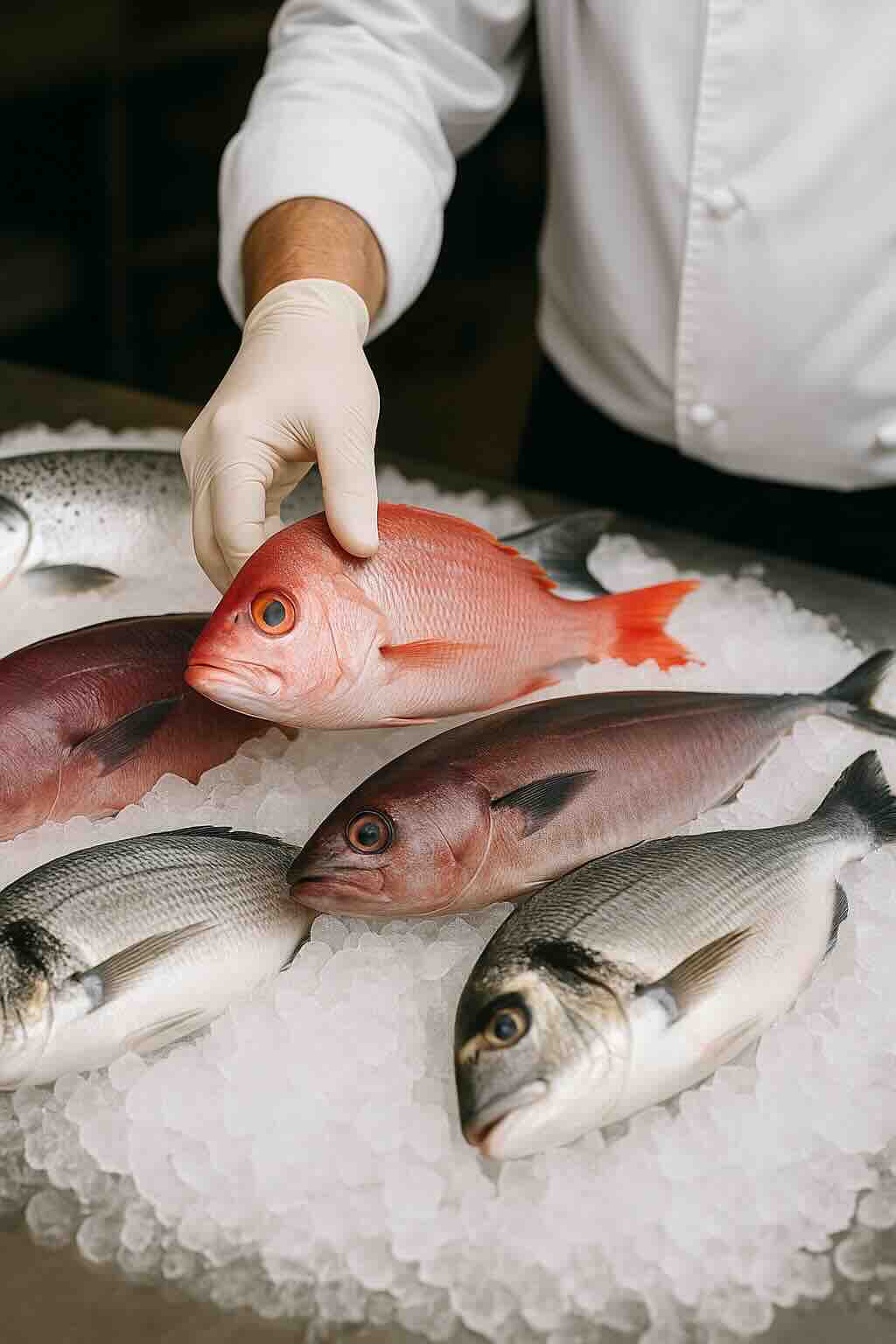
Seafood tartare at a glance
| Species | Raw suitability | Freezing for parasites | Texture | Best seasoning | Recipe |
|---|---|---|---|---|---|
| Tuna (yellowfin, bigeye, bluefin) | Excellent | Often exempt for certain species; confirm locally | Firm, meaty | Soy, sesame, lime, avocado, chili | Tuna & avocado |
| Salmon | Good if farmed or previously frozen | Needed for most wild salmon | Buttery, rich | Dill, citrus, shallot, crème fraîche | Salmon tartare |
| Yellowtail / hamachi | Excellent (farmed) | Ask about wild amberjack/kingfish | Silky, fatty | Ponzu, yuzu, jalapeño, scallion | Hamachi tartare |
| Scallop (adductor muscle) | Excellent if sashimi-grade | Not usually a parasite concern | Sweet, soft | Green apple, lime, olive oil, chive | Scallop & apple |
| Shrimp / prawns | Higher risk raw | Varies; buy only product sold for raw use | Sweet, snappy | Lime, chili, herbs | Shrimp tartare |
| Abalone | Good if live and farmed | Not usually a parasite concern | Crunchy, clean | Sesame oil, ponzu, chogochujang | Abalone tartare |
| Croaker / wild white fish | Only if frozen to standard | Yes | Soft, mild | Lime, avocado, cilantro, chili | See below |
| Sea bream (dorade) | Good; farmed is common | Confirm with supplier | Clean, lightly firm | Olive oil, lemon zest, sea salt, fennel | Tartare trio (method) |
“Exempt” and “confirm with supplier” are doing real work in that table. Rules on which fish must be frozen before raw service differ by country, and farmed fish may be treated differently depending on how they were raised. Our explainer on whether freezing kills parasites in fish gives the reference temperatures and the reasoning behind them.
Tuna tartare
Tuna is the default seafood tartare for good reason. Several tuna species are commonly treated as a negligible parasite risk and are often exempted from parasite-control freezing, which is why good tuna reaches restaurants fresh. The real hazard with tuna is scombroid (histamine) poisoning, which builds up when the fish warms after it is caught. Freezing does not undo it, so the cold chain matters more than anything. Choose deep red or ruby loin with no brown edges or sour smell.
Tuna is firm enough to take bold seasoning: soy, sesame, lime, chili, avocado. Start with our tuna and avocado tartare or the spicy tuna tartare. For parties there is a tuna mango tartare, tuna tartare bites and tuna tartare on crispy rice.
Salmon tartare
Salmon makes the richest, most forgiving tartare, but it is also the species where the parasite question matters most. Many wild salmon are associated with parasites such as Anisakis and should be frozen to a parasite-control standard before raw use. Farmed Atlantic salmon raised on pelleted feed is widely considered lower risk and is treated differently in some jurisdictions. Ask your fishmonger which applies, and if in doubt buy fish that is labelled as previously frozen for raw use.
Salmon’s fat wants acid and fresh herbs. Dill, shallot, lemon or lime and a spoon of crème fraîche are classic. See the Nordic salmon tartare, the brighter salmon citrus tartare, or the salmon-dill-lime third of our tartare trio.
Yellowtail tartare (hamachi)
If you searched for “yellow tail tartar”, this is the fish: Japanese yellowtail, hamachi or buri, Seriola quinqueradiata. The name usually means farmed fish, and farmed hamachi is one of the most common sashimi fish in the world. Close relatives sold as amberjack, kingfish or “yellowtail” in other countries are often wild. Wild Seriola can carry muscle worms, so ask whether wild fish has been frozen before you use it raw.
Hamachi is silky and fatty, richer than tuna but cleaner-tasting than salmon. Ponzu, yuzu, thin-sliced jalapeño and scallion are the classic combination. Our hamachi tartare recipe covers the knife work and the dressing.
Scallop tartare
Scallop tartare uses only the white adductor muscle, the part sold as a “scallop” in most shops. Parasites are not normally a concern with this muscle. The things to check are freshness and handling: buy dry-packed scallops (not soaked in phosphate solution) that are sold for raw use. Many of the best sashimi scallops, including Hokkaido scallops, are sold frozen and are excellent raw once thawed slowly in the fridge.
Scallops are sweet and soft, so they need crunch and gentle acid rather than heavy sauces. Cut them slightly larger than fish, about 6–8 mm, or they turn to paste. Try our scallop and green apple tartare.
Shrimp tartare
Raw shrimp is eaten as amaebi in Japan and as crudo in southern Italy, and at its best it is extraordinary. It also carries a higher relative risk than most raw fish, and most supermarket shrimp is not meant to be eaten raw. Our shrimp tartare is written for shrimp that is explicitly sold for raw consumption. For everyone else, and for any mixed group, the recipe’s cooked route is the one we recommend. Poach peeled shrimp for a minute or two until just opaque, chill them in iced water, dry them well, then dice and dress them the same way. You lose the raw texture but keep the lime, chili and herb character.
Mediterranean red prawns (gambero rosso) are a special case covered in the tartare trio. They are usually frozen at sea and are served raw all over Italy.
Abalone tartare
Raw abalone tartare is less exotic than it sounds. In Korea, raw abalone (jeonbok) is sliced and eaten as hoe, and in Japan raw awabi is a classic sashimi. Its flesh is crunchy and clean, closer to a firm clam than to fish. For diced abalone tartare, you shuck and scrub a live abalone, trim away the viscera and the hard mouthparts, and cut the foot into 3–4 mm dice. Cutting it small is what makes it pleasant to eat: large raw pieces are rubbery, while small dice are crisp.
Buy live, farmed abalone. It is widely available from Korean, Australian, South African and Californian farms, and wild abalone is heavily restricted or protected in many places. Like other shellfish, abalone needs a clean source and a tight cold chain rather than parasite freezing. Our abalone tartare recipe walks through shucking, cleaning, tenderising and a sesame-ponzu or Korean-style dressing.
Croaker and other wild white fish
A reader query we see often is “tartare of croaker, with avocado and lime.” It is a good combination in principle. Croaker is mild and slightly soft, so the lime brightens it and the avocado gives it body. But croaker, and most wild white fish from coastal waters, are exactly the fish where parasite risk is real. Only eat wild croaker raw if it has been commercially frozen to a parasite-control standard, such as the FDA’s −20°C (−4°F) for 7 days or −35°C (−31°F) until solid and held for 15 hours. Home freezers are usually not cold or consistent enough to do this reliably. Our freezing guide explains why.
If you have properly frozen croaker, thaw it slowly in the fridge and pat it very dry. Cut it into 5 mm dice and dress it with lime juice, a little lime zest, olive oil, finely chopped shallot, cilantro, salt and a little chili. Fold in diced avocado at the end. Serve it within five minutes: lime turns soft white fish opaque quickly, and after that you are eating ceviche (tartare vs ceviche explains the difference). If you cannot confirm the fish was frozen, use the same dressing on a steamed or seared fillet instead.
Sea bream tartare
Sea bream is the Mediterranean’s everyday raw fish. Gilthead bream (orata, dorade) is mostly farmed and is served as crudo and tartare along the Italian and French coasts. Its flesh is clean and faintly sweet with a light firmness, and it takes the simplest seasoning best: good olive oil, lemon zest rather than much juice, flaky salt, and perhaps shaved fennel or chive. Treat it like the salmon in our tartare trio, but with fewer herbs. In EU countries, restaurants generally freeze fish before raw service unless the fish qualifies for an exemption, so ask your fishmonger whether yours has been frozen or is suitable for raw use as sold.
How to buy fish for any seafood tartare
Labels such as “sushi grade” are marketing terms, not regulated grades in most countries. What matters is what the seller can tell you: the species, whether it is wild or farmed, whether it has been frozen for parasite control, and how long it has been on ice. Our guides to selecting safe seafood, sushi grade vs sashimi grade and where to buy sushi-grade fish cover the questions to ask. At home, trust your senses too: a clean sea smell, firm and glossy flesh, and no stickiness or ammonia.