Larb Dib (Lao Raw Beef Larb)
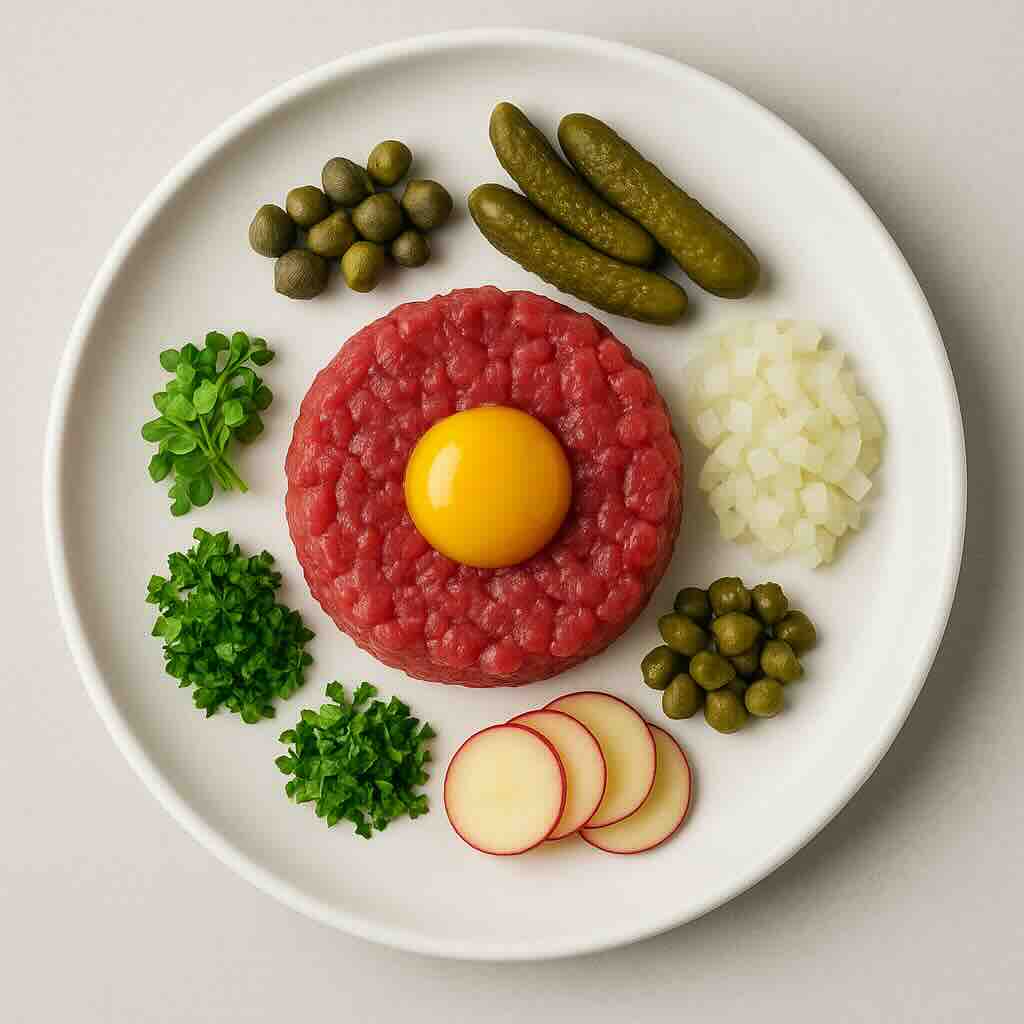
Larb (also written laab, laap or lahb) is often called the national dish of Laos, and it is equally at home in Isan, the Lao-speaking northeast of Thailand. It is a “salad” of minced meat or fish dressed with lime, fish sauce, chilli and herbs, and thickened with khao khua — sticky rice toasted until golden and ground to a coarse powder. Dib (“raw”) means the meat is not cooked, which makes larb dib the Lao answer to beef tartare; larb suk (“cooked”) is the far more commonly eaten version.
If you arrived here searching for “larb tartar” or “Lao tartare”, this is the dish. It tastes nothing like a French tartare: hot, sour, salty and herbal, with the nutty crunch of toasted rice, eaten by the handful with sticky rice and raw vegetables. This page gives a raw version built on the same precautions we apply to classic steak tartare, and a cooked version that most readers should choose.
Instructions
- Make the khao khua: toast the dry sticky rice in a heavy pan over medium-low heat, stirring constantly, for 10–15 minutes until deep golden and fragrant. If using, add the galangal slices for the last few minutes. Cool, then grind to a coarse sand in a mortar or spice grinder.
- Toast the chilli flakes briefly in the same dry pan if they are not already roasted. Set aside.
- Chill a board, a bowl and a knife. Trim the beef of all fat and sinew and firm it in the freezer for 15–20 minutes.
- Slice the beef thinly, then mince it with a heavy knife (or two, Lao-style), chopping and turning until it is very fine. Keep it cold.
- In the chilled bowl, mix the beef with the lime juice and fish sauce. The lime starts to firm and pale the surface of the meat; that is expected but it does not cook it or make it safe.
- Add the shallots, spring onion, chilli flakes and 2–3 tbsp of the khao khua and toss well. Taste: it should be sour and salty first, then hot. Adjust with more lime, fish sauce or chilli.
- Fold in the mint, coriander, culantro and lemongrass at the last moment so they stay bright.
- Pile onto a cold plate, scatter over a little more khao khua and some mint, and serve immediately with sticky rice and raw vegetables.
Nutrition Information (per serving)
Estimates per serving for the larb only; sticky rice and vegetables are excluded. Sodium is high because of the fish sauce.
Larb dib in Laos and Isan
Larb is a dish of celebration and hospitality in Laos — the word is often linked to laap, luck or good fortune, and it is served at weddings, new-year gatherings and when guests arrive. It is made from almost anything: beef, water buffalo, pork, chicken, duck, fish, even mushrooms. Rural versions of larb dib can be made from freshly slaughtered beef or buffalo, sometimes mixed with raw blood and a little bile (bee) for a bitter edge, a style that also appears as larb khom (“bitter larb”). Related raw dishes include koi (goi), a coarser, rougher-cut raw preparation that is also often made with fish.
The honest part: why raw larb is a public-health topic
In Laos and northeastern Thailand, raw and undercooked meat dishes such as larb dib and koi have been discussed for years in public-health research, because they are linked to parasitic infections that are rare in countries with routine meat inspection. The ones most often mentioned are:
- Beef tapeworm (Taenia saginata), caught from raw or undercooked beef containing the larval cysts. Taeniasis has been reported as relatively common in parts of the region, and raw beef dishes are the usual suspected route.
- Pork tapeworm (Taenia solium) and Trichinella, linked to raw or undercooked pork larb; outbreaks of trichinellosis in the region have been traced to shared raw-pork dishes at gatherings.
- Streptococcus suis, a bacterial infection associated in Thailand with raw pork and raw pig blood dishes.
- Liver fluke (Opisthorchis viverrini), which comes from raw freshwater fish dishes such as koi pla, not from beef, but belongs to the same raw-food conversation.
The level of risk depends heavily on where the meat comes from, how it was inspected and how it was handled, and we are not a medical source — consult a doctor if you have eaten raw meat abroad and feel unwell. The practical conclusions are simple: never eat raw pork larb, leave out raw blood and bile, and make larb dib only with inspected whole-muscle beef handled like any other raw preparation. Lime juice and chilli add flavour, not safety — acid does not kill parasites the way cooking does, a point we cover in raw vs cured vs cooked.
How it is eaten
Larb is shared from a central plate. You pinch a small ball of sticky rice with your fingers, use it to pick up some larb, and follow it with a crunchy bite of cabbage, long bean or cucumber to cool the chilli. Beer Lao or another cold lager is the usual drink. For other Asian raw beef traditions, see Korean yukhoe and our overview of tartare around the world.
Variations
- Larb suk (cooked) — our recommended version. Put the minced beef in a dry pan or wok with 3–4 tbsp water and a pinch of salt over medium heat. Stir and break it up for 3–5 minutes until just cooked through with no pink (71°C/160°F for minced meat). Let it cool for a few minutes, then dress exactly as above with lime, fish sauce, chilli, khao khua, shallots and herbs. It is the everyday larb in Laos and Isan, and it is safe for everyone.
- Chicken, duck or mushroom larb. Always cooked. Mushroom larb (oyster or king oyster, torn and dry-fried) makes a good vegetarian version with soy sauce in place of fish sauce.
- Seared-edge larb. Some restaurants serve beef larb “half-raw”, pouring a little hot stock over it. This does not reliably cook the meat, so treat it as raw.
- Isan-style. More chilli, more lime, and often a pinch of sugar; served with a basket of sticky rice and grilled meats.
Troubleshooting
- Soggy khao khua. The rice powder was added too early. Keep some back and scatter it on just before serving.
- Rice powder tastes raw or chalky. It was not toasted enough. Toast slowly until evenly deep golden.
- Too salty. Fish sauces vary a lot in strength. Start with less and add to taste; balance with extra lime and herbs.
- Herbs wilted and dark. They were added too soon or bruised. Tear or slice them and fold in at the very end.
Make-ahead & storage
Make the khao khua ahead: it keeps for up to two weeks in an airtight jar. Prepare herbs and vegetables a few hours in advance and keep them chilled. Mince and dress raw beef only at the moment of serving, and discard any raw leftovers. Cooked larb suk can be refrigerated for a day, though the herbs and rice powder lose their freshness; add fresh ones when serving. See the complete food safety guide for cold-chain details.
Frequently Asked Questions
What is larb dib?
Larb dib is raw larb from Laos and the Isan region of Thailand: finely minced raw beef dressed with lime, fish sauce, chilli, shallots, fresh herbs and toasted sticky rice powder (khao khua), eaten with sticky rice and raw vegetables. Dib means raw; the cooked version is larb suk.
Is larb a kind of tartare?
Larb dib is sometimes called Lao tartare or “larb tartar” because the beef is minced and eaten raw, but the flavours are completely different: sour, hot, salty and herbal rather than mustardy. Most larb is cooked, and cooked larb is not a tartare at all.
Is raw larb safe to eat?
Raw larb carries the risks of any raw meat, and in parts of Southeast Asia raw beef dishes are associated with beef tapeworm (Taenia saginata). Never eat raw pork larb, avoid versions with raw blood or bile, and use only inspected whole-muscle beef minced just before serving. Pregnant people, young children, older adults and anyone immunocompromised should eat cooked larb suk instead.
Does lime juice cook the beef in larb?
No. Lime juice changes the colour and texture of the surface, but it does not kill parasites or reliably kill bacteria. Only heat does that.
What is khao khua?
Khao khua is toasted rice powder: uncooked sticky rice dry-toasted until golden and ground coarse. It gives larb its nutty aroma and slight crunch and helps absorb the dressing.
What is the difference between larb dib, larb suk and koi?
Larb dib is raw larb, larb suk is cooked larb, and koi (goi) is a related raw dish that is usually coarser and often made with fish or beef. Larb suk is by far the most commonly eaten and the safest choice.
You May Also Like
Korean Yukhoe
Raw beef with sesame, soy and pear
Kibbeh Nayyeh
Lebanese raw kibbeh with bulgur
Is Beef Tartare Safe?
The real risks, explained