Polish Tatar (Tatar Wołowy)
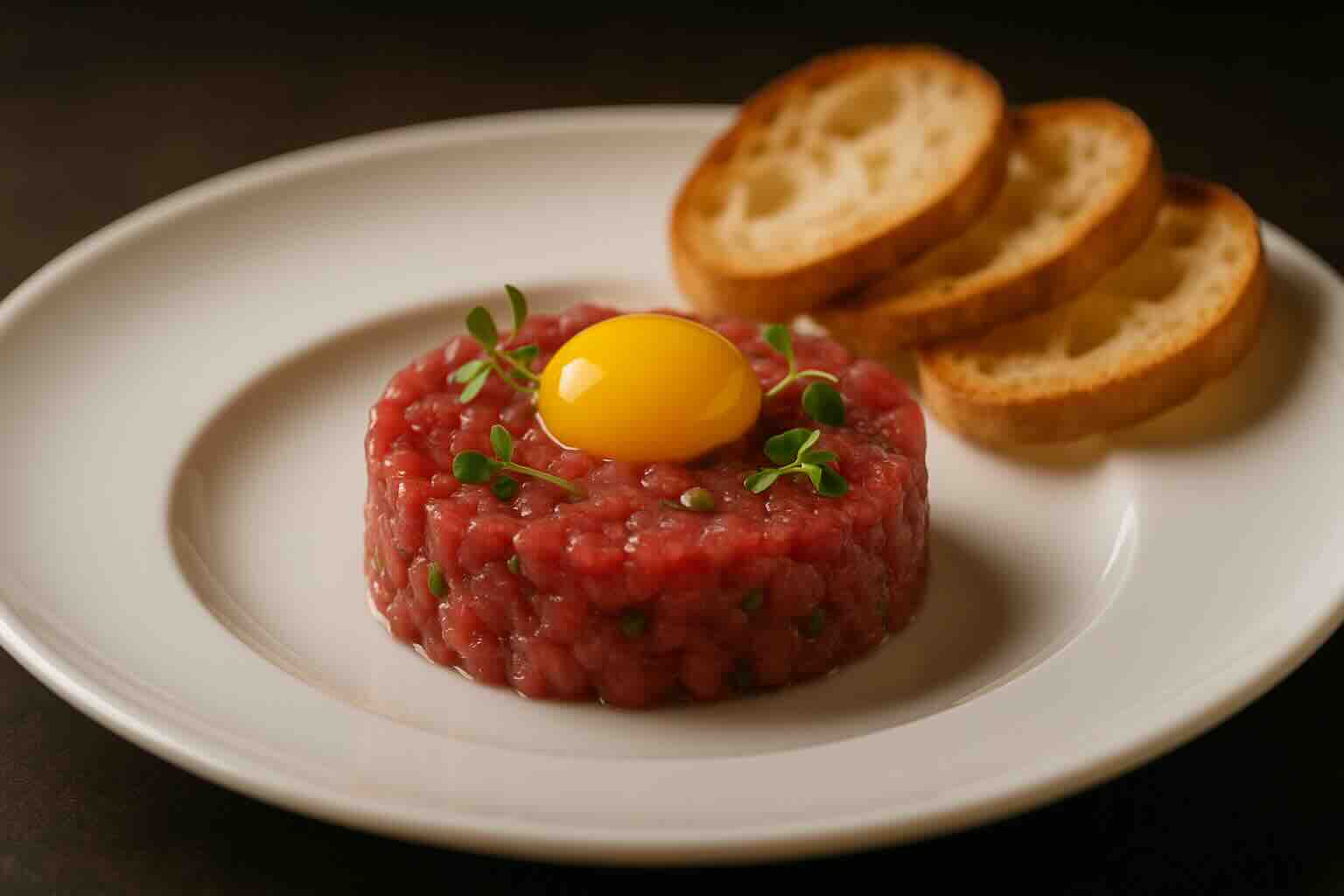
Tatar wołowy — beef tatar, also called befsztyk tatarski — is how Poland eats raw beef, and it is served in a way that lets everyone season their own. A mound of finely chopped beef arrives with a raw egg yolk sitting in a hollow on top, surrounded by little heaps of chopped onion, pickled cucumber and marinated mushrooms (grzybki marynowane). Salt, pepper, mustard, oil and often a bottle of Maggi seasoning are on the side. You mix it all together at the table and eat it on buttered rye bread, very often with a glass of cold vodka.
It is a close relative of the French steak tartare, but the flavours are sharper and more rustic: sour brined cucumber instead of cornichon, earthy pickled mushrooms, raw onion with real bite. In Polish homes it is a party dish and a classic zakąska — the small, savoury plates that go with vodka.
Instructions
- Chill four plates, a board and a bowl. Prepare the garnishes first: chop the onion, dice the cucumbers, chop the drained mushrooms (and capers or anchovies if using), and keep each separately in the fridge. Squeeze the cucumbers lightly in kitchen paper so they don't weep.
- Trim the beef of all fat, sinew and silverskin. If it is soft, firm it in the freezer for 15–20 minutes.
- Slice the beef thinly, cut into strips, then chop with a heavy knife into a fine mince, gathering and re-chopping until it holds together but still has texture. Traditionally tatar is chopped by knife; passing it once through the chilled coarse plate of a mincer immediately before serving is a common home shortcut.
- Season the beef lightly with salt and pepper and mix in a teaspoon of oil. Divide it into four portions.
- On each cold plate, shape a portion into a flat mound or round and press a hollow into the centre with the back of a spoon.
- Slide an egg yolk into each hollow, or set the yolk in its half shell in the hollow, which is the classic Polish presentation.
- Arrange small heaps of onion, cucumber and mushrooms (and capers or anchovy) around the meat. Scatter with chives.
- Serve immediately with mustard, oil, Maggi, salt and pepper on the table, and rye bread and butter. Each person mixes the yolk and garnishes into the meat to taste.
Nutrition Information (per serving)
Estimates per serving with one yolk and tenderloin; bread and butter are excluded.
Tatar in Poland and Central Europe
Across Central Europe, raw chopped beef with an egg yolk became a restaurant and home classic in the 19th and 20th centuries, and each country dressed it with its own pantry. In Poland that means the pickling cellar: brine-fermented cucumbers and vinegar-marinated forest mushrooms are what make tatar taste Polish. Serving the garnishes separately so each diner mixes his or her own is the norm, and it is still how many Polish restaurants plate it.
Its relatives
- Czech Republic — tatarák or tatarský biftek. A pub favourite, served with topinky: slices of bread fried in fat or toasted, which you rub with a cut clove of raw garlic before piling on the beef. Seasoning often includes paprika, ketchup or mustard, and Worcestershire.
- Slovakia — tatársky biftek. Very similar to the Czech version, with garlic toast.
- Hungary — tatárbifsztek. Usually seasoned more heavily, with sweet paprika to the fore, and served with toast and butter.
- Germany and Austria — Tatar or Beef Tatar. Closer to the French style, with capers, gherkins and anchovy. Germany also has raw pork Mett, which is a different dish.
- Scandinavia and the Baltics. Råbiff in Sweden is a raw beef patty with yolk, capers, beetroot and onion, served along much the same lines.
Why “tatar”?
Polish simply borrowed the international name. The popular story that the dish comes from Tatar horsemen tenderising meat under their saddles is folklore rather than documented history — our article on why it is called tartare explains where the name more likely came from. For more regional versions, see tartare around the world.
Variations
- Czech-style. Mix in sweet paprika, a little ketchup, mustard and Worcestershire, and serve with fried bread rubbed with raw garlic.
- Yolk-free. Leave out the yolk and bind with a little extra oil and mustard, or a spoon of pasteurised mayonnaise.
- Herring and beetroot twist. Some modern Polish restaurants add finely chopped marinated herring or roasted beetroot to the garnish ring.
- Cooked alternative. For guests who should not eat raw meat, shape the seasoned beef into small patties, cook through and serve with the same garnishes and rye bread.
Troubleshooting
- Watery plate. Cucumbers and mushrooms release brine. Drain and blot them before chopping, and arrange them only at the last moment.
- Too sour. Brine-fermented cucumbers are more sour than cornichons. Use fewer, or balance with a little more oil and yolk.
- Mushy meat. The meat was warm, over-processed or ground too fine. Chop by hand, cold. See knife skills for tartare.
- Onion overpowers everything. Rinse chopped onion under cold water and pat dry, or use shallot.
Make-ahead & storage
Chop the garnishes up to a few hours ahead and keep them covered in the fridge. Trim the beef in advance if you like, but chop it within about 30 minutes of serving and keep it cold until it goes to the table. Leftover tatar — mixed or not — should be discarded rather than refrigerated. More in the complete food safety guide.
Frequently Asked Questions
What is Polish tatar?
Polish tatar (tatar wołowy or befsztyk tatarski) is raw, finely chopped beef served with a raw egg yolk on top and small piles of chopped onion, pickled cucumber and marinated mushrooms around it. Diners mix it themselves and eat it on rye bread with butter.
What goes in tatar wołowy?
Beef tenderloin or another very lean cut, egg yolk, onion, pickled cucumbers, marinated mushrooms, salt and pepper, and often mustard, oil and a few drops of Maggi. Capers and chopped anchovies or sprats are common extras.
How is Polish tatar different from French steak tartare?
The French version is usually mixed in the kitchen with Dijon, Worcestershire, capers and cornichons. Polish tatar is often served unmixed, with brine-fermented cucumbers and marinated mushrooms, and is eaten on rye bread, often with vodka, rather than with fries.
What is Czech tatarák?
Tatarák is the Czech version of beef tatar, seasoned with paprika, mustard and sometimes ketchup, and served with topinky, fried bread rubbed with raw garlic. Slovakia and Hungary have very similar dishes.
Is it safe to eat raw beef and raw egg?
For healthy adults it can be, when the beef is whole-muscle from a trusted butcher, chopped the same day and kept cold, and the eggs are very fresh or pasteurised. Pregnant people, young children, older adults and anyone immunocompromised should avoid it.
You May Also Like
Classic Beef Tartare
The French bistro version
German Mett
Raw pork spread on rolls
Carne Cruda all'Albese
Piedmont's olive oil and lemon tartare