Tuna Tartare with Avocado, Mango & Toasted Sesame
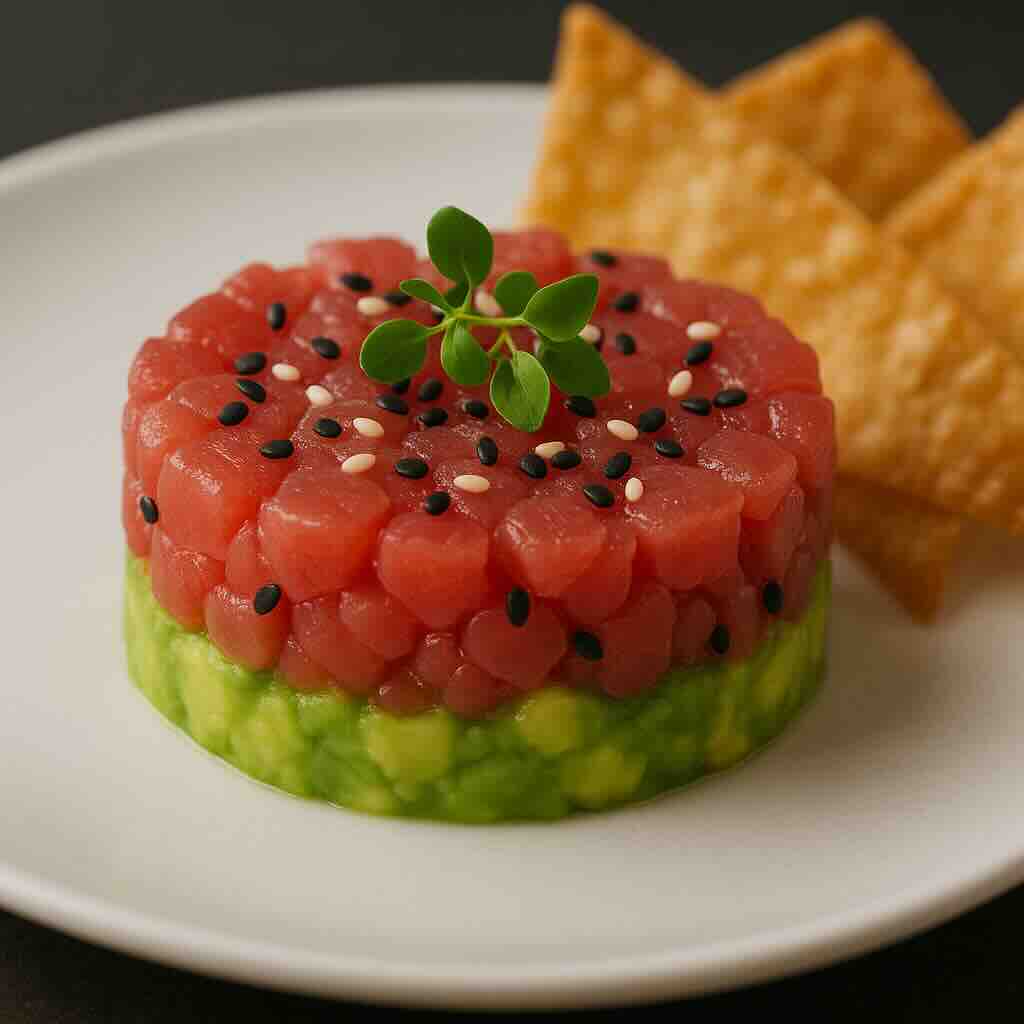
This is our tuna and avocado tartare with two additions that change its character: sweet, slightly acidic mango, and a spoonful of soy sauce simmered down with mirin until it turns glossy and syrupy. The mango brings a fruity contrast to the rich tuna and buttery avocado; the reduction gives a deeper, rounder saltiness than raw soy, and it clings to each cube instead of pooling in the bowl. Toasted sesame — seeds and a few drops of oil — ties it together.
Instructions
- Make the soy reduction. Combine the soy sauce, mirin and sugar in a small saucepan. Simmer gently for 3 to 5 minutes, until reduced by about half and it coats the back of a spoon. It thickens further as it cools. Transfer to a small dish and let it cool completely — warm sauce must never touch raw fish.
- Toast the sesame. Toast the white sesame seeds in a dry pan over medium heat, shaking often, for 2 to 3 minutes until golden and fragrant. Tip onto a plate to cool.
- Chill everything. Put a mixing bowl and four serving plates in the fridge. Put the tuna in the freezer for 10 to 15 minutes to firm it up for clean cutting.
- Dice the tuna. Trim away any dark red bloodline and white sinew. Cut the loin into 1/4-inch (5–6mm) slices, then strips, then cubes. Transfer to the chilled bowl and return it to the fridge.
- Dice the fruit. Peel the mango and cut the cheeks away from the stone, then dice to roughly the same size as the tuna. Halve, stone and dice the avocado, then toss it gently with a squeeze of lime.
- Mix the dressing. In a small bowl stir together 1 tbsp of the cooled soy reduction, the lime juice, sesame oil, ginger and chilli if using. Taste: it should be salty, sharp and nutty.
- Dress the tuna. No more than a few minutes before serving, fold the dressing and most of the scallions into the tuna.
- Add the mango and avocado. Fold in the mango, then the avocado, using a spatula and as few strokes as possible so the avocado keeps its shape.
- Plate. Pack into a ring mould on each chilled plate (or spoon it loosely), lift the ring, and drizzle a thin line of the remaining soy reduction around or over the top.
- Finish and serve. Scatter with toasted white and black sesame seeds, the reserved scallion, a few coriander leaves and a pinch of flaky salt. Serve immediately with wonton crisps, rice crackers or cucumber.
Nutrition Information (per serving, estimated)
Estimates exclude the crackers or crisps and vary with the tuna, the size of the mango and how much reduction you use.
Tuna tartare with soy reduction, avocado and toasted sesame seeds
Leave the mango out and you have the other classic restaurant combination: tuna tartare with soy reduction, avocado and toasted sesame seeds. Follow the recipe above, increase the avocado to two, and use 1 1/2 tbsp of reduction in the dressing because there is no mango sweetness to balance it. The reduction is what makes this version: simmering soy with mirin concentrates it, rounds off its sharp edge, and makes it thick enough to drizzle in a neat line rather than bleed across the plate.
A few rules for the reduction:
- Don't boil it hard. Soy scorches easily once it thickens; keep it at a gentle simmer and pull it as soon as it coats a spoon.
- Always cool it first. Warm sauce starts to cook the surface of the tuna and warms the fish out of the safe zone.
- Make it ahead. It keeps in a sealed jar in the fridge for up to a week. If it sets too thick, loosen with a few drops of water.
- Use less than you think. Reduced soy is roughly twice as salty per spoon; season with it, then taste before adding any salt.
Variations
- Mango-only. Skip the avocado for a lighter, sharper tartare; add a little extra lime and chilli.
- Spicier. Stir 1/2 tsp sriracha or gochujang into the dressing, or go the whole way to our spicy tuna tartare.
- As canapés. Cut everything slightly smaller and spoon onto cucumber rounds or wonton cups — see tuna tartare bites for party quantities and holding times.
- On crispy rice. Pile it onto pan-fried sushi-rice cakes, as in our tuna tartare on crispy rice.
- Other fish. Salmon or yellowtail sold for raw use both work with mango; see hamachi tartare and the best fish for tartare.
- Plant-based. Replace the tuna with more avocado and mango for a take on our avocado tartare.
Troubleshooting
- Watery tartare. The mango was very ripe and juicy, or everything was dressed too early. Choose mango that is ripe but still holds its shape, drain it briefly on paper towel, and dress at the last minute.
- Mushy avocado. Fold it in last, with a spatula, in as few strokes as possible. Avocado that is soft enough for guacamole is too ripe for tartare.
- Too salty. The reduction is concentrated. Add more lime and a little extra mango, and next time dress with less.
- Tuna turned opaque at the edges. Acid and salt had too long on the fish, or the reduction was still warm. Dress just before plating with fully cooled sauce.
Make-ahead & storage
The soy reduction can be made up to a week ahead and the sesame toasted a day ahead. You can dice the tuna up to about two hours before serving and keep it covered in the coldest part of the fridge, with the mango diced and chilled separately; cut the avocado and combine everything just before serving. Don't keep leftovers of the dressed tartare. For the reasoning, see our safe raw food preparation guide.
Frequently Asked Questions
How do you make tuna tartare with avocado, mango and toasted sesame?
Dice 12 oz (340g) of tuna sold for raw use, one mango and one avocado to the same small size. Dress the tuna with cooled soy reduction, lime, sesame oil and ginger, fold in the mango and then the avocado, and finish with toasted white and black sesame seeds. Serve at once on chilled plates.
What is soy reduction for tuna tartare?
It is soy sauce simmered with mirin and a little sugar until reduced by about half and syrupy. It tastes rounder and less harsh than raw soy, clings to the fish, and can be drizzled on the plate. Always let it cool completely before it touches the tuna.
What kind of mango is best?
Any ripe but firm mango that dices cleanly. Varieties with less fibre, such as Ataulfo (honey) or Kent, are easiest to cut neatly. Avoid very soft, stringy fruit, which turns to pulp and waters down the tartare.
Can I make it ahead?
Only in parts. Make the reduction and toast the sesame in advance, and dice the tuna up to about two hours ahead, kept covered and cold. Cut the avocado and dress everything just before serving, and don't save leftovers.
Is this the same as the original tuna and avocado tartare?
It is built on it. Our original Tuna & Avocado Tartare uses the same tuna, avocado, soy, sesame and ginger; this version adds mango for sweetness and uses a soy reduction instead of raw soy sauce.
More Tuna Tartare Recipes
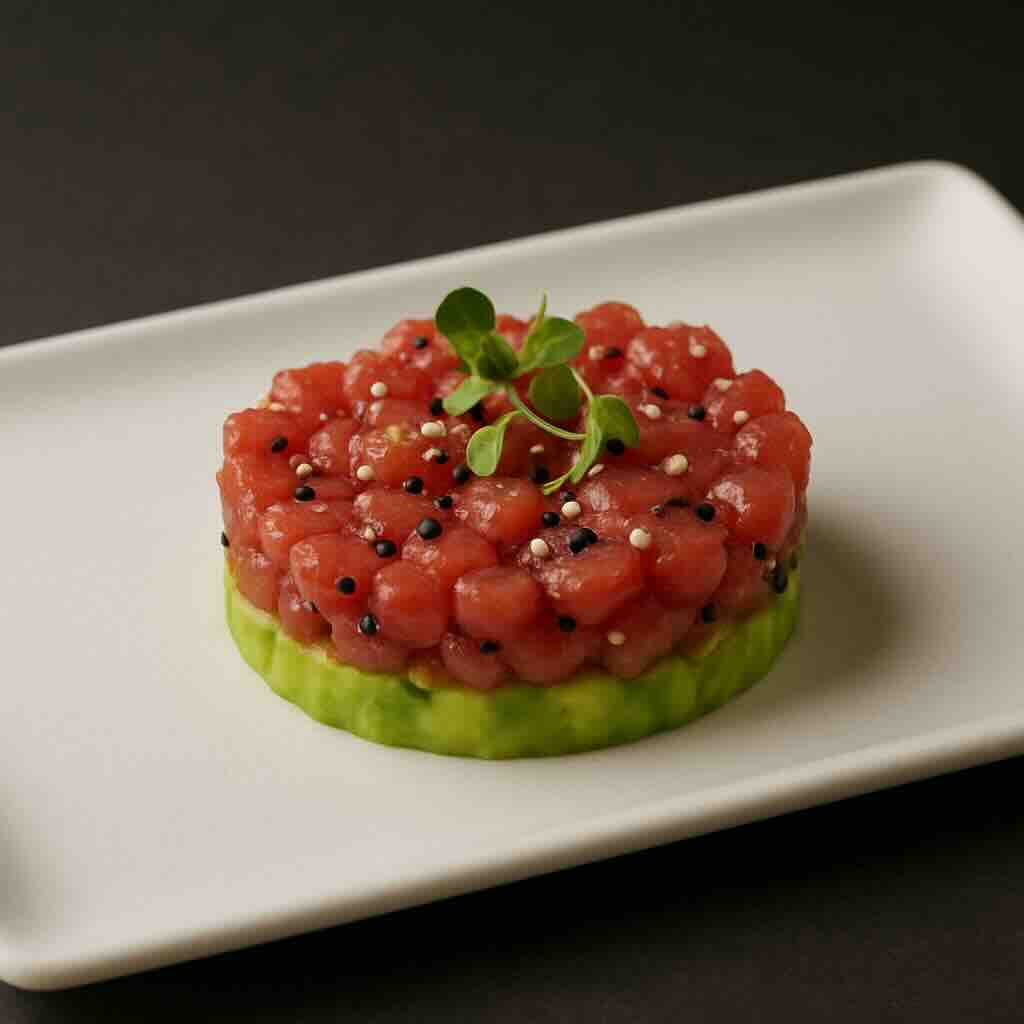
Tuna & Avocado Tartare (the original)
Soy, sesame, ginger and creamy avocado
Spicy Tuna Tartare
Sriracha, sesame and scallion
Tuna Tartare Bites
Canapés for 24 or 48, with holding times
Tuna Tartare on Crispy Rice
Spicy tuna and avocado on golden rice cakes