Almost any fish can be diced, but only a short list makes good tartare. A fish earns its place on that list by satisfying three separate tests: it has to be safe to eat raw, it has to have flesh firm enough to hold a cube rather than collapse into mush, and it has to taste of something clean rather than muddy or aggressively oily. Species that pass all three are the ones that turn up on restaurant menus again and again.
Here is the working list, what each one is like, and the fish to leave alone.
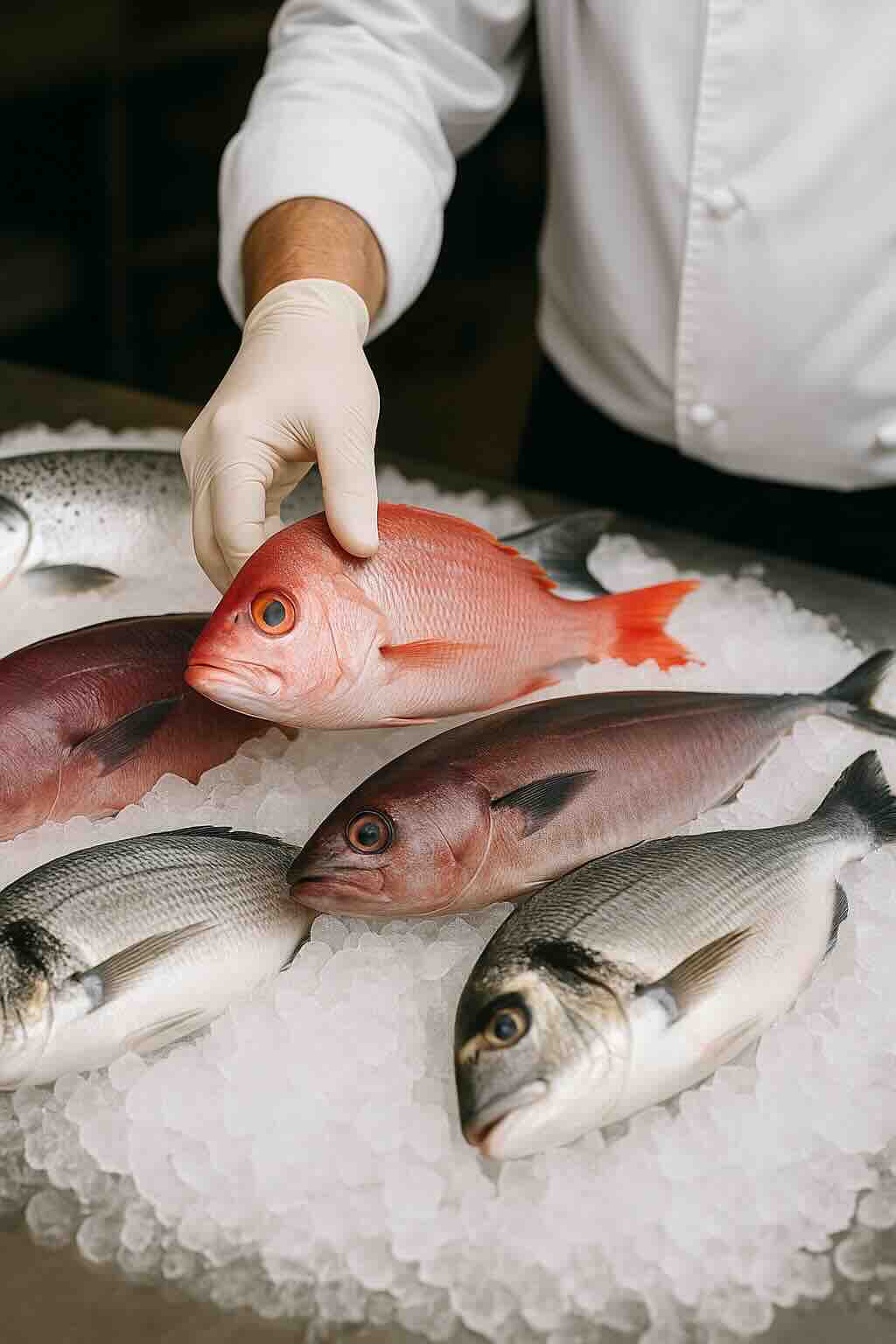
The reliable choices
| Fish | Texture raw | Flavour | Best with |
|---|---|---|---|
| Tuna (yellowfin, bigeye, bluefin) | Firm, meaty, dices beautifully | Clean, mild, faintly mineral | Sesame, soy, ginger, avocado, chili |
| Salmon (Atlantic, king, sockeye) | Soft and fatty; needs cold hands and a sharp knife | Rich, buttery | Dill, capers, shallot, lemon, crème fraîche |
| Hamachi (yellowtail, buri) | Firm but silky | Buttery with a clean finish | Yuzu, ponzu, jalapeño, scallion |
| Sea bream (dorade, madai, orata) | Firm, lean, crisp bite | Delicate, sweet, low fat | Olive oil, lemon, sea salt, chives |
| Sea bass / branzino | Firm and lean | Mild and clean | Citrus, fennel, good oil |
| Scallop | Tender, almost creamy | Distinctly sweet | Apple, citrus, brown butter, chive |
| Shrimp / prawn | Snappy when cooked and chilled | Sweet | Lime, chili, cilantro, avocado |
Tuna — the default
If you make one fish tartare, make it tuna. The loin is dense and low in connective tissue, so it dices into perfect glossy cubes and holds them for as long as it takes to plate. It is also the most widely available fish sold explicitly for raw consumption. Our tuna and avocado tartare is the most-read recipe on the site for good reason, and the spicy tuna version takes the same base somewhere hotter.
Salmon — richest, and the fussiest to cut
Salmon has more fat than tuna, which makes it luxurious in the mouth and slippery under the knife. Firm it in the freezer for twelve to fifteen minutes before dicing, use the centre-cut loin rather than the belly flap, and dress it with something acidic. See our classic salmon tartare and the brighter citrus version.
Sea bream and sea bass — the underrated pair
Lean white fish is what Mediterranean kitchens reach for when they want a raw dish that tastes of the sea rather than of fat. Sea bream (sold as dorade, orata, or madai depending on where you are) has a crisp, almost snappy bite and a sweetness that needs nothing more than olive oil, lemon, flaky salt and chives. Because it is so lean, cut it slightly larger — 6–8 mm — so the cubes keep their presence. It is worth saying plainly that white fish is not automatically safer than oily fish: sea bream, like everything else here, must be sourced and frozen for raw use.
Scallop and shrimp — the sweet ones
Raw scallop is one of the great luxuries of the crudo world: sweet, faintly creamy, and best with acid and something crunchy. Buy dry-packed diver scallops, never wet-packed ones treated with phosphate. Shrimp is the exception on this list — while raw sweet shrimp (amaebi) exists in Japanese cuisine, it depends on a supply chain most home cooks cannot access, so our shrimp tartare is built on briefly cooked, thoroughly chilled shrimp. It gives you the snap without the risk.
Fish to avoid raw
- Freshwater fish — trout, pike, perch, carp. Freshwater species carry parasites, including broad fish tapeworm, that the standard commercial freezing regimes for marine fish are not designed around. Farmed freshwater trout raised on controlled feed is a partial exception, but only where the producer explicitly sells it for raw use.
- Cod, haddock, pollock and other lean whitefish of the cod family — commonly carry nematodes and have soft, flaky flesh that falls apart when diced.
- Mackerel and sardines, unless cured — extremely perishable and prone to histamine (scombroid) formation. In Japanese cooking mackerel is almost always vinegar-cured (shime saba) before being eaten, which is a technique, not a shortcut.
- Anything from the fish counter labelled only “fresh” — fresh is about age, not about raw-consumption handling.
The part that matters more than species
Terms like “sushi-grade” and “sashimi-grade” are marketing language with no legal definition in most countries — we unpack this in sushi-grade vs sashimi-grade fish. What actually protects you is freezing to a parasite-destruction standard: commonly cited as roughly −20°C/−4°F for about seven days, or −35°C for around 15 hours, with tuna of certain species exempted in some jurisdictions. Most domestic freezers cannot hold those temperatures, so this is something you buy rather than do. Our article on whether freezing kills parasites in fish covers what the process does and does not achieve — notably, it does not kill bacteria or neutralise toxins.
Cutting fish for tartare
Fish is softer than beef, so the knife matters more. Use the longest, sharpest blade you own and cut in single drawing strokes rather than sawing. Chill the fillet until firm but not frozen. Dice lean white fish at 6–8 mm and fatty fish at 4–6 mm; too small and oily fish turns to paste. Dress no more than ten minutes before serving — citrus begins to cure fish on contact, and left to sit, your tartare becomes a ceviche. That distinction is the subject of tartare vs ceviche.