The hardest part of holiday entertaining is rarely the food itself — it's the timing. The oven is full of a roast, the stovetop is committed to side dishes, and you want a starter that feels special without adding one more thing to juggle. Tartare solves that problem neatly. It is served cold, it is assembled rather than cooked, and almost all of the work happens before your guests arrive.
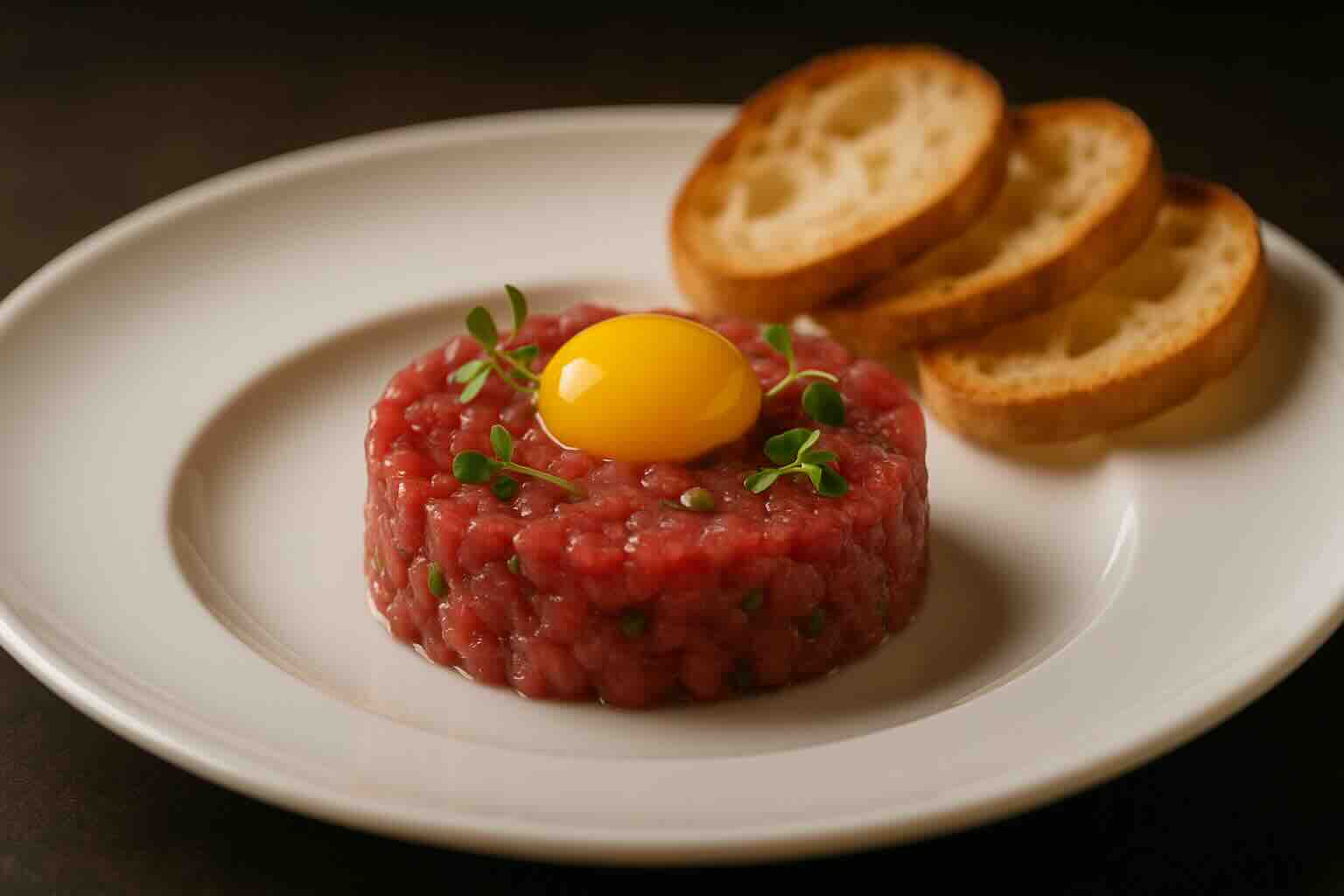
This article is about using tartare as a party dish: why it suits the occasion, how to run a build-your-own tartare bar, menu ideas that mix and match our recipes, how to scale for a crowd, and — importantly — how to look after the guests who shouldn't eat raw protein.
Why tartare suits festive entertaining
Three qualities make tartare a natural party starter.
- It's prep-ahead. The dice, the aromatics, the dressing, the garnishes — all of it can be readied hours in advance and held cold. Final assembly is a five-minute job.
- It's elegant. A neat disc of tartare with a few considered garnishes reads as restaurant cooking. It photographs well, which matters more at a party than anyone admits.
- It doesn't compete for the oven. When the rest of the meal is fighting over heat and space, a cold, knife-built starter sidesteps the whole bottleneck.
The build-your-own tartare bar
For a relaxed gathering, the most fun format is a tartare bar: you supply the seasoned base and a spread of garnishes, and guests dress small portions to taste. It turns a starter into an activity and quietly solves the dietary-preference problem, because everyone controls what goes on their plate.
A workable bar has three tiers:
- The base. One or two finely cut proteins — classically beef, often a fish option — lightly seasoned but underdressed, so guests can build on them. Keep these on ice.
- The dressings and aromatics. Small bowls of finely chopped shallot, capers, cornichons, mustard, a good oil, Worcestershire or a substitute, lemon wedges, and flaky salt.
- The carriers and garnishes. Toasted baguette, crackers, or endive leaves; fresh herbs; a peppermill.
Label anything that contains raw egg or fish, and keep a separate, clearly marked area for cooked or vegetable options so a guest who can't eat raw protein isn't reaching across raw beef to fill their plate.
Menu ideas
You don't need to serve one heroic platter. A spread of two or three smaller tartares gives variety and lets guests graze. Mix richness, colour, and a vegetarian option:
- The anchor: a classic beef tartare — the dish everyone recognises, and the safest crowd-pleaser.
- A bright fish option: a tuna and avocado tartare for freshness and colour, or a salmon tartare for something softer and richer.
- An elegant small bite: a scallop and apple tartare, sweet and clean, which works beautifully in a single spoon or on an endive leaf.
- For the veg guests: a roasted beet tartare that mirrors the look of beef and gives non-meat-eaters a real dish rather than an afterthought.
Two proteins plus the beet option covers most tables. Choose colours that look good side by side: deep red beef, pale pink salmon, ruby beet.
Scaling for a crowd
As an appetizer in a larger meal, plan on a small portion per person — a couple of tablespoons each is plenty when other courses follow. For a standing party where tartare is one of several canapés, even less. The most common holiday mistake is wildly over-buying expensive raw protein.
Our how much tartare per person guide gives specific quantities, but the principle is simple: appetizer portions are small, and across several options each guest takes a little of each rather than a full serving of any one. Buy your protein the day you'll serve it, keep it cold the whole way home, and cut it as close to service as your schedule allows.
How far ahead you can prep
| Component | How far ahead | Notes |
|---|---|---|
| Aromatics (shallot, capers, cornichons, herbs) | Several hours | Chop, cover, refrigerate in separate bowls. |
| Dressing base (mustard, oil, seasonings) | A few hours | Whisk and chill; add to protein late. |
| The protein dice | As close to service as possible | Cut cold, keep cold; quality and safety both favour late cutting. |
| Final dressed, plated tartare | Assemble at the last minute | Dress and plate just before serving; don't let it sit. |
Serving a mixed group safely
At a holiday table you rarely know everyone's situation. Some guests cannot safely eat raw beef, fish, or egg — pregnant guests, very young children, older adults, and anyone immunocompromised among them. The kind thing, and the safe thing, is to plan for them from the start rather than improvise.
- Always include a genuinely good non-raw option — the roasted beet tartare, a cooked dip, a cheese course — so no one is left with crackers and nothing to put on them.
- Plate vulnerable guests separately, away from raw protein, and skip the raw egg entirely on those plates.
- Label clearly at a self-serve bar so guests can make informed choices.
Our guide on who should avoid tartare covers the groups and the reasoning in detail; read it before you finalise the menu for a large or mixed gathering.
A simple plan that works
If you want a reliable festive format: one classic beef tartare as the anchor, one fish option for brightness, and one beet tartare for variety and for guests who don't eat raw meat. Prep all the components in the afternoon, set up a small garnish bar, plate the first round just before guests arrive, and build the rest to order. It feels generous, it costs you little active time at the party itself, and it leaves the oven free for the main event.
Frequently asked questions
Can you serve tartare at a holiday party?
Yes — tartare is one of the best party starters precisely because it's assembled cold rather than cooked, so it doesn't compete for oven space and almost all the work is done ahead. The key responsibilities are keeping raw protein cold until serving, assembling close to service, and offering a non-raw option for guests who can't eat it.
How far ahead can I prep?
Chop your aromatics and whisk your dressing base a few hours ahead and refrigerate them in separate covered bowls. Cut the raw protein as close to serving as your schedule allows, and dress and plate the tartare at the last minute. Pre-cutting the protein early or letting assembled tartare sit out costs you both quality and safety.
How much for a crowd?
As an appetizer within a larger meal, plan on roughly a couple of tablespoons of tartare per guest; for a standing party with several canapés, even less. When you offer two or three different tartares, guests take a little of each rather than a full serving of any one, so don't over-buy expensive raw protein.
What about guests who can't eat it raw?
Plan for them from the start. Include a genuinely good non-raw option such as a roasted beet tartare or a cooked dip, plate vulnerable guests separately away from raw protein, skip the raw egg on those plates, and label everything clearly at a self-serve bar so guests can make informed choices.