Few dishes are searched under as many spellings as this one: beef tartare, beef tartar, beef tar tar, tatare, tartar steak. Add a sauce that shares the name, a deposit on your teeth, and a baking powder ingredient, and the confusion is understandable. This page sorts out which word means what. For where the name actually comes from, we have a separate article on why it is called tartare; we will not repeat the history here.
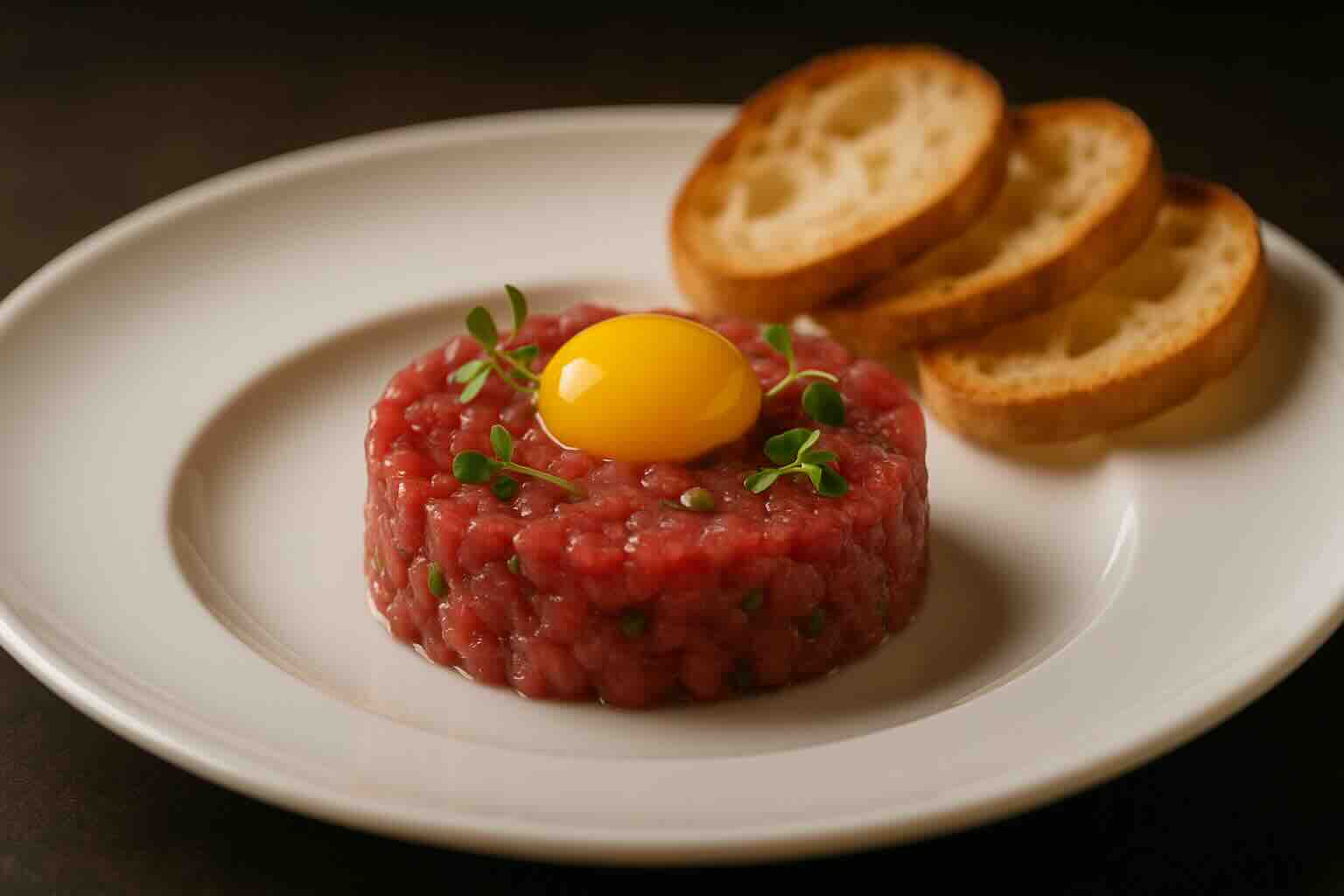
Tartare or tartar: which spelling is right?
Both are correct English. Tartare, with the final e, is the French word and the spelling you will see on most restaurant menus, in cookbooks and on this site. Tartar is the older anglicised form. English dictionaries list the dish as steak tartare, with tartar steak or steak tartar as variants, and there is nothing wrong with the shorter spelling in everyday writing.
For the sauce, usage splits by country. In the US it is almost always tartar sauce; in the UK and much of the Commonwealth, tartare sauce is common and appears on jars and chip-shop menus, though tartar sauce is used there too. For the dish, tartare dominates on both sides of the Atlantic.
The same applies to the fish and vegetable versions. Salmon tartare or tartar? Either, but salmon tartare and tuna tartare are the standard menu spellings. See our salmon tartare and spicy tuna tartare recipes.
Common misspellings: beef tar tar, tatare, tartar
| Spelling | Status | Notes |
|---|---|---|
| Tartare | Correct (French and standard English) | Preferred on menus for the dish. |
| Tartar | Correct (anglicised) | Standard US spelling for the sauce; acceptable for the dish. |
| Tar tar / tar-tar | Misspelling | A phonetic spelling of the pronunciation. “Beef tar tar” means beef tartare. |
| Tatare | Misspelling | Mixes tartare with Tatar. |
| Tatar | Different word in English | The Tatar peoples; but tatar is also the Polish name for the dish — see Polish tatar. |
| Tartre | French for the deposit | Tartre is French for dental tartar and scale, not food. |
So if you searched for “beef tar tar”, “beef tartar” or “tatare”, you meant beef tartare: raw, hand-cut beef with shallot, capers, mustard and egg yolk.
How to pronounce tartare
For the dish, the usual English pronunciation follows the French: tar-TAR, stress on the second syllable, with a long “ah” in both (roughly tahr-TAHR). The final e is silent. Steak tartare is “stayk tar-TAR”.
For the sauce, English speakers usually stress the first syllable: TAR-ter sauce, rhyming with “martyr”. You will hear both pronunciations for both things, and nobody in a restaurant will misunderstand you either way.
Steak tartare vs tartar sauce: completely different foods
The most important distinction on this page: tartar sauce is not raw meat, and steak tartare is not a sauce.
| Steak tartare | Tartar(e) sauce | |
|---|---|---|
| What it is | A dish of raw, finely cut beef | A cold condiment |
| Base | Raw lean beef, egg yolk | Mayonnaise (sometimes with chopped hard-boiled egg) |
| Typical seasoning | Shallot, capers, cornichons, Dijon, Worcestershire | Capers, gherkins or pickle relish, herbs such as parsley, dill or tarragon, onion or shallot, lemon |
| Served with | Toast, fries, green salad | Fried or breaded fish, fish and chips, fish sandwiches, fried seafood |
| Raw animal food? | Yes — raw beef, usually raw yolk | No raw meat; commercial versions use pasteurised egg |
They do share a family resemblance: capers, pickles and a sharp, mustardy or acidic edge. That is not a coincidence — the likeliest explanation for the dish’s name runs through the sauce, as our article on why it is called tartare explains. On old French menus “à la tartare” described a style of seasoning; the sauce and the raw beef dish grew apart from there.
Other things called tartar
- Dental tartar is hardened plaque (calculus) on teeth. Nothing to do with food; in French it is tartre.
- Cream of tartar is potassium bitartrate, a powdery by-product of winemaking used to stabilise egg whites and in baking powder. The chemical sense of “tartar” — the crust that forms in wine casks — is a separate, much older word; it is not the origin of steak tartare.
- Tatars (historically “Tartars”) are Turkic peoples of Russia and Central Asia. The popular story that the dish is named after Tatar horsemen is, on the evidence, folklore — the details are in why is it called tartare?
- Tartar steak in older English cookbooks, and tatar in Polish, Czech and other Central European languages, are the raw beef dish. See tartare around the world.
What “tartare” means today
In modern menus, tartare has widened from beef to any finely cut raw ingredient bound with a dressing and shaped on the plate: seafood tartare, venison, and even vegetable versions such as beet tartare. The word describes the cut and presentation as much as the ingredient. Our overview of the types of tartare covers the range.